satellite imagery
-

How Journalists Can Track Down Great Satellite Images in Realtime
The pandemic has been making on-the-ground photojournalism difficult. Eyes in the sky offer a variety of options, some of them free.
-

Subglacial Lakes in Antarctica Found to Be More Active Than Previously Thought
A new study finds that a system of lakes under Thwaites Glacier have undergone large drainage events, highlighting underestimates in the melting rate of the glacier.
-

New Model Helps in Fight Against Deadly Parasitic Disease
IRI scientists and colleagues from South Africa are using satellites to detect seasonal water bodies that harbor schistosomiasis, the deadliest of the tropical neglected diseases.
-
Study Sees Powerful Winds Carving Away Antarctic Snow
Findings May Boost Estimates of Contributions to Sea Level
-

Mapping Tool Lets Users Pinpoint Hazards Data
The SEDAC Hazards Mapper is designed for disaster risk managers, humanitarian response organizations, public health professionals, journalists and others needing a quick assessment of the potential dangers posed by a major hazardous event or developing emergency.


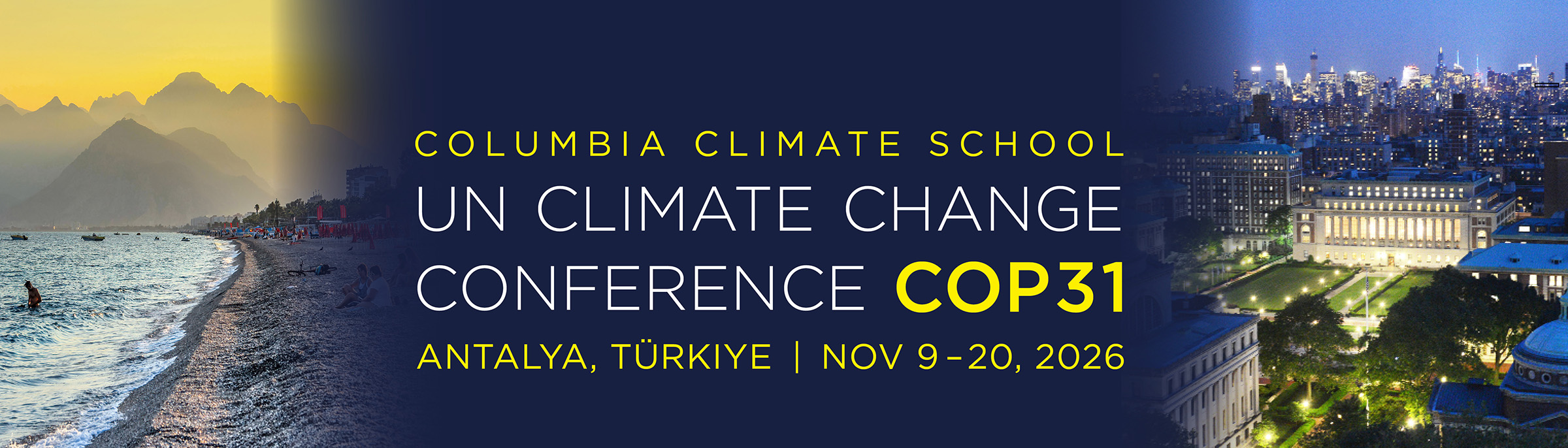
COP31, the 2026 United Nations Climate Change Conference, aims to advance dialogue, strengthen consensus, and accelerate climate action on a global scale. From November 9–20, 2026 in Antalya, Türkiye, heads of state, ministers, scientists, business leaders, and civil society will gather to advance efforts in emission targets, climate finance, and adaptation and resilience. Once again, our experts, students, and global thought leaders from Columbia Climate School and across Columbia University are contributing to key events, sharing insights, and helping shape the dialogue toward ambitious, science-based solutions. Learn More
