State of the Planet

News from the Columbia Climate School

sustainable development16

  • Sustainable Agriculture Through Innovation and Collaboration

    Sustainable Agriculture Through Innovation and Collaboration

    Individuals and institutions are becoming increasingly concerned about the social and environmental impacts and the broader societal ramifications associated with conventional agricultural systems. In response, many are acting to bring into view a brighter future that is capable of satisfying a long list of criteria that define sustainable agriculture.

  • Cities: the Vanguard Against Climate Change

    Cities: the Vanguard Against Climate Change

    Cities are leading the fight against climate change. Here’s what some of the most forward-looking ones are doing.

  • The Candidates Agree: America’s Aging Infrastructure Needs a Fix

    The Candidates Agree: America’s Aging Infrastructure Needs a Fix

    Once infrastructure decisions are made, they are locked in place, often for decades, sometimes for centuries. Recognizing this fact, there is an urgency to think in new ways, rather than simply stick with established practices and systems.

  • Anchor Institutions and Employment

    Anchor Institutions and Employment

    Despite the significance of anchor institutions to local economies, popular and political discourse does not always emphasize their importance. Anchor institutions, such as universities and hospitals, provide various employment opportunities while contributing to the health of local economies in other ways.

  • Housing in New York City: Updating the History

    Housing in New York City: Updating the History

    “Beyond doubt the large question facing New York housing production today has to do with a market that can not provide for the half of our households that are low income.”

  • Solar New York

    Solar New York

    Governor Cuomo has set the goal that in less than a decade and a half, 50% of New York State’s energy will come from renewable resources. To some, that goal seems to be a stretch, but the chatter I’m starting to hear indicates we might even do better.

  • Harnessing Soil to Rebuild Rural Nepal

    Harnessing Soil to Rebuild Rural Nepal

    Within weeks of a devastating earthquake in Nepal, governments and private groups pledged $4 billion in aid. And something else emerged from the rubble: a grassroots movement to rebuild rural Nepal safely and sustainably.

  • 2015 Indonesia Fires Killed 100,000 People, Says Study

    2015 Indonesia Fires Killed 100,000 People, Says Study

    In fall 2015, smoke from agricultural fires in Indonesia blanketed much of equatorial Asia. Schools and businesses closed, planes were grounded and tens of thousands of people sought treatment for respiratory illnesses. In a new study, researchers estimate that the smoke caused upward of 100,000 deaths across Indonesia, Malaysia, and Singapore.

  • Climate Week: Why Does It Matter?

    Climate Week: Why Does It Matter?

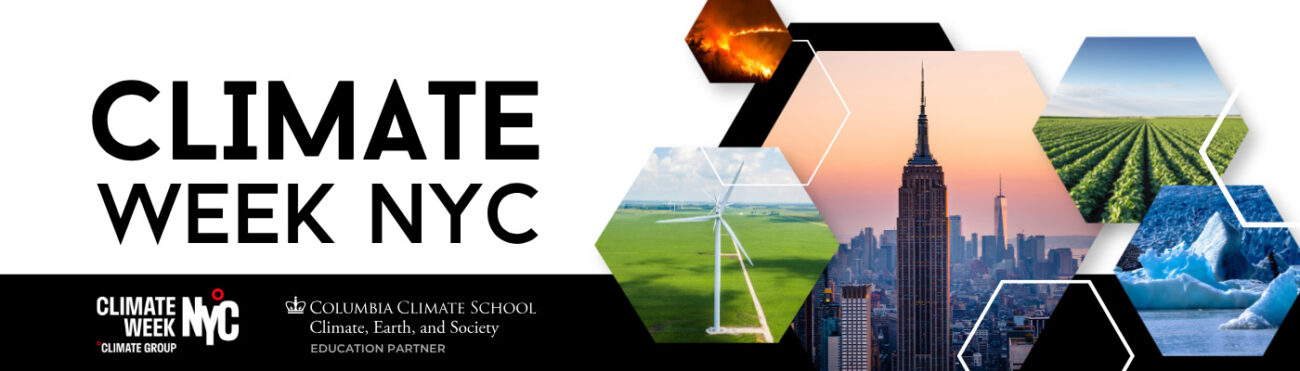
    Climate Week NYC 2016, Sept. 19 to 35, features over 70 events bringing together business, societal and government leaders to share ideas, technologies, resources and success stories that are helping to curb climate change and transition to a low-carbon society.

Banner with images representing environmental issues and text "You Asked: Our Scientists and Experts Answer Your Burning Questions."

You Asked invites you to share your most pressing questions about climate, science, and sustainability. Lamont-Doherty Earth Observatory and Columbia Climate School experts will respond with clear, evidence-based answers. Pose your questions and story ideas!

  • Sustainable Agriculture Through Innovation and Collaboration

    Sustainable Agriculture Through Innovation and Collaboration

    Individuals and institutions are becoming increasingly concerned about the social and environmental impacts and the broader societal ramifications associated with conventional agricultural systems. In response, many are acting to bring into view a brighter future that is capable of satisfying a long list of criteria that define sustainable agriculture.

  • Cities: the Vanguard Against Climate Change

    Cities: the Vanguard Against Climate Change

    Cities are leading the fight against climate change. Here’s what some of the most forward-looking ones are doing.

  • The Candidates Agree: America’s Aging Infrastructure Needs a Fix

    The Candidates Agree: America’s Aging Infrastructure Needs a Fix

    Once infrastructure decisions are made, they are locked in place, often for decades, sometimes for centuries. Recognizing this fact, there is an urgency to think in new ways, rather than simply stick with established practices and systems.

  • Anchor Institutions and Employment

    Anchor Institutions and Employment

    Despite the significance of anchor institutions to local economies, popular and political discourse does not always emphasize their importance. Anchor institutions, such as universities and hospitals, provide various employment opportunities while contributing to the health of local economies in other ways.

  • Housing in New York City: Updating the History

    Housing in New York City: Updating the History

    “Beyond doubt the large question facing New York housing production today has to do with a market that can not provide for the half of our households that are low income.”

  • Solar New York

    Solar New York

    Governor Cuomo has set the goal that in less than a decade and a half, 50% of New York State’s energy will come from renewable resources. To some, that goal seems to be a stretch, but the chatter I’m starting to hear indicates we might even do better.

  • Harnessing Soil to Rebuild Rural Nepal

    Harnessing Soil to Rebuild Rural Nepal

    Within weeks of a devastating earthquake in Nepal, governments and private groups pledged $4 billion in aid. And something else emerged from the rubble: a grassroots movement to rebuild rural Nepal safely and sustainably.

  • 2015 Indonesia Fires Killed 100,000 People, Says Study

    2015 Indonesia Fires Killed 100,000 People, Says Study

    In fall 2015, smoke from agricultural fires in Indonesia blanketed much of equatorial Asia. Schools and businesses closed, planes were grounded and tens of thousands of people sought treatment for respiratory illnesses. In a new study, researchers estimate that the smoke caused upward of 100,000 deaths across Indonesia, Malaysia, and Singapore.

  • Climate Week: Why Does It Matter?

    Climate Week: Why Does It Matter?

    Climate Week NYC 2016, Sept. 19 to 35, features over 70 events bringing together business, societal and government leaders to share ideas, technologies, resources and success stories that are helping to curb climate change and transition to a low-carbon society.