State of the Planet

News from the Columbia Climate School

sustainable development35

  • One Planet, Too Many People?

    One Planet, Too Many People?

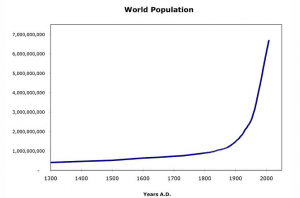
    Can we manage the needs of 9 billion people for water, food and energy without depleting our resources and ruining the environment? “The solutions,” says Tim Fox, “are all within the capability of existing technology.”

  • Can Intensive Farming Save Tropical Forests?

    Can Intensive Farming Save Tropical Forests?

    With 7 billion people on the planet and some 40 percent of earth’s land surface already covered with croplands and pastures, the only remaining frontiers for agricultural expansion are dwindling tropical forests. Some see high-yield industrial-scale farming as a way to take the pressure off; the theory goes that if more produce can be grown…

  • U.S., 5 Nations to Cut Methane, Soot Emissions

    U.S., 5 Nations to Cut Methane, Soot Emissions

    The United States and five other countries agreed this week to fund an effort to cut emissions of methane, soot and other pollutants to start to slow the rate of human-induced climate change.

  • Extraordinary Support for Unprecedented Global Challenges

    Extraordinary Support for Unprecedented Global Challenges

    The Earth Institute’s annual donor report for fiscal year 2011 is now available in an interactive digital format. We remain committed to finding extraordinary support to unprecedented global challenges, many of which are outlined in this report. We have highlighted some of our innovative projects in research, policy, and education, as well as the partnerships…

  • Power Play: an Energy Map of New York City

    Power Play: an Energy Map of New York City

    A new interactive, color-coded map created by a team at Columbia’s engineering school allows viewers to pinpoint and compare estimated energy usage, building lot by building lot, throughout New York City.

  • Climate News Roundup: Week of 2/6

    Three States to Require Insurers to Disclose Climate-Change Response Plans, New York Times 2/2 California, New York and Washington have announced a new requirement for insurance companies to disclose their plans for responding to climate change risks. The new regulation expands a requirement already in place for the largest insurers in those states. While insurance companies…

  • Opening the Door to More Rooftop Farming?

    Opening the Door to More Rooftop Farming?

    The NYC Department of City Planning has proposed new zoning rules to make it easier to retrofit buildings for energy efficiency – including a provision on rooftop greenhouses.

  • Climate Change in Haiti

    Climate Change in Haiti

    By Tracy Slagle and Madeleine Rubenstein Of the many countries at risk from the effects of climate change, small island states are widely considered to be among the most vulnerable. Not only are these countries exposed to direct impacts of climate change, particularly sea level rise, they are also highly sensitive to existing environmental stresses…

  • Breakthrough in Saving Lives in Rural Africa

    Breakthrough in Saving Lives in Rural Africa

    It’s mid-morning in the Tiby Millennium Village in Mali. Rokia, a community health worker, sits with a young mother in a spare courtyard of the household. Gently she asks the key questions.

Photo of the Earth from space with the text "Lamont at AGU25" on top.

AGU25, the premier Earth and space science conference, takes place December 15-19, 2025 in New Orleans, Louisiana. This year’s theme—Where Science Connects Us—puts in focus how science depends on connection, from the lab to the field to the ballot box. Once again, Lamont-Doherty Earth Observatory and Columbia Climate School scientists, experts, students, and educators are playing an active role, sharing our research and helping shape the future of our planet. #AGU25 Learn More

  • One Planet, Too Many People?

    One Planet, Too Many People?

    Can we manage the needs of 9 billion people for water, food and energy without depleting our resources and ruining the environment? “The solutions,” says Tim Fox, “are all within the capability of existing technology.”

  • Can Intensive Farming Save Tropical Forests?

    Can Intensive Farming Save Tropical Forests?

    With 7 billion people on the planet and some 40 percent of earth’s land surface already covered with croplands and pastures, the only remaining frontiers for agricultural expansion are dwindling tropical forests. Some see high-yield industrial-scale farming as a way to take the pressure off; the theory goes that if more produce can be grown…

  • U.S., 5 Nations to Cut Methane, Soot Emissions

    U.S., 5 Nations to Cut Methane, Soot Emissions

    The United States and five other countries agreed this week to fund an effort to cut emissions of methane, soot and other pollutants to start to slow the rate of human-induced climate change.

  • Extraordinary Support for Unprecedented Global Challenges

    Extraordinary Support for Unprecedented Global Challenges

    The Earth Institute’s annual donor report for fiscal year 2011 is now available in an interactive digital format. We remain committed to finding extraordinary support to unprecedented global challenges, many of which are outlined in this report. We have highlighted some of our innovative projects in research, policy, and education, as well as the partnerships…

  • Power Play: an Energy Map of New York City

    Power Play: an Energy Map of New York City

    A new interactive, color-coded map created by a team at Columbia’s engineering school allows viewers to pinpoint and compare estimated energy usage, building lot by building lot, throughout New York City.

  • Climate News Roundup: Week of 2/6

    Three States to Require Insurers to Disclose Climate-Change Response Plans, New York Times 2/2 California, New York and Washington have announced a new requirement for insurance companies to disclose their plans for responding to climate change risks. The new regulation expands a requirement already in place for the largest insurers in those states. While insurance companies…

  • Opening the Door to More Rooftop Farming?

    Opening the Door to More Rooftop Farming?

    The NYC Department of City Planning has proposed new zoning rules to make it easier to retrofit buildings for energy efficiency – including a provision on rooftop greenhouses.

  • Climate Change in Haiti

    Climate Change in Haiti

    By Tracy Slagle and Madeleine Rubenstein Of the many countries at risk from the effects of climate change, small island states are widely considered to be among the most vulnerable. Not only are these countries exposed to direct impacts of climate change, particularly sea level rise, they are also highly sensitive to existing environmental stresses…

  • Breakthrough in Saving Lives in Rural Africa

    Breakthrough in Saving Lives in Rural Africa

    It’s mid-morning in the Tiby Millennium Village in Mali. Rokia, a community health worker, sits with a young mother in a spare courtyard of the household. Gently she asks the key questions.