UNEP
-
The Irreversible Global Impacts From the Loss of Earth’s Frozen Regions
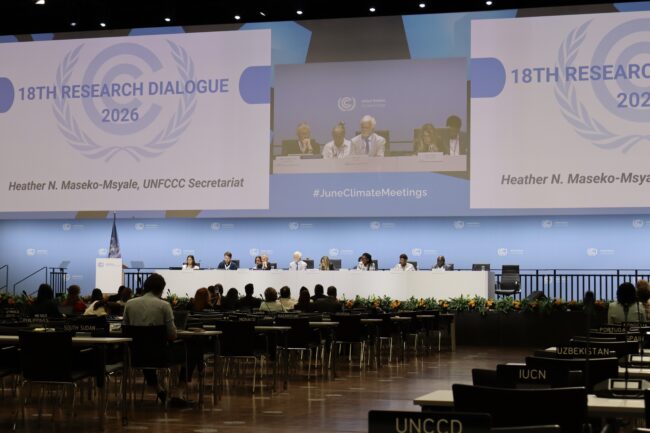
In June, climate negotiators from around the world met in Bonn, Germany for the annual Subsidiary Body meetings in preparation for the Conference of the Parties.
-

What Role Can Climate Change Play in the Courtroom?
Michael Burger, executive director of the Sabin Center for Climate Change Law, discussed recent developments in climate litigation and the questions they raise for the future.
-
Summer Opportunities for Columbia Students at UN Environment Programme
Since the Fall of 2007, the United Nations Environment Programme’s (UNEP) Post-Conflict and Disaster Management Branch (PCDMB) and the Earth Institute, Columbia University, have partnered to offer Research Assistantships each year to Columbia University graduate students. These positions take place at the PCDMB offices in Geneva, Switzerland, each summer. Travel costs will be covered for…
-

A Faustian Choice: Population and Environment
Population growth is a key contributor to the pressures pushing at our planetary boundaries. In Rio+20 discussions, implications of population growth have become shrouded in platitudes. It is important that discussions on planetary limits clearly lay out possible strategies that can alleviate these pressures.



COP31, the 2026 United Nations Climate Change Conference, aims to advance dialogue, strengthen consensus, and accelerate climate action on a global scale. From November 9–20, 2026 in Antalya, Türkiye, heads of state, ministers, scientists, business leaders, and civil society will gather to advance efforts in emission targets, climate finance, and adaptation and resilience. Once again, our experts, students, and global thought leaders from Columbia Climate School and across Columbia University are contributing to key events, sharing insights, and helping shape the dialogue toward ambitious, science-based solutions. Learn More
