State of the Planet

News from the Columbia Climate School

water matters24

  • The Fog Collectors: Harvesting Water From Thin Air

    The Fog Collectors: Harvesting Water From Thin Air

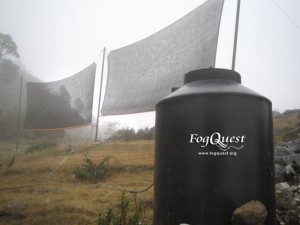
    Today nearly two people in ten have no source of safe drinking water according to the U.N. But in some desert areas, where there is very little rain, fog and dew are abundant sources of humidity that are being harvested to produce fresh water.

  • Irrigation Management and Global Water Supply

    Irrigation Management and Global Water Supply

    The Columbia Water Center hosted Marshall English last week to talk about the role crop irrigation plays in water resource planning and problem solving.

  • Maori Values; Modern Solutions

    Maori Values; Modern Solutions

    New Zealand’s longest river is also its most polluted, but Maori tribesmen have help to offer that goes beyond technology.

  • Flood Impacts: Don’t Forget Other Factors

    Flood Impacts: Don’t Forget Other Factors

    As scientists continue to try to sort out climate change effects, it’s important to remember also that when it comes to the impact of floods, there are many factors outside of global climate change that affect outcomes for people. Here are a few.

  • Seawater Greenhouses Produce Tomatoes in the Desert

    Seawater Greenhouses Produce Tomatoes in the Desert

    With the global population increasing by 80 million each year, a third of the planet will likely face water shortages by 2025. This looming water crisis is inextricably linked to food production…

  • Record-Breaking Amounts of Snow Raise Problems for Cities

    Record-Breaking Amounts of Snow Raise Problems for Cities

    These record breaking amounts of snow have caused numerous concerns both economical and environmental and as snowfalls pile up cities run out of room to put the snow. One suggested solution was to dump the snow into waterways even though it became a mixture of many pollutants including, but not limited to, motor oil and…

  • Floods in Eastern Sri Lanka and North-Eastern Australia: Contrasts in Disaster Risk Management

    Due to the ongoing floods in Sri Lanka, more than a million people are affected, 185,000 were displaced and 16 had died by February 5, 2011. The impact has been most severe on Eastern Sri Lanka a “Disaster Hazard and Vulnerability Hotspot”. The purpose of this post is to publicize information resources to help target…

  • Wild Oysters Deemed ‘Functionally Extinct’

    Wild Oysters Deemed ‘Functionally Extinct’

    A recent Valentine’s Day-inspired article in the Grist pointed out that oysters are the only delicacy that enhances The Mood and water quality. Don’t get too excited, though: a new study published this week in BioScience revealed that oysters are “functionally extinct” in many parts of the world where they were once abundant, and nothing…

  • Recruiting Tiny Organisms to Detect Water Pollution

    Recruiting Tiny Organisms to Detect Water Pollution

    Climate change has huge implications for water pollution, so with increasing climate change effects and the concern that many regions on the planet are approaching peak water, timely water pollution detection is critical.

Overhead view of Columbia campus with text Columbia Climate School Class Day 2026: Congratulations Graduates

Congratulations to our Columbia Climate School Class of 2026 and all of our 2026 Columbia University graduates! Learn more about our May 15 Climate School Class Day celebration. 💙 #Columbia2026 #ColumbiaClimate2026

  • The Fog Collectors: Harvesting Water From Thin Air

    The Fog Collectors: Harvesting Water From Thin Air

    Today nearly two people in ten have no source of safe drinking water according to the U.N. But in some desert areas, where there is very little rain, fog and dew are abundant sources of humidity that are being harvested to produce fresh water.

  • Irrigation Management and Global Water Supply

    Irrigation Management and Global Water Supply

    The Columbia Water Center hosted Marshall English last week to talk about the role crop irrigation plays in water resource planning and problem solving.

  • Maori Values; Modern Solutions

    Maori Values; Modern Solutions

    New Zealand’s longest river is also its most polluted, but Maori tribesmen have help to offer that goes beyond technology.

  • Flood Impacts: Don’t Forget Other Factors

    Flood Impacts: Don’t Forget Other Factors

    As scientists continue to try to sort out climate change effects, it’s important to remember also that when it comes to the impact of floods, there are many factors outside of global climate change that affect outcomes for people. Here are a few.

  • Seawater Greenhouses Produce Tomatoes in the Desert

    Seawater Greenhouses Produce Tomatoes in the Desert

    With the global population increasing by 80 million each year, a third of the planet will likely face water shortages by 2025. This looming water crisis is inextricably linked to food production…

  • Record-Breaking Amounts of Snow Raise Problems for Cities

    Record-Breaking Amounts of Snow Raise Problems for Cities

    These record breaking amounts of snow have caused numerous concerns both economical and environmental and as snowfalls pile up cities run out of room to put the snow. One suggested solution was to dump the snow into waterways even though it became a mixture of many pollutants including, but not limited to, motor oil and…

  • Floods in Eastern Sri Lanka and North-Eastern Australia: Contrasts in Disaster Risk Management

    Due to the ongoing floods in Sri Lanka, more than a million people are affected, 185,000 were displaced and 16 had died by February 5, 2011. The impact has been most severe on Eastern Sri Lanka a “Disaster Hazard and Vulnerability Hotspot”. The purpose of this post is to publicize information resources to help target…

  • Wild Oysters Deemed ‘Functionally Extinct’

    Wild Oysters Deemed ‘Functionally Extinct’

    A recent Valentine’s Day-inspired article in the Grist pointed out that oysters are the only delicacy that enhances The Mood and water quality. Don’t get too excited, though: a new study published this week in BioScience revealed that oysters are “functionally extinct” in many parts of the world where they were once abundant, and nothing…

  • Recruiting Tiny Organisms to Detect Water Pollution

    Recruiting Tiny Organisms to Detect Water Pollution

    Climate change has huge implications for water pollution, so with increasing climate change effects and the concern that many regions on the planet are approaching peak water, timely water pollution detection is critical.