West Antarctic Ice Sheet2
-
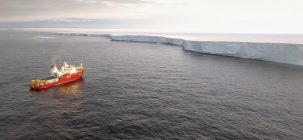
Short-Term Ocean Temperature Shifts Are Affecting West Antarctic Ice, Says Study
Scientists have known for some time that ice shelves off West Antarctica are melting as deep, warm ocean waters eat at their undersides, but a new study shows that temperatures, and resultant melting, can vary far more than previously thought, within a time scale of a few years.
-

Shrinking Ice Sheet Made A Surprising Comeback
Thousands of years ago, the West Antarctic ice sheet shrank dramatically—then grew back in an unexpected way.
-

U.S., UK Scientists Join to Study Possible Collapse of Massive Antarctic Glacier
An international collaboration will study the wasting of the Thwaites glacier, which already accounts for around 4 percent of current global sea-level rise, and could collapse within decades or centuries.
-

Exploring Beneath Earth’s Changing Ice Sheets
If just the West Antarctic Ice Sheet were to melt, it would raise global sea level by 6 meters. That’s more than a theoretical problem. West Antarctica is losing ice mass, and scientists are worried.
-

Antarctica’s Retreating Ice
While the ice sheets on West Antarctica and the Antarctic Peninsula are usually the ones to make the news in relation to climate change, recent studies have documented transformations that are taking place on the East Antarctic Ice Sheet as well. On the continent as a whole, large areas of ice have already melted and…
-
No Longer Anchored, Antarctic Ice Stream Surges to Sea
Under-Ice Sub Finds Ridge That May Have Held Back Pine Island Glacier
-
Nearly All of Antarctica Is Warming
New Study Shows Steady 50-Year Rise



COP31, the 2026 United Nations Climate Change Conference, aims to advance dialogue, strengthen consensus, and accelerate climate action on a global scale. From November 9–20, 2026 in Antalya, Türkiye, heads of state, ministers, scientists, business leaders, and civil society will gather to advance efforts in emission targets, climate finance, and adaptation and resilience. Once again, our experts, students, and global thought leaders from Columbia Climate School and across Columbia University are contributing to key events, sharing insights, and helping shape the dialogue toward ambitious, science-based solutions. Learn More
