State of the Planet

News from the Columbia Climate School

June 20112

  • Clean Water for Fiji

    Clean Water for Fiji

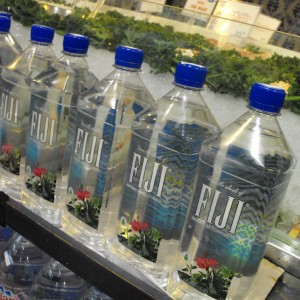
    Corporate giant Fiji Water makes millions of dollars every year selling bottled water, but only 47 percent of Fiji Islanders have access to clean drinking water. That may change.

  • Into Thin(ner) Air – On Route to the Cordillera Carabaya

    Into Thin(ner) Air – On Route to the Cordillera Carabaya

    This morning we left Arequipa and the comforts of the tourist trail, driving east across the puna towards the Andes proper. Our route took us along the newly constructed Caraterra Interoceanica – a highway linking the Pacific coast of Peru to ports in Brazil – and up to elevations of 4700 m. Along the way…

  • Climate-Ready Crops: The Pros and Cons

    Climate-Ready Crops: The Pros and Cons

    “If crops don’t adapt to climate change, neither will agriculture, and neither will we,” said Cary Fowler of the Global Crop Diversity Trust at the 2009 TED conference. Climate change is already affecting food supplies around the world as heat waves and drought reduce grain harvests and food prices soar. For every 1˚ C rise above…

  • At the Feet of El Misti

    At the Feet of El Misti

    What a difference a day makes! We’ve said goodbye to the sprawling metropolis of Lima and now are happily settled in Arequipa – the White City. This name refers to the white sillar rock used in the construction of the old colonial city and which is in fact a pyroclastic deposit from the volcanoes towering…

  • Installing Seismic Gear On The Beautiful (But Challenging) Alaska Peninsula

    Installing Seismic Gear On The Beautiful (But Challenging) Alaska Peninsula

    Every field location comes with logistical hurdles, and the Alaska Peninsula is no exception. Weather, wildlife and modes of transport pose the greatest challenges. We are hardly the first scientists to encounter these: Lamont-Doherty Earth Observatory has a long, rich history of collecting seismic data in this region (e.g., Shumagin Seismic Network, which ran for…

  • Earth Institute Participates in First Ever mHealth Survey

    By Chelsea Kinsman Patty Mechael, Nadi Kaonga, and Hima Batavia, researchers at the Earth Institute (EI), assisted in designing the first ever mHealth survey module as part of the World Health Organization’s (WHO) Second Global Observatory for eHealth (GOe) Survey.

  • Climate Information Crucial to Help Reduce Disaster Risk

    Climate Information Crucial to Help Reduce Disaster Risk

    Forecasts can play an invaluable role in helping humanitarian agencies and governments plan for and prevent disasters, according to a new report published by Earth Institute’s IRI and its international partners.

  • Off to Lima, World’s Second Largest Desert City

    Off to Lima, World’s Second Largest Desert City

    18th June 2011  Lima, Peru Our 2011 field season is underway. After a full day’s travel from New York, we arrived in Lima, the capital of Peru. This sprawling city perched on the edge of the Pacific Ocean is home to more than nine million people and, after Cairo, is the largest desert city in…

  • How Far Can a Bicycle Take You in Uganda?

    How Far Can a Bicycle Take You in Uganda?

    In rural Uganda a bicycle is the key to many destinations.  It can take you to be an entrepreneur offering delivery and taxi services, it can also increase the revenue from the crops since you will be able to transport your “Matoke” bananas to the nearest town and boost the price. A bicycle here means…

Photo of the Earth from space with the text "Lamont at AGU25" on top.

AGU25, the premier Earth and space science conference, takes place December 15-19, 2025 in New Orleans, Louisiana. This year’s theme—Where Science Connects Us—puts in focus how science depends on connection, from the lab to the field to the ballot box. Once again, Lamont-Doherty Earth Observatory and Columbia Climate School scientists, experts, students, and educators are playing an active role, sharing our research and helping shape the future of our planet. #AGU25 Learn More

  • Clean Water for Fiji

    Clean Water for Fiji

    Corporate giant Fiji Water makes millions of dollars every year selling bottled water, but only 47 percent of Fiji Islanders have access to clean drinking water. That may change.

  • Into Thin(ner) Air – On Route to the Cordillera Carabaya

    Into Thin(ner) Air – On Route to the Cordillera Carabaya

    This morning we left Arequipa and the comforts of the tourist trail, driving east across the puna towards the Andes proper. Our route took us along the newly constructed Caraterra Interoceanica – a highway linking the Pacific coast of Peru to ports in Brazil – and up to elevations of 4700 m. Along the way…

  • Climate-Ready Crops: The Pros and Cons

    Climate-Ready Crops: The Pros and Cons

    “If crops don’t adapt to climate change, neither will agriculture, and neither will we,” said Cary Fowler of the Global Crop Diversity Trust at the 2009 TED conference. Climate change is already affecting food supplies around the world as heat waves and drought reduce grain harvests and food prices soar. For every 1˚ C rise above…

  • At the Feet of El Misti

    At the Feet of El Misti

    What a difference a day makes! We’ve said goodbye to the sprawling metropolis of Lima and now are happily settled in Arequipa – the White City. This name refers to the white sillar rock used in the construction of the old colonial city and which is in fact a pyroclastic deposit from the volcanoes towering…

  • Installing Seismic Gear On The Beautiful (But Challenging) Alaska Peninsula

    Installing Seismic Gear On The Beautiful (But Challenging) Alaska Peninsula

    Every field location comes with logistical hurdles, and the Alaska Peninsula is no exception. Weather, wildlife and modes of transport pose the greatest challenges. We are hardly the first scientists to encounter these: Lamont-Doherty Earth Observatory has a long, rich history of collecting seismic data in this region (e.g., Shumagin Seismic Network, which ran for…

  • Earth Institute Participates in First Ever mHealth Survey

    By Chelsea Kinsman Patty Mechael, Nadi Kaonga, and Hima Batavia, researchers at the Earth Institute (EI), assisted in designing the first ever mHealth survey module as part of the World Health Organization’s (WHO) Second Global Observatory for eHealth (GOe) Survey.

  • Climate Information Crucial to Help Reduce Disaster Risk

    Climate Information Crucial to Help Reduce Disaster Risk

    Forecasts can play an invaluable role in helping humanitarian agencies and governments plan for and prevent disasters, according to a new report published by Earth Institute’s IRI and its international partners.

  • Off to Lima, World’s Second Largest Desert City

    Off to Lima, World’s Second Largest Desert City

    18th June 2011  Lima, Peru Our 2011 field season is underway. After a full day’s travel from New York, we arrived in Lima, the capital of Peru. This sprawling city perched on the edge of the Pacific Ocean is home to more than nine million people and, after Cairo, is the largest desert city in…

  • How Far Can a Bicycle Take You in Uganda?

    How Far Can a Bicycle Take You in Uganda?

    In rural Uganda a bicycle is the key to many destinations.  It can take you to be an entrepreneur offering delivery and taxi services, it can also increase the revenue from the crops since you will be able to transport your “Matoke” bananas to the nearest town and boost the price. A bicycle here means…