State of the Planet

News from the Columbia Climate School

201134

  • Losing Our Coral Reefs

    Losing Our Coral Reefs

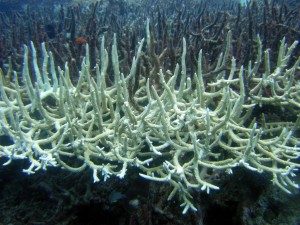
    Coral reefs, the “rainforests of the sea,” are some of the most biodiverse and productive ecosystems on earth. But tragically, they are in crisis.

  • Climate News Roundup: Week of 5/30 and 6/6

    Climate News Roundup: Week of 5/30 and 6/6

    IEA Sees Record CO2 Emissions in 2010, Reuters, May 30 2010 saw that highest level ever seen of world-wide CO2 emissions, driven in large part by economic growth in coal-heavy countries, including China and India. Increased consumption of oil and natural gas were the next largest contributors to emissions levels. The Fukushima disaster and ensuing…

  • A Call for One Million Community Health Workers

    A Call for One Million Community Health Workers

    By Anne Liu and Sarah Sullivan Extending the reach of public health systems through a well-trained and supported community health workforce is the best step we can take in meeting the MDGs. This can be done by strengthening health systems and increasing equity in health care access by extending care to the world’s most vulnerable…

  • Time and Technology and the Really Down Deep

    Time and Technology and the Really Down Deep

    Two years before Google Earth was launched, Bill Ryan and Suzanne Carbotte, oceanographers at the Lamont-Doherty Earth Observatory, began a project to transform the way we look at the ocean. They started collecting reams of data that had been gathered by scientists sailing on research vessels all over the world since the 1980s, one ship…

  • The Indiana Jones of Climate Modeling

    The Indiana Jones of Climate Modeling

    By JD Capuano Benjamin Cook is a climate modeler at Lamont-Doherty Earth Observatory, part of the Earth Institute at Columbia University. Cook completed his Ph.D. in environmental science at the University of Virginia in 2007. He was among a select group of scientists awarded a Climate and Global Change Postdoctoral Fellowship by the National Oceanic…

  • Can Water Scarcity Bring Down a Government? Yemen Spirals Out of Control

    Can Water Scarcity Bring Down a Government? Yemen Spirals Out of Control

    According to The New York Times, Yemen, a nation of 24 million people that sits at the southern and southwestern tip of the Arabian Peninsula, is “on the brink of an economic collapse so dire it could take years to recover.”

  • Integrating Treatment for AIDS and Other Neglected Tropical Diseases

    Integrating Treatment for AIDS and Other Neglected Tropical Diseases

    Thirty years after AIDS was first reported, the United Nations will meet today to discuss next-steps toward controlling the disease. Developing countries in Africa are still the hardest hit by AIDS, but progress is being made through the framework of the Millennium Development Goals, which calls for a reversal of the spread of HIV/AIDS in…

  • New Google Ocean Maps Dive Deep

    Up Close and Personal With Landscapes of the Abyss

  • Making Room for Rivers: A Different Approach to Flood Control

    Making Room for Rivers: A Different Approach to Flood Control

    Over time, the U.S. Army Corps of Engineers, the federal engineering and construction agency, has spent over $123 billion on flood control infrastructure that hasn’t always adequately protected us. Now, with the devastation of the spring floods in the Midwest, some are calling for a new approach to flood control that makes room for our…

Photo of the Earth from space with the text "Lamont at AGU25" on top.

AGU25, the premier Earth and space science conference, takes place December 15-19, 2025 in New Orleans, Louisiana. This year’s theme—Where Science Connects Us—puts in focus how science depends on connection, from the lab to the field to the ballot box. Once again, Lamont-Doherty Earth Observatory and Columbia Climate School scientists, experts, students, and educators are playing an active role, sharing our research and helping shape the future of our planet. #AGU25 Learn More

  • Losing Our Coral Reefs

    Losing Our Coral Reefs

    Coral reefs, the “rainforests of the sea,” are some of the most biodiverse and productive ecosystems on earth. But tragically, they are in crisis.

  • Climate News Roundup: Week of 5/30 and 6/6

    Climate News Roundup: Week of 5/30 and 6/6

    IEA Sees Record CO2 Emissions in 2010, Reuters, May 30 2010 saw that highest level ever seen of world-wide CO2 emissions, driven in large part by economic growth in coal-heavy countries, including China and India. Increased consumption of oil and natural gas were the next largest contributors to emissions levels. The Fukushima disaster and ensuing…

  • A Call for One Million Community Health Workers

    A Call for One Million Community Health Workers

    By Anne Liu and Sarah Sullivan Extending the reach of public health systems through a well-trained and supported community health workforce is the best step we can take in meeting the MDGs. This can be done by strengthening health systems and increasing equity in health care access by extending care to the world’s most vulnerable…

  • Time and Technology and the Really Down Deep

    Time and Technology and the Really Down Deep

    Two years before Google Earth was launched, Bill Ryan and Suzanne Carbotte, oceanographers at the Lamont-Doherty Earth Observatory, began a project to transform the way we look at the ocean. They started collecting reams of data that had been gathered by scientists sailing on research vessels all over the world since the 1980s, one ship…

  • The Indiana Jones of Climate Modeling

    The Indiana Jones of Climate Modeling

    By JD Capuano Benjamin Cook is a climate modeler at Lamont-Doherty Earth Observatory, part of the Earth Institute at Columbia University. Cook completed his Ph.D. in environmental science at the University of Virginia in 2007. He was among a select group of scientists awarded a Climate and Global Change Postdoctoral Fellowship by the National Oceanic…

  • Can Water Scarcity Bring Down a Government? Yemen Spirals Out of Control

    Can Water Scarcity Bring Down a Government? Yemen Spirals Out of Control

    According to The New York Times, Yemen, a nation of 24 million people that sits at the southern and southwestern tip of the Arabian Peninsula, is “on the brink of an economic collapse so dire it could take years to recover.”

  • Integrating Treatment for AIDS and Other Neglected Tropical Diseases

    Integrating Treatment for AIDS and Other Neglected Tropical Diseases

    Thirty years after AIDS was first reported, the United Nations will meet today to discuss next-steps toward controlling the disease. Developing countries in Africa are still the hardest hit by AIDS, but progress is being made through the framework of the Millennium Development Goals, which calls for a reversal of the spread of HIV/AIDS in…

  • New Google Ocean Maps Dive Deep

    Up Close and Personal With Landscapes of the Abyss

  • Making Room for Rivers: A Different Approach to Flood Control

    Making Room for Rivers: A Different Approach to Flood Control

    Over time, the U.S. Army Corps of Engineers, the federal engineering and construction agency, has spent over $123 billion on flood control infrastructure that hasn’t always adequately protected us. Now, with the devastation of the spring floods in the Midwest, some are calling for a new approach to flood control that makes room for our…