201922
-
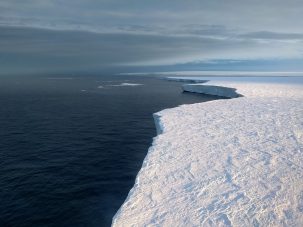
Scientists Link Climate Change to Melting in West Antarctica
A new study shows, for the first time, evidence of a link between human-caused global warming and melting of the West Antarctic Ice Sheet.
-

Education Brings Sectors Together to Address Fluorosis in Alirajpur
A new project from the Center for Sustainable Development and Lamont-Doherty Earth Observatory will use education interventions to try to curb fluorosis, caused by high fluoride levels in drinking water, in Alirajpur, India.
-

The Automobile and New York City
The private automobile should be seen as a valuable piece of a complex, varied system of transit. It should not simply be shunned but electrified, accommodated and regulated.
-

Why You Should Shop at the Farmers Market
In honor of National Farmers Market Week, a staffer who used to work at the market tells us why farmers markets are valuable community resources.
-

WOW-ing and RAW-ing in the South Pacific
Despite all the “Waiting on Weather” and “Running Away from Weather,” the expedition recovered exciting new sedimentary climate records in the remote and notoriously stormy Southern Ocean.
-

Air Pollution Cuts Are Saving Lives in New York State
Lower air pollution levels saved an estimated 5,660 lives in New York State in 2012, compared to 2002 levels, according to a new study.
-

More Intense Non-Tropical Storms Causing Increased Rainfall in U.S. Southeast
In the Southeastern United States, the increasing amount of rain during hurricane season is coming not from hurricanes but from non-tropical storms created by weather fronts, new research finds.
-

Call for Proposals: Earth Frontiers: A New Seed Funding Program
This fall, the Earth Institute will be evaluating project proposals under its new Earth Frontiers seed funding program for Columbia University faculty and researchers. The program, which was first announced this past spring of 2019, is accepting projects through September 9, 2019.
-

North to Patuakhali and Barisal for the End of Our Fieldwork
We added a campaign monument to the tide gauge at Khepupara on the way to our last GPS and SET installation site at Patuakhali. We faced challenges such as bad roads and broken bridges, and leeches, but got the work done. The field work was now coming to a close.


The first Earth Day in 1970 ignited a movement to stop polluting our planet. Today, our scientists and experts are tackling the most pressing challenges to achieve real-world impact. This Earth Day, join us in our commitment to realizing a just and sustainable future for our planet. Visit our Earth Day website for ideas, resources, and inspiration.
