State of the Planet

News from the Columbia Climate School

Climate153

  • Water Is Streaming Across Antarctica

    Water Is Streaming Across Antarctica

    In the first such continent-wide survey, scientists have found extensive drainages of meltwater flowing over parts of Antarctica’s ice during the brief summer. Many of the newly mapped drainages are not new, but the fact they exist at all is significant; they appear to proliferate with small upswings in temperature, so warming projected for this…

  • Colin Kelley: Food and Water Vulnerability in a Changing Climate

    Colin Kelley: Food and Water Vulnerability in a Changing Climate

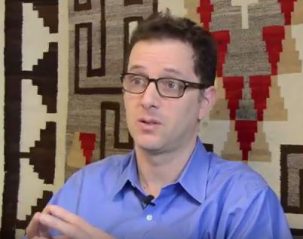
    Colin Kelley, an associate research scientist with the International Research Institute for Climate and Society, studies regional climate in vulnerable areas like the Middle East in order to improve our ability to make forecasts, plan ahead and become more resilient to drought and other climate shifts.

  • How We Know Today’s Climate Change Is Not Natural

    How We Know Today’s Climate Change Is Not Natural

    Despite the many climate “skeptics” in key positions of power today, 97 percent of climate scientists agree that the warming of Earth’s climate over the last 100 years is mainly due to human activity. Why are they so sure?

  • Kirsty Tinto: Mapping on and under Antarctica’s Ice

    Kirsty Tinto: Mapping on and under Antarctica’s Ice

    Kirsty Tinto flies aboard a specially equipped airplane in very cold places to study ice sheets and ice shelves. She’s an associate research scientist in the polar geophysics group at Lamont-Doherty Earth Observatory.

  • Park Williams Discovers History and Science in a Tree Ring

    Park Williams Discovers History and Science in a Tree Ring

    Park Williams studies trees and climate, in particular the causes of drought and the effects of climate change on forests. In this latest in a series of Earth Institute videos, we spoke to him about what he does, what’s important about it, and how his interest in history and environmental science blended into a career.

  • Under the Dead Sea, Warnings of Dire Drought

    Ancient Sediments Tell a Story That Could Be Repeated

  • The Science of Carbon Dioxide and Climate

    The Science of Carbon Dioxide and Climate

    The vast majority of scientists around the world agree that our climate is changing at a faster rate than ever recorded in human history because of our use of fuels such as coal and oil, so-called fossil fuels. The conclusion rests on basic physics known since the early 1800s, when physical scientists first recognized that…

  • Grasslands More Sensitive to Dryness than Rainfall, Study Says

    Grasslands More Sensitive to Dryness than Rainfall, Study Says

    A new study shows that dryness of the atmosphere affects U.S. grassland productivity more than rainfall does. The findings could have important implications for predicting how plants will respond to warming climate conditions.

  • Women Leaders Tackle the Urban Climate Challenge

    Women Leaders Tackle the Urban Climate Challenge

    Anne Hidalgo, the mayor of Paris, will join dozens of other leaders in government, business and the non-profit world at the Women4Climate conference at Columbia University on March 15.

Photo of the Earth from space with the text "Lamont at AGU25" on top.

AGU25, the premier Earth and space science conference, takes place December 15-19, 2025 in New Orleans, Louisiana. This year’s theme—Where Science Connects Us—puts in focus how science depends on connection, from the lab to the field to the ballot box. Once again, Lamont-Doherty Earth Observatory and Columbia Climate School scientists, experts, students, and educators are playing an active role, sharing our research and helping shape the future of our planet. #AGU25 Learn More

  • Water Is Streaming Across Antarctica

    Water Is Streaming Across Antarctica

    In the first such continent-wide survey, scientists have found extensive drainages of meltwater flowing over parts of Antarctica’s ice during the brief summer. Many of the newly mapped drainages are not new, but the fact they exist at all is significant; they appear to proliferate with small upswings in temperature, so warming projected for this…

  • Colin Kelley: Food and Water Vulnerability in a Changing Climate

    Colin Kelley: Food and Water Vulnerability in a Changing Climate

    Colin Kelley, an associate research scientist with the International Research Institute for Climate and Society, studies regional climate in vulnerable areas like the Middle East in order to improve our ability to make forecasts, plan ahead and become more resilient to drought and other climate shifts.

  • How We Know Today’s Climate Change Is Not Natural

    How We Know Today’s Climate Change Is Not Natural

    Despite the many climate “skeptics” in key positions of power today, 97 percent of climate scientists agree that the warming of Earth’s climate over the last 100 years is mainly due to human activity. Why are they so sure?

  • Kirsty Tinto: Mapping on and under Antarctica’s Ice

    Kirsty Tinto: Mapping on and under Antarctica’s Ice

    Kirsty Tinto flies aboard a specially equipped airplane in very cold places to study ice sheets and ice shelves. She’s an associate research scientist in the polar geophysics group at Lamont-Doherty Earth Observatory.

  • Park Williams Discovers History and Science in a Tree Ring

    Park Williams Discovers History and Science in a Tree Ring

    Park Williams studies trees and climate, in particular the causes of drought and the effects of climate change on forests. In this latest in a series of Earth Institute videos, we spoke to him about what he does, what’s important about it, and how his interest in history and environmental science blended into a career.

  • Under the Dead Sea, Warnings of Dire Drought

    Ancient Sediments Tell a Story That Could Be Repeated

  • The Science of Carbon Dioxide and Climate

    The Science of Carbon Dioxide and Climate

    The vast majority of scientists around the world agree that our climate is changing at a faster rate than ever recorded in human history because of our use of fuels such as coal and oil, so-called fossil fuels. The conclusion rests on basic physics known since the early 1800s, when physical scientists first recognized that…

  • Grasslands More Sensitive to Dryness than Rainfall, Study Says

    Grasslands More Sensitive to Dryness than Rainfall, Study Says

    A new study shows that dryness of the atmosphere affects U.S. grassland productivity more than rainfall does. The findings could have important implications for predicting how plants will respond to warming climate conditions.

  • Women Leaders Tackle the Urban Climate Challenge

    Women Leaders Tackle the Urban Climate Challenge

    Anne Hidalgo, the mayor of Paris, will join dozens of other leaders in government, business and the non-profit world at the Women4Climate conference at Columbia University on March 15.