State of the Planet

News from the Columbia Climate School

Climate176

  • John Imbrie, a Pioneer of Paleoceanography

    John Imbrie, a Pioneer of Paleoceanography

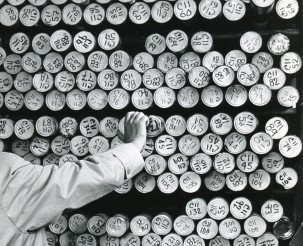
    Imbrie, a former head of the Department of Geological Sciences, helped confirmed connections between changes in Earth’s orbit and the timing of the ice ages and was a co-founder of CLIMAP, an international effort to use sediment cores to map Earth’s climate at the height of the last ice age.

  • Iron Fertilization Won’t Work in Equatorial Pacific, Study Suggests

    Iron Fertilization Won’t Work in Equatorial Pacific, Study Suggests

    Over the past half-million years, the equatorial Pacific Ocean has seen five spikes in the amount of iron-laden dust blown in from the continents. In theory, those bursts should have turbo-charged the growth of carbon-capturing algae, but a new study shows that the excess iron had little to no effect.

  • Study Downgrades Groundwater Contribution to Sea Level Rise

    Study Downgrades Groundwater Contribution to Sea Level Rise

    Some research suggests that, along with melting ice sheets and glaciers, the water pumped from underground for irrigation and other uses, on the rise worldwide, could contribute substantially to rising sea levels over the next 50 years. A new study published in Nature Climate Change says the magnitude is substantially lower.

  • As Predicted: A Rising Tide of Migration

    As Predicted: A Rising Tide of Migration

    “With sea levels on the rise, several island nations are scrambling to stay above water and ensure citizens will have a place to go when the ocean engulfs their homeland. The humanitarian-crisis phase of climate change has officially begun.”

  • Learning from El Niño as La Niña Odds Rise

    Learning from El Niño as La Niña Odds Rise

    Although El Niño is weakening, its ramifications continue to be felt around the world. Drought and resulting food insecurity is one of the major implications for southeast Asia, eastern and southern Africa, Central America and the Caribbean. Sixty million are in need of emergency relief today, according to the United Nations.

  • ESP Alumna Joins Climate Leadership Corps

    ESP Alumna Joins Climate Leadership Corps

    Olivia Owre-Bell, a recent alumna of Columbia’s MPA in Environmental Science and Policy program, attended the Climate Reality Leadership Corps 31st training in the Philippines this March.

  • The Climate Crisis and the Transition to a Renewable Economy

    What I am betting on is the growing sense of awareness and understanding of environmental issues among the people of the world. It could be that my personal perspective is a little warped. I’ve seen the environmental issue move from the outer fringes to the center of our political agenda.

  • In Greenland, Exactly Where Meltwater Enters the Ocean Matters

    In Greenland, Exactly Where Meltwater Enters the Ocean Matters

    In southern Greenland in summer, rivers have been streaming off the ice sheet, pouring cold fresh water into the fjords. A new study tracks where that meltwater goes—with surprising results.

  • Accounting for Volcanoes Using Tools of Economics

    Accounting for Volcanoes Using Tools of Economics

    Climate scientists teamed up with an econometrics expert to develop an innovative new method for picking out past volcanic eruptions in temperature reconstructions going back millennia and gauging their impact on the climate.

Blue banner with kids and Earth photos. Text: "Lamont-Doherty Earth Observatory Open House, Saturday, October 17, 2026, 10am-4pm.

On Saturday, October 17, 2026 from 10am to 4pm, Lamont-Doherty Earth Observatory Open House—our biggest, best science fun and discovery event of the year—will take place on our beautiful campus in Palisades, NY. Mark your calendar and join us for this free, family-friendly celebration of science! RSVP Today!

  • John Imbrie, a Pioneer of Paleoceanography

    John Imbrie, a Pioneer of Paleoceanography

    Imbrie, a former head of the Department of Geological Sciences, helped confirmed connections between changes in Earth’s orbit and the timing of the ice ages and was a co-founder of CLIMAP, an international effort to use sediment cores to map Earth’s climate at the height of the last ice age.

  • Iron Fertilization Won’t Work in Equatorial Pacific, Study Suggests

    Iron Fertilization Won’t Work in Equatorial Pacific, Study Suggests

    Over the past half-million years, the equatorial Pacific Ocean has seen five spikes in the amount of iron-laden dust blown in from the continents. In theory, those bursts should have turbo-charged the growth of carbon-capturing algae, but a new study shows that the excess iron had little to no effect.

  • Study Downgrades Groundwater Contribution to Sea Level Rise

    Study Downgrades Groundwater Contribution to Sea Level Rise

    Some research suggests that, along with melting ice sheets and glaciers, the water pumped from underground for irrigation and other uses, on the rise worldwide, could contribute substantially to rising sea levels over the next 50 years. A new study published in Nature Climate Change says the magnitude is substantially lower.

  • As Predicted: A Rising Tide of Migration

    As Predicted: A Rising Tide of Migration

    “With sea levels on the rise, several island nations are scrambling to stay above water and ensure citizens will have a place to go when the ocean engulfs their homeland. The humanitarian-crisis phase of climate change has officially begun.”

  • Learning from El Niño as La Niña Odds Rise

    Learning from El Niño as La Niña Odds Rise

    Although El Niño is weakening, its ramifications continue to be felt around the world. Drought and resulting food insecurity is one of the major implications for southeast Asia, eastern and southern Africa, Central America and the Caribbean. Sixty million are in need of emergency relief today, according to the United Nations.

  • ESP Alumna Joins Climate Leadership Corps

    ESP Alumna Joins Climate Leadership Corps

    Olivia Owre-Bell, a recent alumna of Columbia’s MPA in Environmental Science and Policy program, attended the Climate Reality Leadership Corps 31st training in the Philippines this March.

  • The Climate Crisis and the Transition to a Renewable Economy

    What I am betting on is the growing sense of awareness and understanding of environmental issues among the people of the world. It could be that my personal perspective is a little warped. I’ve seen the environmental issue move from the outer fringes to the center of our political agenda.

  • In Greenland, Exactly Where Meltwater Enters the Ocean Matters

    In Greenland, Exactly Where Meltwater Enters the Ocean Matters

    In southern Greenland in summer, rivers have been streaming off the ice sheet, pouring cold fresh water into the fjords. A new study tracks where that meltwater goes—with surprising results.

  • Accounting for Volcanoes Using Tools of Economics

    Accounting for Volcanoes Using Tools of Economics

    Climate scientists teamed up with an econometrics expert to develop an innovative new method for picking out past volcanic eruptions in temperature reconstructions going back millennia and gauging their impact on the climate.