State of the Planet

News from the Columbia Climate School

Climate179

  • Shrinking Glaciers: A Chronology of Climate Change

    Shrinking Glaciers: A Chronology of Climate Change

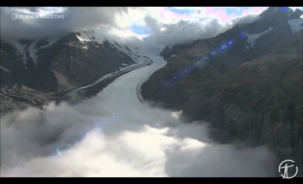
    With new data, scientists can track back what glaciers did in the past, and how it is related to climate change. This provides a link to predict what could be happening in the next 100, 200, 500 years.

  • Why are Past Surface Temperatures and CO2 Concentrations Important?

    Why are Past Surface Temperatures and CO2 Concentrations Important?

    Kelsey Dyez, a geochemist at the Lamont-Doherty Earth Observatory, describes how the carbon dioxide content of the atmosphere influences climate.

  • A Daily Dose, Plus Magnum Mondays

    A Daily Dose, Plus Magnum Mondays

    Leading up to the UN Conference on Climate Change this month in Paris, the Earth Institute is posting daily photos and videos from experts working in the field of climate science.

  • From Copenhagen to Paris: Holding onto Hope

    From Copenhagen to Paris: Holding onto Hope

    I don’t believe for a second that we are on the brink of global destruction. We are on the brink of a global re-distribution and whole scale re-balancing of global goods and bads. But we have been there before and survived.

  • Exploring Beneath Earth’s Changing Ice Sheets

    Exploring Beneath Earth’s Changing Ice Sheets

    If just the West Antarctic Ice Sheet were to melt, it would raise global sea level by 6 meters. That’s more than a theoretical problem. West Antarctica is losing ice mass, and scientists are worried.

  • U.S. Could Cut Per Capita Greenhouse Emissions 90% by 2050, Says Report

    U.S. Could Cut Per Capita Greenhouse Emissions 90% by 2050, Says Report

    The report says it is possible to revamp the energy system in a way that reduces per capita carbon dioxide emissions from 17 tons per person currently to 1.7 tons in 2050, while still providing all the services people expect, from driving to air conditioning.

  • From Copenhagen to Paris: Low Expectations

    From Copenhagen to Paris: Low Expectations

    As we head to Paris, the expectations are profoundly lower. The national commitments that countries are putting on the table do not add up to nearly enough to keep us within 2 degrees; instead the plan is to come back every five years and hopefully do better. … It is still mathematically possible to stay…

  • How Bad Will this El Niño Be? Worse Than You May Think

    How Bad Will this El Niño Be? Worse Than You May Think

    Today’s El Niño is unfolding over a world that is in many ways more vulnerable than the world of 1997-1998. Just as today’s climate continues to generate extremes without historical precedent, we are starting to see elements of social vulnerability also without historical precedent. That is an alarming combination.

  • Climate Is Changing Fast in West Antarctica

    Climate Is Changing Fast in West Antarctica

    Fast-rising temperatures on the Antarctic Peninsula are having an impact on the ice and marine life, and providing clues about future ecosystem changes elsewhere.

Colorful icons representing nature, sustainable living, and renewable energy with text "Earth Day 2026"

The first Earth Day in 1970 ignited a movement to stop polluting our planet. Today, our scientists and experts are tackling the most pressing challenges to achieve real-world impact. This Earth Day, join us in our commitment to realizing a just and sustainable future for our planet. Visit our Earth Day website for ideas, resources, and inspiration.

  • Shrinking Glaciers: A Chronology of Climate Change

    Shrinking Glaciers: A Chronology of Climate Change

    With new data, scientists can track back what glaciers did in the past, and how it is related to climate change. This provides a link to predict what could be happening in the next 100, 200, 500 years.

  • Why are Past Surface Temperatures and CO2 Concentrations Important?

    Why are Past Surface Temperatures and CO2 Concentrations Important?

    Kelsey Dyez, a geochemist at the Lamont-Doherty Earth Observatory, describes how the carbon dioxide content of the atmosphere influences climate.

  • A Daily Dose, Plus Magnum Mondays

    A Daily Dose, Plus Magnum Mondays

    Leading up to the UN Conference on Climate Change this month in Paris, the Earth Institute is posting daily photos and videos from experts working in the field of climate science.

  • From Copenhagen to Paris: Holding onto Hope

    From Copenhagen to Paris: Holding onto Hope

    I don’t believe for a second that we are on the brink of global destruction. We are on the brink of a global re-distribution and whole scale re-balancing of global goods and bads. But we have been there before and survived.

  • Exploring Beneath Earth’s Changing Ice Sheets

    Exploring Beneath Earth’s Changing Ice Sheets

    If just the West Antarctic Ice Sheet were to melt, it would raise global sea level by 6 meters. That’s more than a theoretical problem. West Antarctica is losing ice mass, and scientists are worried.

  • U.S. Could Cut Per Capita Greenhouse Emissions 90% by 2050, Says Report

    U.S. Could Cut Per Capita Greenhouse Emissions 90% by 2050, Says Report

    The report says it is possible to revamp the energy system in a way that reduces per capita carbon dioxide emissions from 17 tons per person currently to 1.7 tons in 2050, while still providing all the services people expect, from driving to air conditioning.

  • From Copenhagen to Paris: Low Expectations

    From Copenhagen to Paris: Low Expectations

    As we head to Paris, the expectations are profoundly lower. The national commitments that countries are putting on the table do not add up to nearly enough to keep us within 2 degrees; instead the plan is to come back every five years and hopefully do better. … It is still mathematically possible to stay…

  • How Bad Will this El Niño Be? Worse Than You May Think

    How Bad Will this El Niño Be? Worse Than You May Think

    Today’s El Niño is unfolding over a world that is in many ways more vulnerable than the world of 1997-1998. Just as today’s climate continues to generate extremes without historical precedent, we are starting to see elements of social vulnerability also without historical precedent. That is an alarming combination.

  • Climate Is Changing Fast in West Antarctica

    Climate Is Changing Fast in West Antarctica

    Fast-rising temperatures on the Antarctic Peninsula are having an impact on the ice and marine life, and providing clues about future ecosystem changes elsewhere.