Climate217
-
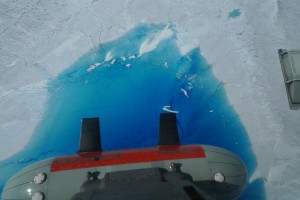
Gone Fishing…Took IcePod!
When we sat down to map out the flight plan, our request to the crew for locating lakes met with an easy nod: No problem at all. It took only seconds to register that our definition of lakes might differ from theirs.
-

‘Lipreading’ the Icesheet
Even the most skilled of English language lipreaders are only able to tease apart about 30 percent of the information being shared, I read in a recent article. The author, herself deaf, noted that in some transmissions, the information capture is higher, while in others, nothing is collected. An average of 30 percent information transfer…most…
-

Climate Forecasts: A Vital Tool for Policymakers
Focusing on near-term probabilities can also aid in decreasing vulnerability to future climate uncertainties.
-

World Population Projected to Cross 11 Billion Threshold in 2100
In 2011, the U.N. announced that the world population had reached 7 billion. This year’s new projections for future population growth are higher than previously expected. Projects like Millennium Cities hope to alleviate many of the pressures that crowded cities place on infrastructure, public services, and the environment.
-

Photo Essay: High Desert, Deep Earth
In the Arabian peninsula nation of Oman, geologists are studying the Hajar mountains–a range containing rocks that have been thrust up from the deep earth. Accessible to humans in only a few places on earth, these kinds of rocks offer clues to the planet’s deep history–and possible ways that natural processes may be harnessed to…
-

Ancient Rocks, Modern Purpose
The desert sultanate of Oman is home to some of the weirdest—and possibly most useful—rocks on earth. The stark Hajar mountains, near the border with Saudi Arabia, contain a chunk of earth’s mantle—a zone that makes up most of earth’s mass, but normally lies inaccessible to humans, far below the surface. Here, though, a sliver…
-

What’s the Real Story With Clean Coal?
The Obama administration will propose new rules to limit carbon emissions from coal-fired power plants. But is “clean coal” technology up to the job?
-

Science in the Streets
What motivates artists may be different than what motivates scientists, but they can investigate similar ideas. Artists interested in sustainability issues might team up with scientists to make sure their work is accurate. Scientists benefit from art projects that communicate their research to a broader audience than would normally read a journal article. However, the…
-

Managing Water in a Dry Land
Since 2010, the Earth Institute’s International Research Institute for Climate and Society along with UNESCO and their colleagues in Chile have been working with Elqui’s water authority to help them use seasonal forecasts as way to better allocate water and prepare for droughts.


On Saturday, October 17, 2026 from 10am to 4pm, Lamont-Doherty Earth Observatory Open House—our biggest, best science fun and discovery event of the year—will take place on our beautiful campus in Palisades, NY. Mark your calendar and join us for this free, family-friendly celebration of science! RSVP Today!
