Climate231
-
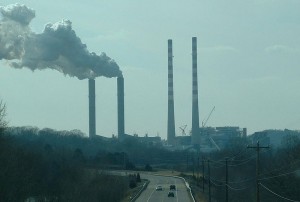
EPA Announces New Performance Standards for Power Plants
EPA recently announced new performance standards for power plants that limit carbon dioxide emissions. The proposed rule formally recognizes the importance of regulating carbon dioxide as a greenhouse gas and effectively eliminates the construction of conventional coal plants.
-

Save those Acorns for the Apocalypse
As biodiversity takes a hit from climate change, forward thinking groups store seed samples in gene banks. The idea: if an entire species is wiped out, scientists can repopulate from the samples. Hello, plant versions of Adam and Eve.
-

Growing Food, Protecting the Land in Africa
The new Africa Monitoring System aims to help land managers and policy makers identify and tackle tradeoffs between intensified food production on the African continent and the vital services provided by healthy ecosystems.
-

More Food Insecurity Expected in Horn of Africa
The current rainy season in the Horn of Africa is off to a poor start, and fear of famine once again looms large for the region.
-

Climate News Roundup: Week of 4/01
EPA to impose first greenhouse gas limits on power plants, Washington Post, Mar 27 The US EPA issued its first regulations addressing greenhouse gas emissions from power plants. The regulation is a New Source Performance Standard, meaning that it applies only to new power plants that are not yet permitted or under construction. The standard…
-

Faculty Profile: Yochanan Kushnir
by Kaci Fowler Yochanan Kushnir began his career as a meteorologist in the Israeli Navy, where he started as an operational marine forecaster, and with time became the Navy’s Chief Meteorology Officer. As part of his duties, Kushnir ventured out to sea to collect meteorological and oceanographic data for research. Motivated by these experiences, Kushnir…
-
Oil Stains on Direct Air Capture?
Affordable direct air capture could shape long-term climate mitigation options. Point source emissions may be the first to be addressed, but the climate change problem is not resolved until the carbon dioxide from the transportation sector is also dealt with. Conflating air capture with a carbon dioxide consuming application like the environmentally questionable EOR should…
-

Rare Earth Metals: Another Challenge for the Green Economy?
Rare earth metals play an important role in our envisaged carbon-free future, but their availability in the future is under question for different political and availability issues, which is worrying for planned reductions in greenhouse gas emissions.
-
Summer 2012 Announcement: Internship Positions
This summer the Earth Institute, Columbia University is offering Columbia students opportunities to intern within various departments and research centers at the Earth Institute. All full-time Columbia and Barnard students are eligible to apply for internships. These internships are funded at a rate of $15/hr for 35 hours per week and up to a maximum…


The first Earth Day in 1970 ignited a movement to stop polluting our planet. Today, our scientists and experts are tackling the most pressing challenges to achieve real-world impact. This Earth Day, join us in our commitment to realizing a just and sustainable future for our planet. Visit our Earth Day website for ideas, resources, and inspiration.
