Climate249
-
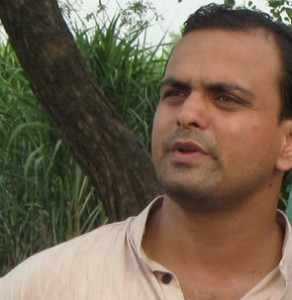
The Uncertainties of Groundwater and Climate in India: An Interview with Chandra Kiran Krishnamurthy
Since he arrived at the Columbia Water Center at its founding in 2008, Chandra Kiran Krishnamurthy has been unswervingly focused on two questions. First, how will groundwater depletion and climate change affect agriculture in India? And given the dire nature of the crisis, what can we do to help people adapt?
-
Young Citizens Lawsuit Seeks to Compel US Action on Climate Change
A lawsuit filed in April on behalf of citizens too young to vote takes a novel approach in seeking to force the United States government to mitigate the most serious impacts of human-induced climate change. The petitioners argue that, in failing to address climate change, the federal government has abandoned its fiduciary responsibility to affirmatively…
-

Tree Rings Open Door on 1,100 Years of El Niño
Scientists have used tree-ring data from the American Southwest to reconstruct a 1,100-year history of the El Niño cycle that shows that, when the earth warms, the climate acts up. The research may improve scientists’ ability to predict future climate and the effects of global warming.
-

R.I.P. La Niña
La Niña, we hardly knew ye. This year’s iteration of the climate phenomenon nearly set records for strength and riled up world weather for nine months. Now it’s dead. What’s next?
-
Rising Seas Pushing Island Nations to the Brink
Rising sea levels caused by global warming could displace millions of people worldwide who are living on low-lying coastlines, and it may prove fatal to some small island nations. At a conference at Columbia Law School, legal experts explored the implications for the people whose homelands could become uninhabitable within a matter of decades.
-

Squeezing the Last Drops out of Sicily
If you were to drive south from Palermo, Sicily toward Monreale, you would be ringed in by green mountains, the sparkling white of ancient and modern buildings and the azure Mediterranean Sea receding behind you. Continuing south through the island’s mountainous interior, you would pass verdant agricultural fields on your way past Corleone, the namesake…
-

Switchyard Project: A Very Successful Year
The 2011 field season has been a very very successful year, in fact the most successful one we have ever had. The weather has been great, the equipment proved to be mostly reliable, the people have been great and the samples are plenty.
-

Climate News Roundup: Week of 5/15
Climate Scientist Fears His “Wedges” Made It Seem Too Easy, National Geographic, May 17 In their 2004 paper, “Stabilization Wedges: Solving the Climate Problem for the Next 50 Years with Current Technologies,” Princeton physics and engineering professor, Robert Socolow, and his colleague, ecologist Stephen Pacala proposed a theory to check any increase in greenhouse gas…
-

Switchyard Project: Melting Ice, a Fresher Arctic
The freshwater content of the Arctic Ocean is increasing as the Earth’s climate warms. Chemical analysis indicates that the source is both melting ice and the Pacific Ocean.


The first Earth Day in 1970 ignited a movement to stop polluting our planet. Today, our scientists and experts are tackling the most pressing challenges to achieve real-world impact. This Earth Day, join us in our commitment to realizing a just and sustainable future for our planet. Visit our Earth Day website for ideas, resources, and inspiration.
