Earth Sciences12
-

Can ‘Super Volcanoes’ Cool the Earth in a Major Way? A New Study Suggests No.
An extended volcanic winter could have huge impacts on all living creatures. But could this really happen?
-

High in a Cloud Forest, Tapping Into the Breathing of a Volcanic Beast
On Costa Rica’s active Poás volcano, scientists install geophysical instruments that can monitor the underground in real time.
-

Science for the Planet: Sinking Seaweed for Sequestration
This second video for Science for the Planet series explores the idea of sinking sargassum seaweed deep in the ocean, taking carbon with it.
-

A Volcanic Explosion 520,000 Years Ago Dwarfed One That Devastated the Minoan Civilization
An undersea eruption a half million years ago was much larger than nearly anything recorded in human time.
-

A New 66 Million-Year History of Carbon Dioxide Offers Little Comfort for Today
Scientists have produced a new curve of how atmospheric carbon dioxide affects climate. It makes clear that its effects can be long lasting.
-

Paving the Way for Backpack Climate Science: North Cascades Glacier Climate Project Turns 40
Forty years after Mauri Pelto began studying the glaciers in northern Washington, much has changed about the glaciers, the project and the people involved.
-

American Geophysical Union 2023: Key Research From the Columbia Climate School
A guide to notable research to be presented at the world’s largest gathering of earth and space scientists.
-

She’s on a Mission to Plumb the Secrets of New York’s Disappearing Wetlands
Botanist and climate scientist Dorothy Peteet has been in the business digging deep into bogs, marshes and fens for more than 40 years, revealing natural and human histories going back thousands of years, and their role in changing climate. A final frontier: the obscure remains of New York City’s once widespread coastal wetlands.
-

Learning How Trees Can Help Unlock Secrets of Our Climate Future
A new cataloging system will help better preserve, track and share thousands of tree ring samples from around the globe.


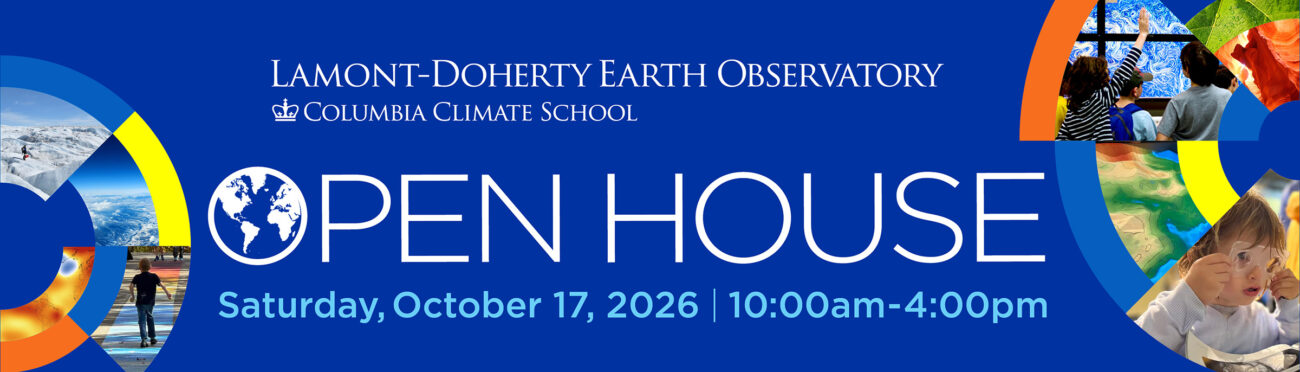
On Saturday, October 17, 2026 from 10am to 4pm, Lamont-Doherty Earth Observatory Open House—our biggest, best science fun and discovery event of the year—will take place on our beautiful campus in Palisades, NY. Mark your calendar and join us for this free, family-friendly celebration of science! RSVP Today!
