Earth Sciences14
-

California Quake Faults Are Highly Sensitive to Solid Earth Tides, Say Scientists
Oceans have tides, and so does the solid earth. Could they have an effect on earthquake faults? Yes, say scientists, but that doesn’t necessarily mean they cause big quakes.
-

Upcoming Scientific Fieldwork, 2023 and Beyond
Climate School researchers are carrying out fieldwork on every continent and every ocean. A guide to upcoming projects.
-

Vikings Abandoned Greenland Centuries Ago in Face of Rising Seas, Says New Study
Counterintuitively, seas were rising around Greenland as it went through a cold period centuries ago. This helped drive out Viking colonists, says new research.
-

Vetlesen Prize Ceremony Honors Two Distinguished Researchers in Earth Sciences
A celebration held at Columbia University recognized scientists Anny Cazenave and David Kohlstedt as the 2020 and 2023 Vetlesen Prize recipients.
-

Land Subsidence in the Netherlands
At a symposium on land subsidence, I learned about how the Dutch transformed their country so that about a quarter of it is below sea level and how they cope with it.
-

New Project Aims to Advance Open and Inclusive Science
A new CIESIN project funded by NASA’s Open Source Science Initiative will produce online learning modules to develop open science literacy for researchers at diverse career stages and from varied backgrounds.
-

Ivan Tolstoy, Who Elucidated Travels of Sound Through Oceans and Air, and Helped Map Seabeds, Dies at 99
From beginnings as an exile from the Russian Revolution, a life spent studying geology and long-distance acoustics at sea and in the atmosphere.
-

1,000-Plus Years of Tree Rings Confirm Historic Extremity of 2021 Western North America Heat Wave
Scientists quickly pronounced the summer 2021 heat wave that hit western North America to be unprecedented, but they had no long-term physical proof. Now they do.
-

Exploring the Sundarbans and Back to Dhaka
Our group of 24 Americans and Bangladeshis continued to explore the Sundarbans mangrove forest, rice farming in embanked low-lying islands, and heritage sites of Bangladesh.


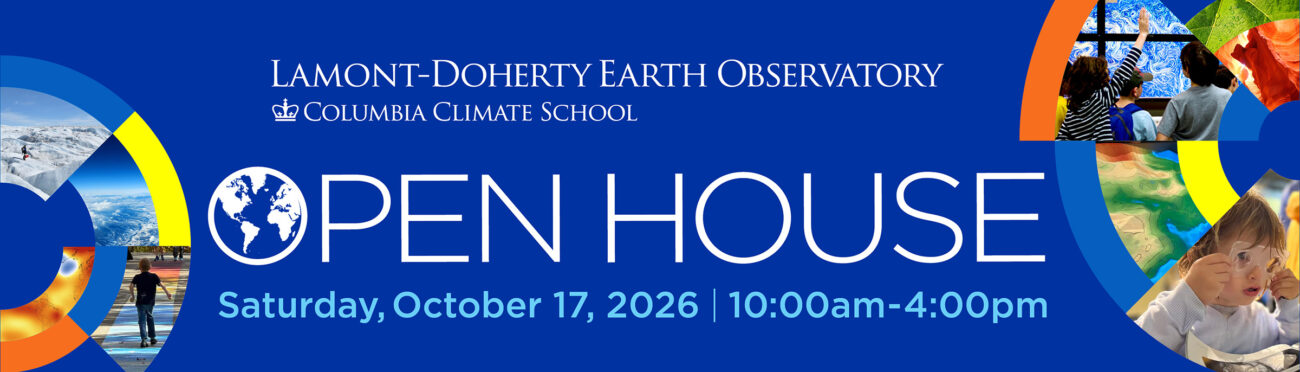
On Saturday, October 17, 2026 from 10am to 4pm, Lamont-Doherty Earth Observatory Open House—our biggest, best science fun and discovery event of the year—will take place on our beautiful campus in Palisades, NY. Mark your calendar and join us for this free, family-friendly celebration of science! RSVP Today!
