Earth Sciences15
-

Across the Ganges to Southwest Bangladesh and the Sundarbans
Our group of 23 American and Bangladeshi students and professors traveled from the Jamuna River to the Ganges and Gorai Rivers, and then down to an island on the edge of the Sundarbans, the world’s largest mangrove forest.
-

Cutting Confederate Ties, the U.S. Navy Names Ships for a Pioneering Female Oceanographer and a Daring Enslaved Pilot
Marie Tharp was a marine scientist in a man’s world. Robert Smalls was a skilled sailor, but held as a slave. Both are now being honored by the U.S. Navy.
-

Taking My Class to Bangladesh
My undergraduate Sustainable Development course is in Bangladesh for a Spring Break trip to see what they have been learning about. We will be touring the country by bus and boat to learn about the environment and people of Bangladesh.
-

Towering Wildfire Clouds Are Affecting the Stratosphere, and the Climate
Aircraft collecting data from clouds of smoke have revealed surprising effects of wildfires on the ground.
-

Ancient Eggshell Fragments Crack Giant Elephant Bird’s Life Secrets
In a region where skeletal fossils are poorly preserved, old eggshells are opening a window into the evolution, diet and distribution of Madagascar’s extinct birds.
-

New Partnership Invites Black Students to Explore the High Seas
The STEMSEAS program is partnering with historically Black colleges and universities to brainstorm new ideas and networks for increasing diversity in the geosciences and providing opportunities for undergraduate students.
-

Q&A With French Geophysicist and 2020 Vetlesen Prize Winner Anny Cazenave
For the International Day of Women and Girls in Science, world-renowned geophysicist Anny Cazenave discusses her research journey, the Vetlesen Prize, and her hopes for younger women scientists entering the field.
-

More Frequent Atmospheric Rivers Are Hindering the Recovery of Arctic Sea Ice
Giant trains of warm, moist air are playing havoc with Arctic sea ice during the season when it should be recovering from summer melting.
-

Explorer of Deep Earth Wins Vetlesen Prize
Using sophisticated equipment, David Kohlstedt has recreated the pressure, temperature and chemical conditions in the Earth’s mantle, which humans cannot observe directly. His findings have laid the basis for understanding many of the processes that drive the planet’s dynamics.


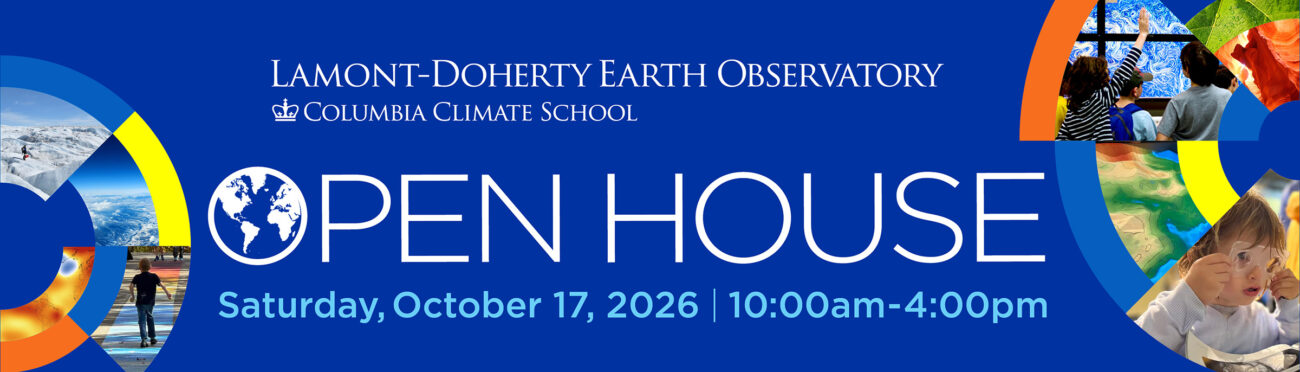
On Saturday, October 17, 2026 from 10am to 4pm, Lamont-Doherty Earth Observatory Open House—our biggest, best science fun and discovery event of the year—will take place on our beautiful campus in Palisades, NY. Mark your calendar and join us for this free, family-friendly celebration of science! RSVP Today!
