Earth Sciences41
-
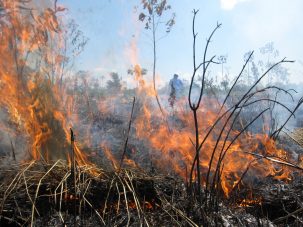
Wildfire Experts: A Journalist’s Guide
A guide to wildfire experts at the Earth Institute.
-

End of Our Fieldwork and Mandalay Hill
I had one last day installing seismometers with the team, then left for Mandalay. After a breakfast with colleagues, I had a free day to explore Mandalay Hill.
-

I Switch to Installing Seismometers
With the GPS done, I joined the seismologists installing 32 stations in Myanmar. We finished the preparations and then headed out to the field in three teams.
-

From Catholic Churches to Buddhist Monasteries, the Work Continued
On the way back to Kale, we stopped at a Catholic church where one of the seismometers will be deployed.
-

Our Next Sets of GPS in Kalewa and Tedim
To get to Kalewa we followed the Myittha River past the Kabaw Fault to the site with view of a monastery. Tedim is a long and windy drive through the mountainous Chin Hills.
-

M.S. Sustainability Science Student Aims To Make Scientific Models Accessible For Communities
Isabela Brown wants to use her graduate degree to integrate social, political, and scientific frameworks into environmental models.
-

To Kale for the First GPS Station
We drove 15 hours over two days to get to Kale, our new home base. Here, we managed to build a monument and install our first GPS station in only one day. Our homemade post-driver worked amazingly well.
-

Installing GPS in Myanmar
We believe the IndoBurman subduction zone is active and that there is a significant earthquake hazard in this densely populated region. We are installing GPS stations to monitor it.
-

9 Awesome Exhibits from the 2018 Lamont Open House
This annual celebration consists of talks by Lamont’s world-renowned experts as well as dozens of hands-on activities and experiments for kids to learn about how our planet works.


The first Earth Day in 1970 ignited a movement to stop polluting our planet. Today, our scientists and experts are tackling the most pressing challenges to achieve real-world impact. This Earth Day, join us in our commitment to realizing a just and sustainable future for our planet. Visit our Earth Day website for ideas, resources, and inspiration.
