Earth Sciences62
-
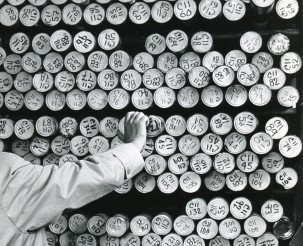
John Imbrie, a Pioneer of Paleoceanography
Imbrie, a former head of the Department of Geological Sciences, helped confirmed connections between changes in Earth’s orbit and the timing of the ice ages and was a co-founder of CLIMAP, an international effort to use sediment cores to map Earth’s climate at the height of the last ice age.
-

Walking in the Shadow of a Great Volcano
On a ledge just inside the lip of Chile’s Quizapu volcanic crater, Philipp Ruprecht was furiously digging a trench. Here at an elevation of 10,000 feet, a 1,000-foot plunge loomed just yards away, and wind was whipping dust off his shovel. But the volcanologist was excited. Ruprecht had just found this spot, topped with undisturbed…
-

Photo Essay: In the Shadow of a Great Volcano
High in the southern Andes, Chile’s Quizapu crater is one of South America’s most fearsome geologic features. In 1846, it was the source of one the continent’s largest historically recorded lava flows. In 1932, it produced one of the largest recorded volcanic blasts. The volcano is currently inactive, but could revive at any time. What…
-

Iron Fertilization Won’t Work in Equatorial Pacific, Study Suggests
Over the past half-million years, the equatorial Pacific Ocean has seen five spikes in the amount of iron-laden dust blown in from the continents. In theory, those bursts should have turbo-charged the growth of carbon-capturing algae, but a new study shows that the excess iron had little to no effect.
-

From Top to Bottom: Scientists Map a New Island Volcano
One of the earth’s newest islands exploded into view from the bottom of the southwest Pacific Ocean in January 2015, and scientists sailing around the volcano this spring have created a detailed map of its topography.
-

Viewing Science Through a Different Frame
Is it an album cover for a 1980s hair band, or a thin section micrograph of precious minerals? A model of ice streams in glacial lakes, or a 3D laser light show from a dance club? This past week at the third annual Research as Art exhibit at the Lamont-Doherty Earth Observatory, scientists traded in…
-
The Climate Crisis and the Transition to a Renewable Economy
What I am betting on is the growing sense of awareness and understanding of environmental issues among the people of the world. It could be that my personal perspective is a little warped. I’ve seen the environmental issue move from the outer fringes to the center of our political agenda.
-

In Greenland, Exactly Where Meltwater Enters the Ocean Matters
In southern Greenland in summer, rivers have been streaming off the ice sheet, pouring cold fresh water into the fjords. A new study tracks where that meltwater goes—with surprising results.
-

Citizen Science, Smartphone Apps and a $10,000 Prize
If you think you can combine an interest in the environment with a little savvy about smartphone apps, listen up. You could win $10,000.


The first Earth Day in 1970 ignited a movement to stop polluting our planet. Today, our scientists and experts are tackling the most pressing challenges to achieve real-world impact. This Earth Day, join us in our commitment to realizing a just and sustainable future for our planet. Visit our Earth Day website for ideas, resources, and inspiration.
