State of the Planet

News from the Columbia Climate School

Earth Sciences63

  • Visit to a Different Delta: the Mississippi

    Visit to a Different Delta: the Mississippi

    This summer I am in the Mississippi Delta in southern Louisiana helping to install an updated version of the compaction meters that we have in Bangladesh. The environment is quite different and we have arrived in the midst of an historic storm. Luckily for us the brunt of the storm is NW of us. So…

  • Project Maps the Chemistry of the World’s Oceans

    Project Maps the Chemistry of the World’s Oceans

    Until recently, too little data existed about the distribution of trace elements and nutrients in the oceans to provide a global picture. In 2002, a group of scientists connected with Columbia University’s Lamont-Doherty Earth Observatory set out to fill those gaps.

  • NSF Joins Early Career Scientists aboard a Training Cruise

    NSF Joins Early Career Scientists aboard a Training Cruise

    Rose Dufour, NSF’s Program Director of Ship Operations, joined the cruise to talk with early career scientists about writing scientific proposals and loving what you do.

  • Shipboard Science: It’s All About Collaboration This Week

    Shipboard Science: It’s All About Collaboration This Week

    Early-career scientists aboard the UNOLS training cruise are getting to try new techniques and technologies, and collaborations are springing up everywhere.

  • The Magic of Exploring Under the Sea

    The Magic of Exploring Under the Sea

    It’s midnight on the ship, and the labs are filled with scientists busy examining samples. Two of them just got back from a trip to the seafloor, and the excitement is palpable.

  • Life Aboard a Research Cruise: 24-Hour Workdays, Amazing Discoveries

    Life Aboard a Research Cruise: 24-Hour Workdays, Amazing Discoveries

    When scientists say “research cruise,” they aren’t talking about sunny afternoons of shuffleboard and margaritas on deck. Life aboard a research vessel means tight spaces, few amenities, and long workdays.

  • Roving the Abyss: It Takes a Team

    Roving the Abyss: It Takes a Team

    Bridgit’s first mission with the autonomous underwater vehicle (AUV) Sentry was a rousing success, including locating a patch of seafloor where methane is bubbling up.

  • When Doing Science at Sea, Prepare to Adapt

    When Doing Science at Sea, Prepare to Adapt

    Bridgit’s research training cruise started with a fundamental lesson of ocean science: Science at sea requires constant adaptation. Morning fog meant rewriting dive plans and reconsidering priorities.

  • Going Deep for Science

    Going Deep for Science

    Bridgit Boulahanis, a marine geophysics graduate student at Lamont-Doherty Earth Observatory, prepares to head out on her first research cruise exploring the seafloor with underwater vehicles.

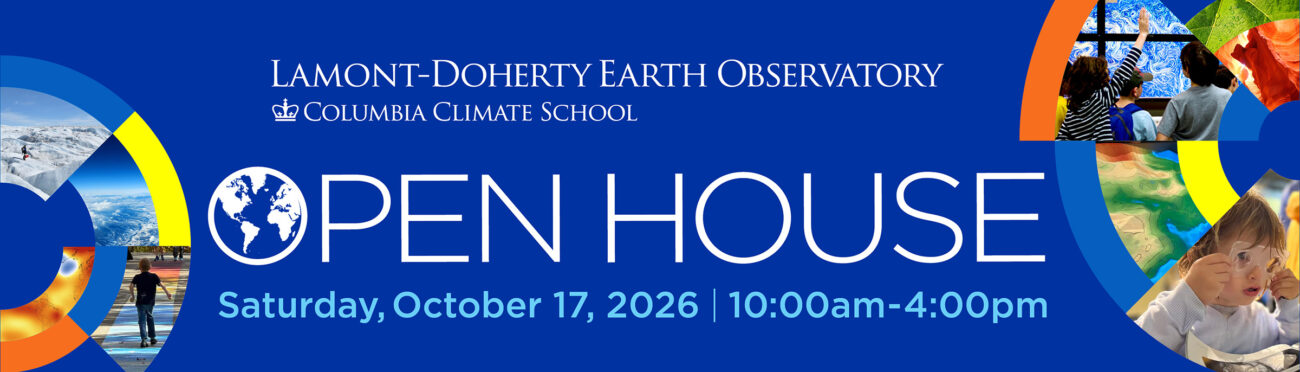
Blue banner with kids and Earth photos. Text: "Lamont-Doherty Earth Observatory Open House, Saturday, October 17, 2026, 10am-4pm.

On Saturday, October 17, 2026 from 10am to 4pm, Lamont-Doherty Earth Observatory Open House—our biggest, best science fun and discovery event of the year—will take place on our beautiful campus in Palisades, NY. Mark your calendar and join us for this free, family-friendly celebration of science! RSVP Today!

  • Visit to a Different Delta: the Mississippi

    Visit to a Different Delta: the Mississippi

    This summer I am in the Mississippi Delta in southern Louisiana helping to install an updated version of the compaction meters that we have in Bangladesh. The environment is quite different and we have arrived in the midst of an historic storm. Luckily for us the brunt of the storm is NW of us. So…

  • Project Maps the Chemistry of the World’s Oceans

    Project Maps the Chemistry of the World’s Oceans

    Until recently, too little data existed about the distribution of trace elements and nutrients in the oceans to provide a global picture. In 2002, a group of scientists connected with Columbia University’s Lamont-Doherty Earth Observatory set out to fill those gaps.

  • NSF Joins Early Career Scientists aboard a Training Cruise

    NSF Joins Early Career Scientists aboard a Training Cruise

    Rose Dufour, NSF’s Program Director of Ship Operations, joined the cruise to talk with early career scientists about writing scientific proposals and loving what you do.

  • Shipboard Science: It’s All About Collaboration This Week

    Shipboard Science: It’s All About Collaboration This Week

    Early-career scientists aboard the UNOLS training cruise are getting to try new techniques and technologies, and collaborations are springing up everywhere.

  • The Magic of Exploring Under the Sea

    The Magic of Exploring Under the Sea

    It’s midnight on the ship, and the labs are filled with scientists busy examining samples. Two of them just got back from a trip to the seafloor, and the excitement is palpable.

  • Life Aboard a Research Cruise: 24-Hour Workdays, Amazing Discoveries

    Life Aboard a Research Cruise: 24-Hour Workdays, Amazing Discoveries

    When scientists say “research cruise,” they aren’t talking about sunny afternoons of shuffleboard and margaritas on deck. Life aboard a research vessel means tight spaces, few amenities, and long workdays.

  • Roving the Abyss: It Takes a Team

    Roving the Abyss: It Takes a Team

    Bridgit’s first mission with the autonomous underwater vehicle (AUV) Sentry was a rousing success, including locating a patch of seafloor where methane is bubbling up.

  • When Doing Science at Sea, Prepare to Adapt

    When Doing Science at Sea, Prepare to Adapt

    Bridgit’s research training cruise started with a fundamental lesson of ocean science: Science at sea requires constant adaptation. Morning fog meant rewriting dive plans and reconsidering priorities.

  • Going Deep for Science

    Going Deep for Science

    Bridgit Boulahanis, a marine geophysics graduate student at Lamont-Doherty Earth Observatory, prepares to head out on her first research cruise exploring the seafloor with underwater vehicles.