Earth Sciences66
-
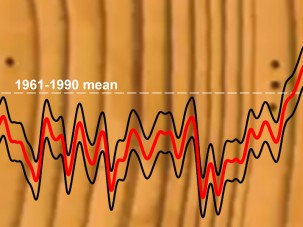
A New Global Team Tracks Temperature Change Through Time
A new international consortium of scientists is bringing the history of temperature fluctuations across the entire Northern Hemisphere to life.
-

Uncovering the Stories of Southern Africa’s Climate Past
Sidney Hemming is preparing to spend two months at sea studying global ocean circulation and southern Africa’s climate variability over the past 5 million years.
-
In Gulf of Mexico, Microbes Thrive Above Natural Oil Seeps
New insight into how plankton and oil interact
-

In Isolation, Community
Being aboard a ship is isolating—but for a scientist, it’s not lonely.
-

The Floor of the Ocean Comes into Better Focus
The bottom of the ocean just keeps getting better. Or at least more interesting to look at.
-

All I Wanted for Christmas Was for These Pumps to Work
We’ve just completed our first full station and are remarkably pleased with the results. We collected 8 seawater samples to measure helium isotopes; 20 to measure thorium and protactinium isotopes; 7 in-situ pump filters; 1 box core of the ocean floor; and more.
-

Doing Science When There’s No Science to Be Done
With an abundance of time and a dearth of work, we have begun to devise ways of doing science before we can actually do science at sea. Among other things, we set up an imaging system to take pictures of particle filters we bring back from the deep sea.
-
Electoral Politics and Environmental Sustainability
The political consensus for sustainability that could emerge might be based on increased funding for the science of renewable energy, battery technology, energy efficiency and smart grids. It could also include incentives for private sector investment to commercialize new energy technologies, and tax expenditures that make it easier for consumers to adopt these new technologies.
-

Day 2: What Am I Doing Here, Anyway?
The South Pacific Gyre is the most nutrient-poor region in the ocean, and the waters are the clearest in the ocean. The sediments accumulate below the water at rates as low as 0.1 millimeter per thousand years. So, 10 centimeters of seafloor are equivalent to one million years of material deposition in the South Pacific.


The first Earth Day in 1970 ignited a movement to stop polluting our planet. Today, our scientists and experts are tackling the most pressing challenges to achieve real-world impact. This Earth Day, join us in our commitment to realizing a just and sustainable future for our planet. Visit our Earth Day website for ideas, resources, and inspiration.
