Earth Sciences66
-

Citizen Science, Smartphone Apps and a $10,000 Prize
If you think you can combine an interest in the environment with a little savvy about smartphone apps, listen up. You could win $10,000.
-

Walter Pitman and the Smoking Gun of Plate Tectonics
“We had this magic key, this magic magnetic profile,” Pitman said. “We were able to date it and eventually use it not only as a tool that proved continental drift but a tool by which we could actually reconstruct the pattern of drift, that is the relative position of the continents, and the actual timing…
-

Top Seismology Award Goes to Pioneer in Rock Mechanics: Christopher Scholz
For his pioneering work in rock mechanics and his skill at communicating earthquake science, Scholz is being honored on April 20 by the Seismological Society of America with its top award, the Harry Fielding Reid Medal.
-

Zeroing in on Life Around a Hydrothermal Vent
Vicki Ferrini has spent a lot of time working on mapping the ocean floor, and now she’s sailing in the South Pacific to get a closer look.
-

Almost Home, with Another 7 Million Years of Climate History
Science at sea isn’t easy, but the benefits are huge, writes Sidney Hemming in her final post from a two-month expedition that collected millions of years of climate history in the deep-sea sediment from off southern Africa.
-

‘Popping Rocks’ and Robots
It turns out that studying lava flows at the bottom of the ocean uses many of the same methods as studying lava flows on other planets, writes Lamont’s Elise Rumpf.
-

Finding Microfossils off Southern Africa
Expedition 361’s newest sediment cores brought up spectacular foraminifera—translucent, glassy and “very pretty” throughout the ocean sediment.
-

A Surprise from the Zambezi River
Sidney Hemming and her team aboard the JOIDES Resolution got a surprise when they began taking sediment cores from their first river site off southern Africa—about 10 times more sediment than expected.
-

Mozambique Core Brings Up 7 Million Years of Climate History
With calm seas, the JOIDES Resolution’s latest sediment core comes up with what appears to be a fantastic, cyclic climate signal that is continuous back 7 million years, writes Sidney Hemming.


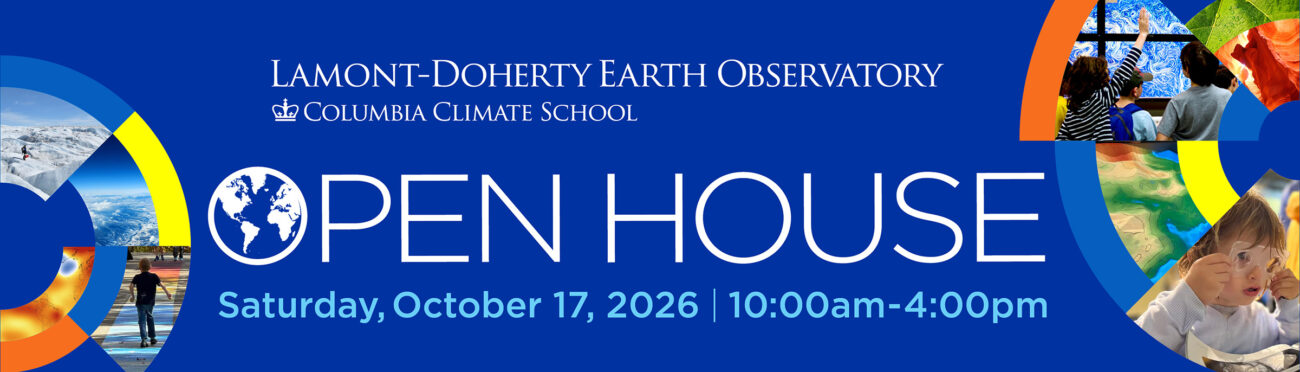
On Saturday, October 17, 2026 from 10am to 4pm, Lamont-Doherty Earth Observatory Open House—our biggest, best science fun and discovery event of the year—will take place on our beautiful campus in Palisades, NY. Mark your calendar and join us for this free, family-friendly celebration of science! RSVP Today!
