State of the Planet

News from the Columbia Climate School

Earth Sciences69

  • Unlocking the Secrets of the Ross Ice Shelf

    Unlocking the Secrets of the Ross Ice Shelf

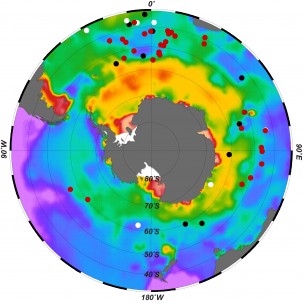
    The Ross Ice Shelf is much like the Rosetta Stone. The historic stone inscribed in three scripts told the same story but in different tongues, so when matched together scholars could decode an ancient language. The Antarctic Rosetta Project also brings together three different “scripts,” each written by an Earth system; the ice, the ocean…

  • Faculty Profile: Upmanu Lall

    Faculty Profile: Upmanu Lall

      As he explained in a recent issue of Columbia Engineering, for Professor Upmanu Lall, “the goal of engineering is to develop solutions to societal problems.” Over three decades a hydrologist, Lall has focused on the societal problems associated with water: from severe water shortages that are expected to occur in one-third of the developing…

  • Last Sample and Home

    Last Sample and Home

    We finished our work at the river transect. Now we had one more sample to collect. Alamgir had arranged for drillers at this new site, but they were delayed because of a knife fight between two villages over some property.

  • OSL Samples at Last

    OSL Samples at Last

    The success of the tube wells for drilling and obtaining samples was a great boon to our field program. We drilled three additional tube wells to complete a five-well transect across the abandoned river valley. When we date the samples, we will find out if the river switched position suddenly, possibly from an earthquake.

  • Exploring Rugged Hills & Turbulent Waters 4,500 Meters Down

    Exploring Rugged Hills & Turbulent Waters 4,500 Meters Down

    Aboard a ship at the Mid-Atlantic Ridge, scientists are studying how the deepest and coldest waters mix with shallower waters, gaining heat in the process.

  • Tubewells to the Rescue

    Tubewells to the Rescue

    The resistivity testing was hampered by bad roads and flooded fields. The augering was proving similarly difficult in the thick muds of the abandoned channel. It was time to change to our alternative plan: drilling with tube wells. That worked better and we had turned a corner.

  • Climate Change Leaves Its Mark on the Sea Floor? Maybe Not

    Climate Change Leaves Its Mark on the Sea Floor? Maybe Not

    A new study in Science questions the provocative idea that climate change may shape the texture of the sea floor. A Snickers bar helps explain what’s really going on.

  • Come Aboard: A Look at the R/V Marcus Langseth

    Come Aboard: A Look at the R/V Marcus Langseth

    A new video produced by Columbia University tells the story of what the research vessel Marcus G. Langseth is all about.

  • Pani, Pani Everywhere

    Pani, Pani Everywhere

    Heading out to our field area, we discovered that the abandoned river valley we planned to study was completely flooded. There was pani—the Bangla word for water—everywhere.

Overhead view of Columbia campus with text Columbia Climate School Class Day 2026: Congratulations Graduates

Congratulations to our Columbia Climate School Class of 2026 and all of our 2026 Columbia University graduates! Learn more about our May 15 Climate School Class Day celebration. 💙 #Columbia2026 #ColumbiaClimate2026

  • Unlocking the Secrets of the Ross Ice Shelf

    Unlocking the Secrets of the Ross Ice Shelf

    The Ross Ice Shelf is much like the Rosetta Stone. The historic stone inscribed in three scripts told the same story but in different tongues, so when matched together scholars could decode an ancient language. The Antarctic Rosetta Project also brings together three different “scripts,” each written by an Earth system; the ice, the ocean…

  • Faculty Profile: Upmanu Lall

    Faculty Profile: Upmanu Lall

      As he explained in a recent issue of Columbia Engineering, for Professor Upmanu Lall, “the goal of engineering is to develop solutions to societal problems.” Over three decades a hydrologist, Lall has focused on the societal problems associated with water: from severe water shortages that are expected to occur in one-third of the developing…

  • Last Sample and Home

    Last Sample and Home

    We finished our work at the river transect. Now we had one more sample to collect. Alamgir had arranged for drillers at this new site, but they were delayed because of a knife fight between two villages over some property.

  • OSL Samples at Last

    OSL Samples at Last

    The success of the tube wells for drilling and obtaining samples was a great boon to our field program. We drilled three additional tube wells to complete a five-well transect across the abandoned river valley. When we date the samples, we will find out if the river switched position suddenly, possibly from an earthquake.

  • Exploring Rugged Hills & Turbulent Waters 4,500 Meters Down

    Exploring Rugged Hills & Turbulent Waters 4,500 Meters Down

    Aboard a ship at the Mid-Atlantic Ridge, scientists are studying how the deepest and coldest waters mix with shallower waters, gaining heat in the process.

  • Tubewells to the Rescue

    Tubewells to the Rescue

    The resistivity testing was hampered by bad roads and flooded fields. The augering was proving similarly difficult in the thick muds of the abandoned channel. It was time to change to our alternative plan: drilling with tube wells. That worked better and we had turned a corner.

  • Climate Change Leaves Its Mark on the Sea Floor? Maybe Not

    Climate Change Leaves Its Mark on the Sea Floor? Maybe Not

    A new study in Science questions the provocative idea that climate change may shape the texture of the sea floor. A Snickers bar helps explain what’s really going on.

  • Come Aboard: A Look at the R/V Marcus Langseth

    Come Aboard: A Look at the R/V Marcus Langseth

    A new video produced by Columbia University tells the story of what the research vessel Marcus G. Langseth is all about.

  • Pani, Pani Everywhere

    Pani, Pani Everywhere

    Heading out to our field area, we discovered that the abandoned river valley we planned to study was completely flooded. There was pani—the Bangla word for water—everywhere.