State of the Planet

News from the Columbia Climate School

Earth Sciences72

  • Exploring Rugged Hills & Turbulent Waters 4,500 Meters Down

    Exploring Rugged Hills & Turbulent Waters 4,500 Meters Down

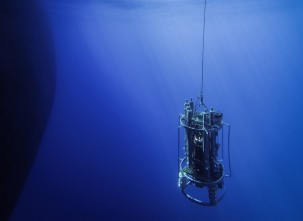
    Aboard a ship at the Mid-Atlantic Ridge, scientists are studying how the deepest and coldest waters mix with shallower waters, gaining heat in the process.

  • Tubewells to the Rescue

    Tubewells to the Rescue

    The resistivity testing was hampered by bad roads and flooded fields. The augering was proving similarly difficult in the thick muds of the abandoned channel. It was time to change to our alternative plan: drilling with tube wells. That worked better and we had turned a corner.

  • Climate Change Leaves Its Mark on the Sea Floor? Maybe Not

    Climate Change Leaves Its Mark on the Sea Floor? Maybe Not

    A new study in Science questions the provocative idea that climate change may shape the texture of the sea floor. A Snickers bar helps explain what’s really going on.

  • Come Aboard: A Look at the R/V Marcus Langseth

    Come Aboard: A Look at the R/V Marcus Langseth

    A new video produced by Columbia University tells the story of what the research vessel Marcus G. Langseth is all about.

  • Pani, Pani Everywhere

    Pani, Pani Everywhere

    Heading out to our field area, we discovered that the abandoned river valley we planned to study was completely flooded. There was pani—the Bangla word for water—everywhere.

  • Melting Ice, Suntanned Rocks and an Award-Winning Postdoc

    Melting Ice, Suntanned Rocks and an Award-Winning Postdoc

    Nicolás Young was just named a winner of a 2015 Blavatnik Award for his work measuring ice sheets in changing climates of the past. His new projects are taking glacier tracking to the next level.

  • Bangladesh and India, Too

    Bangladesh and India, Too

    Returning to Bangladesh for additional fieldwork, I stopped off in India for several meetings, but we found time for some sightseeing, too. We were able to see the Qutub Minar complex in Delhi as well as the Taj Mahal and Agra Fort in Agra. Plus all the meetings in Delhi, Kolkata and Dhaka were very…

  • Anatomy of an ‘Ice Station’

    Anatomy of an ‘Ice Station’

    Completing an “Ice Station” means collecting samples over a wide range of Arctic water and ice conditions. Each station means a major orchestration of people and resources.

  • Photo Essay: Rising Islands, Monster Wave

    Photo Essay: Rising Islands, Monster Wave

    Researchers at Lamont-Doherty Earth Observatory have published a new study showing that a tsunami of unimaginable size swept over the Cape Verde Islands some 73,000 years ago. The discovery may have implications for the potential for modern hazards.  READ THE FULL SCIENTIFIC STORY

Blue banner with kids and Earth photos. Text: "Lamont-Doherty Earth Observatory Open House, Saturday, October 17, 2026, 10am-4pm.

On Saturday, October 17, 2026 from 10am to 4pm, Lamont-Doherty Earth Observatory Open House—our biggest, best science fun and discovery event of the year—will take place on our beautiful campus in Palisades, NY. Mark your calendar and join us for this free, family-friendly celebration of science! RSVP Today!

  • Exploring Rugged Hills & Turbulent Waters 4,500 Meters Down

    Exploring Rugged Hills & Turbulent Waters 4,500 Meters Down

    Aboard a ship at the Mid-Atlantic Ridge, scientists are studying how the deepest and coldest waters mix with shallower waters, gaining heat in the process.

  • Tubewells to the Rescue

    Tubewells to the Rescue

    The resistivity testing was hampered by bad roads and flooded fields. The augering was proving similarly difficult in the thick muds of the abandoned channel. It was time to change to our alternative plan: drilling with tube wells. That worked better and we had turned a corner.

  • Climate Change Leaves Its Mark on the Sea Floor? Maybe Not

    Climate Change Leaves Its Mark on the Sea Floor? Maybe Not

    A new study in Science questions the provocative idea that climate change may shape the texture of the sea floor. A Snickers bar helps explain what’s really going on.

  • Come Aboard: A Look at the R/V Marcus Langseth

    Come Aboard: A Look at the R/V Marcus Langseth

    A new video produced by Columbia University tells the story of what the research vessel Marcus G. Langseth is all about.

  • Pani, Pani Everywhere

    Pani, Pani Everywhere

    Heading out to our field area, we discovered that the abandoned river valley we planned to study was completely flooded. There was pani—the Bangla word for water—everywhere.

  • Melting Ice, Suntanned Rocks and an Award-Winning Postdoc

    Melting Ice, Suntanned Rocks and an Award-Winning Postdoc

    Nicolás Young was just named a winner of a 2015 Blavatnik Award for his work measuring ice sheets in changing climates of the past. His new projects are taking glacier tracking to the next level.

  • Bangladesh and India, Too

    Bangladesh and India, Too

    Returning to Bangladesh for additional fieldwork, I stopped off in India for several meetings, but we found time for some sightseeing, too. We were able to see the Qutub Minar complex in Delhi as well as the Taj Mahal and Agra Fort in Agra. Plus all the meetings in Delhi, Kolkata and Dhaka were very…

  • Anatomy of an ‘Ice Station’

    Anatomy of an ‘Ice Station’

    Completing an “Ice Station” means collecting samples over a wide range of Arctic water and ice conditions. Each station means a major orchestration of people and resources.

  • Photo Essay: Rising Islands, Monster Wave

    Photo Essay: Rising Islands, Monster Wave

    Researchers at Lamont-Doherty Earth Observatory have published a new study showing that a tsunami of unimaginable size swept over the Cape Verde Islands some 73,000 years ago. The discovery may have implications for the potential for modern hazards.  READ THE FULL SCIENTIFIC STORY