Earth Sciences78
-

Indian Sundarban
We arrived in Kolkata, and filmed by the Hooghly River. While it is no longer the main channel of the Ganges, it is still the Holy Ganges and we saw a funeral procession spreading ashes of a loved one while filming there. Then a 5 hour trip by car, ferry, rickshaw and boat to the…
-

On Our Way: Avoiding the Storm
We are now aboard the R/V Palmer and on our way to East Antarctica. Due to two storms in our direct way we are heading west first to go around the storms and we’ll then head south on their backside.
-

Geology and Filming in Mizoram
In the small town of Kolasib, we stayed in Hotel Cloud 9. I had been told since I was a child that I was always off on Cloud 9 and now I was actually here. However, the electricity wasn’t for the first few hours, so showers were cold, but the dinner was hot.
-

Soon-to-End Mercury Mission May Hold Clues to Earth’s Evolution
NASA’s MESSENGER spacecraft has been orbiting Mercury for the last four years, giving scientists an unprecedented look at our solar system’s innermost planet. But now the craft’s fuel supply is exhausted; inexorably drawn in by Mercury’s gravity, it is scheduled to crash in April. Sean Solomon, director of Columbia University’s Lamont-Doherty Earth Observatory, has been…
-

Mapping Faults Hidden below Lake Malawi
Marine seismic studies like ours are routinely done in the oceans using scientific equipment and research vessels outfitted specially for these purposes. Collecting comparable data in a great lake in Africa requires creative repurposing of available vessels and adaption of scientific equipment.
-

Adapting to the Unexpected
I grew up outside of Chicago and I wasn’t a Boy Scout, so sometimes I feel like I missed out on learning the type of practical—albeit rarely used—skills that would have garnered merit badges. Now that I’m nearing the conclusion of my fourth research expedition at sea, I think I have amassed a few badge-worthy…
-

Tiger Footprints and Dhaka
We finished our time in the Sundarbans with a silent boat ride in a tidal creek. The highlight was sets of fresh tiger footprints. We then had a long sail back to Dhaka with only one stop at a village. We then had a whirlwind tour of Old Dhaka with enough shopping to send the…
-

Preparing for Seven Weeks at Sea
For our spring expedition, NBP1503, to the margin of East Antarctica we will live and work on board the United States icebreaker Nathaniel B. Palmer. Together we are eight scientists, 10 science support staff and 19 crew members of the ship’s crew.
-

Salt Kilns and Landscape Change in the Sundarbans
Leaving Hiron Point, we headed east through the Sundarbans to Kotka. At Kotka the students had walks through the forest seeing deer, wild boar and monkeys, while a smaller group also sampled near a set of 300 year old salt making kilns for OSL dating. We managed to finish while the tide inundated the site.…


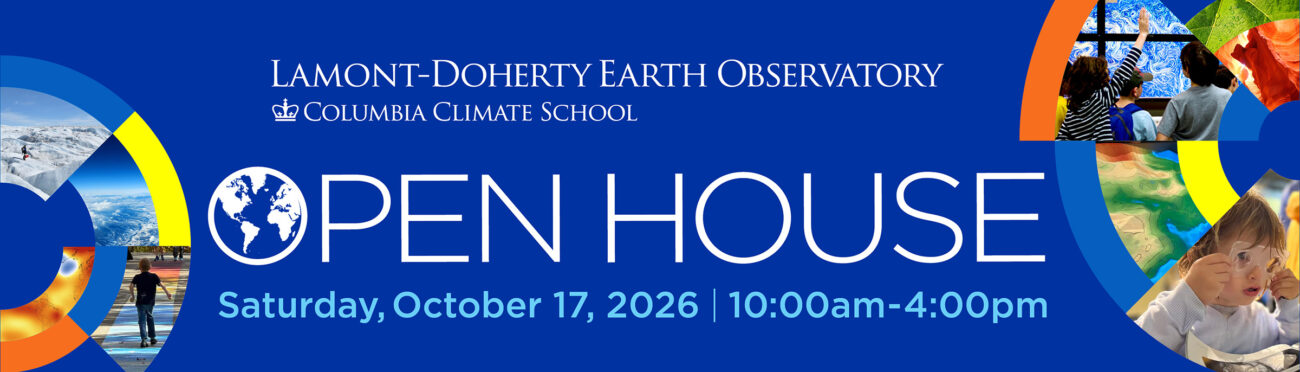
On Saturday, October 17, 2026 from 10am to 4pm, Lamont-Doherty Earth Observatory Open House—our biggest, best science fun and discovery event of the year—will take place on our beautiful campus in Palisades, NY. Mark your calendar and join us for this free, family-friendly celebration of science! RSVP Today!
