Earth Sciences80
-

OUTPACE Cruise: Setting Sail
The OUTPACE 2015 cruise has set sail on February 20! We left port in Nouméa at 8:30 a.m. last Friday morning. I lost sight of land around 10 a.m. or so, and I won’t see it again until we return to port in Papeete, Tahiti on April 3.
-

Webcast Tonight: Focus on Extreme Weather
The Columbia Initiative on Extreme Weather and Climate brings together experts across the university to integrate research into the physical science of these events with research on their impacts on human society and engineering solutions. The initiative kicks off this evening with a panel discussion, “Preparing for Extreme Weather: Global Lessons from Sandy,” from 6-7:30…
-

Bonjour de Nouméa!
Scientists from research institutions around the world are participating in a research expedition aboard the R/V L ‘Atalante to study how microorganisms in the South Pacific Ocean influence the carbon cycle. Lamont-Doherty Earth Observatory graduate student Kyle Frischkorn is among them; this is the first in a series of posts in which Kyle shares what…
-

Photo Essay: Fire and Ice off Cascadia
A team of scientists traveled to the Pacific Northwest aboard the R/V Atlantis last fall to investigate whether the waxing and waning of ice ages and volcanic eruptions are somehow related.
-

Lamont-Doherty Earth Observatory Honors Recipients of Science Awards
From October 2013 to December 2014, a total of 49 professors, scientists and students who are part of the Lamont-Doherty Earth Observatory community were recognized for outstanding achievements in their field. The acknowledgements in education and research included fellowships, medals and awards from many of the top science institutions in the world.
-
Geologist Who Modernized Volcanology Wins the 2015 Vetlesen Prize
Volcanoes can have multiple personalities, peaceful one minute, explosive the next. A geologist who has untangled these complicated states on land and at sea, improving our ability to see deadly eruptions coming, will receive the 2015 Vetlesen Prize. Stephen Sparks, a volcanologist at the University of Bristol, will be awarded a medal and $250,000 at…
-

Photo Essay: Sleeping Giant off West Africa Awakes
Nearly 20 years after its last eruption, in 1995, Fogo volcano off West Africa awoke on Nov. 26. Within a week, it had buried two villages under scorching lava, leaving 1,200 people homeless. Lamont-Doherty geologist Ricardo Ramalho was there to document the action and help advise local government.
-

Exploring Antarctica by Sea, Air and Land
Lamont Doherty Earth Observatory scientists are among the many researchers currently doing fieldwork in Antarctica. They’re participating in expeditions near, above and on the continent, doing critical studies that will advance understanding of Antarctica’s land and sea processes.
-

Ice Loss in West Antarctic is Speeding Up
Glaciers in one part of West Antarctica are melting at triple the rate of a decade ago and have become the most significant contributor to sea level rise in that region, a new study says. The study found that the glaciers in the Amundsen Sea Embayment of West Antarctica have shrunk by an average of…


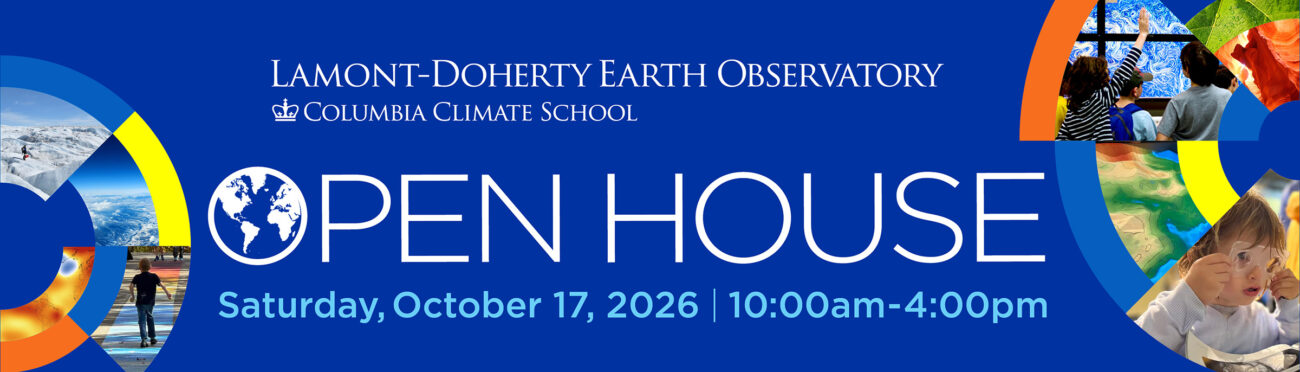
On Saturday, October 17, 2026 from 10am to 4pm, Lamont-Doherty Earth Observatory Open House—our biggest, best science fun and discovery event of the year—will take place on our beautiful campus in Palisades, NY. Mark your calendar and join us for this free, family-friendly celebration of science! RSVP Today!
