Earth Sciences84
-

The Columbia Geology Tour: Stories in the Stones
For the last decade or so, Columbia University geologist David Walker has led students and colleagues on a tour of the geologic gems hiding within Columbia’s campus. Along the way, Walker finds evidence of how life on Earth has evolved over 4.5 billion years.
-
Kenneth Hunkins, Arctic Oceanographer
While Adrift on Ice Floes, He Charted Unexplored Depths
-

Photo Essay: Studying Fracking’s Effects, Up Close and Personal
Ten years ago, hydraulic fracturing barely existed. Today 45,000 fracked wells produce natural gas, providing energy for millions of homes and businesses, and nearly a quarter of the nation’s electricity. But scientists are far behind in understanding how this boom affects people near wells. Geochemists Beizhan Yan and James Ross of Columbia University’s Lamont-Doherty Earth…
-

Erosion, Then Explosion
When viewing The Great Unconformity, The result of a vast denudation, One feels a new sense of enormity … And above it lie critters crustacean!
-

Faint Young Sun
Through an ancient looking-glass, Perhaps you’d see more H2 gas, And if with denser gas collided, Greater greenhouse warmth provided.
-

Reflections of a Changing North
No one ever leaves the field the same way they entered it. Yes there is a new layer of mud on equipment, the expected wear and tear on your gear and your physical being. But also, an intangible shift in perspective.
-

Beneath an Icelandic Glacier, Another Eruption Brewing
The 2,000-meter tall Bárðarbunga volcano in Iceland is at risk of eruption, an event that could send a cloud of ash and steam high into the atmosphere and cause extensive disruptions in air travel, among other effects, according to media reports. Earth Institute scientist Ben Orlove looks into it on the Glacier Hub blog.
-

Bottom Feeders
Graduate students, microbe goo … What is it that links the two? It seems that both life forms are found Where electron donors (food) abound!
-

Seismic Stomp
Lamont-Doherty Earth Observatory graduate student Natalie Accardo recently returned from Tanzania and Malawi, where she installed seismic instruments in both countries alongside Lamont seismologists Donna Shillington and Jim Gaherty. Natalie produced this video, which shows the scientists and their Tanzanian colleagues conducting a “stomp test” at one of their sites in the Tanzanian village of…


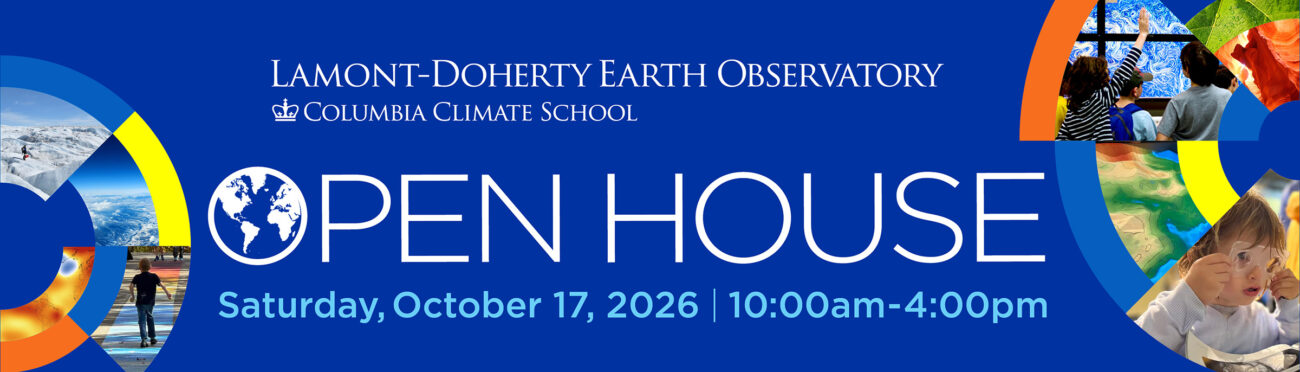
On Saturday, October 17, 2026 from 10am to 4pm, Lamont-Doherty Earth Observatory Open House—our biggest, best science fun and discovery event of the year—will take place on our beautiful campus in Palisades, NY. Mark your calendar and join us for this free, family-friendly celebration of science! RSVP Today!
