State of the Planet

News from the Columbia Climate School

General152

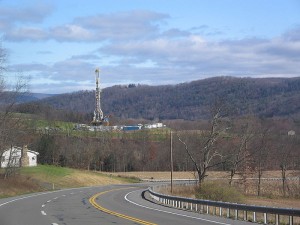
  • A Controversy: Fracturing in the Marcellus Shale

    A Controversy: Fracturing in the Marcellus Shale

    The organic-rich source rock of the Marcellus Shale is an on-going target for massive gas extraction. Advances in horizontal drilling and hydraulic fracturing, or hydrofracking, have made this extensive area of Marcellus black shale one of the largest unconventional and widely controversial gas operations in the United States today.

  • A New Spring Course: Bangladesh: Life on a Tectonically Active Delta

    During the Spring 2012 semester, the Undergraduate Program in Sustainable Development is offering a new and unique senior Capstone Workshop that explores the world’s largest delta in Bangladesh as an example of development challenges in the 21st century.

  • ESP Students Present Initial Findings for Clients at Midterm Presentations

    ESP Students Present Initial Findings for Clients at Midterm Presentations

    “The midterm briefings showcase each Workshop’s central analytic challenge and progress to date, but what I like best is the students’ palpable excitement at working for a real world client on a pressing problem,” stated Professor Sara Tjossem, who is the faculty advisor for the Workshop project “Building the First Sustainability Rating System for Local…

  • “The Population Bomb: Defused or Still Ticking?” Seminar Recap

    “The Population Bomb: Defused or Still Ticking?” Seminar Recap

    “Thank you for coming on this gorgeous day, to sit in an airless, lightless room and discuss how to save the world,” said John Mutter, director of Columbia’s PhD in Sustainable Development and a member of the Earth Institute faculty, in welcoming the audience of the Sustainable Development Seminar, “The Population Bomb: Defused or Still…

  • Bottom Up or Top Down? Another Way to Look at an Air Quality Problem

    Bottom Up or Top Down? Another Way to Look at an Air Quality Problem

    While not all countries have the financial wherewithal and capacity to deploy ground-based instruments for air-quality monitoring, and for some countries monitoring information is not available to the public, for example, through health advisories, another way exists to assess air pollution levels: through satellites.

  • GrowNYC Speaks to CU Undergrads about Environmental Education Efforts

    Amanda Gentile, Development and Communications Manager for GrowNYC, talks to undergrads about the non-profit that has been improving NYC’s environment for forty years.

  • Practicing What You Preach: Sustainability on Columbia’s Campus

    Consilience, Columbia EcoReps and Green Umbrella are among the many groups on campus working to provide a public platform to engage the global community in thinking more broadly, thoroughly, and analytically about sustainable development

  • Indian Point: Safe, Secure and Vital or an Unacceptable Risk?

    Indian Point: Safe, Secure and Vital or an Unacceptable Risk?

    The owners of Indian Point nuclear power plant want to re-license the facility for 20 years. Opponents say the plant is unsafe and we can do without its electricity. Supporters say it’s safe, and we need the power.

  • MPA Student Prepares for Green Building Career

    MPA Student Prepares for Green Building Career

    “I hope to combine the technical, industry-specific skills with the policy and management experience that I have gained from the program to pursue a career here in NYC working with green buildings and energy efficiency.” Alyssa Zucker joined the MPA in Environmental Science and Policy Class of 2012 because she saw the program’s dual emphasis…

Photo of the Earth from space with the text "Lamont at AGU25" on top.

AGU25, the premier Earth and space science conference, takes place December 15-19, 2025 in New Orleans, Louisiana. This year’s theme—Where Science Connects Us—puts in focus how science depends on connection, from the lab to the field to the ballot box. Once again, Lamont-Doherty Earth Observatory and Columbia Climate School scientists, experts, students, and educators are playing an active role, sharing our research and helping shape the future of our planet. #AGU25 Learn More

  • A Controversy: Fracturing in the Marcellus Shale

    A Controversy: Fracturing in the Marcellus Shale

    The organic-rich source rock of the Marcellus Shale is an on-going target for massive gas extraction. Advances in horizontal drilling and hydraulic fracturing, or hydrofracking, have made this extensive area of Marcellus black shale one of the largest unconventional and widely controversial gas operations in the United States today.

  • A New Spring Course: Bangladesh: Life on a Tectonically Active Delta

    During the Spring 2012 semester, the Undergraduate Program in Sustainable Development is offering a new and unique senior Capstone Workshop that explores the world’s largest delta in Bangladesh as an example of development challenges in the 21st century.

  • ESP Students Present Initial Findings for Clients at Midterm Presentations

    ESP Students Present Initial Findings for Clients at Midterm Presentations

    “The midterm briefings showcase each Workshop’s central analytic challenge and progress to date, but what I like best is the students’ palpable excitement at working for a real world client on a pressing problem,” stated Professor Sara Tjossem, who is the faculty advisor for the Workshop project “Building the First Sustainability Rating System for Local…

  • “The Population Bomb: Defused or Still Ticking?” Seminar Recap

    “The Population Bomb: Defused or Still Ticking?” Seminar Recap

    “Thank you for coming on this gorgeous day, to sit in an airless, lightless room and discuss how to save the world,” said John Mutter, director of Columbia’s PhD in Sustainable Development and a member of the Earth Institute faculty, in welcoming the audience of the Sustainable Development Seminar, “The Population Bomb: Defused or Still…

  • Bottom Up or Top Down? Another Way to Look at an Air Quality Problem

    Bottom Up or Top Down? Another Way to Look at an Air Quality Problem

    While not all countries have the financial wherewithal and capacity to deploy ground-based instruments for air-quality monitoring, and for some countries monitoring information is not available to the public, for example, through health advisories, another way exists to assess air pollution levels: through satellites.

  • GrowNYC Speaks to CU Undergrads about Environmental Education Efforts

    Amanda Gentile, Development and Communications Manager for GrowNYC, talks to undergrads about the non-profit that has been improving NYC’s environment for forty years.

  • Practicing What You Preach: Sustainability on Columbia’s Campus

    Consilience, Columbia EcoReps and Green Umbrella are among the many groups on campus working to provide a public platform to engage the global community in thinking more broadly, thoroughly, and analytically about sustainable development

  • Indian Point: Safe, Secure and Vital or an Unacceptable Risk?

    Indian Point: Safe, Secure and Vital or an Unacceptable Risk?

    The owners of Indian Point nuclear power plant want to re-license the facility for 20 years. Opponents say the plant is unsafe and we can do without its electricity. Supporters say it’s safe, and we need the power.

  • MPA Student Prepares for Green Building Career

    MPA Student Prepares for Green Building Career

    “I hope to combine the technical, industry-specific skills with the policy and management experience that I have gained from the program to pursue a career here in NYC working with green buildings and energy efficiency.” Alyssa Zucker joined the MPA in Environmental Science and Policy Class of 2012 because she saw the program’s dual emphasis…