General89
-
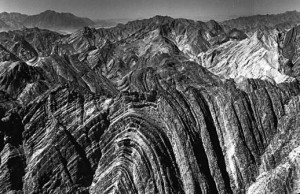
Orogenous Zones: How Rock Flows
The architects of Columbia’s modern Northwest Tower, at the corner of Broadway and 120th Street, made good use of some beautiful stones. In their polished and swirling surfaces, they tell a story of the clash of continents and the processes by which mountains are made.
-

Chemical silence
What if you couldn’t smell smoke? Or detect flirty signs from a bloke? Imagine the cost Of faculties lost, Of signals that deafness would cloak …
-

Reclaiming Butte through New Uses for Reclaimed Areas
This weekend, students from Montana State University in Bozeman and Columbia University in New York gathered to generate ideas to use Butte’s reclaimed Superfund areas as more than vast swaths of grassland, but as places to foster community participation.
-

Seeing Red: The Great Oxygenation Event
In Part 4 of the Columbia Geology Tour, David Walker of the Lamont-Doherty Earth Observatory explores the source of the red sandstone of Russell Hall at the Columbia Teachers College on 120th Street.
-

Lamont-Doherty Director Awarded National Medal of Science
Sean Solomon, director of the Lamont-Doherty Earth Observatory and a geophysicist who has spent much of his career studying Earth’s neighboring planets as well as the Earth itself, will receive the National Medal of Science.
-

MS Students Supplement Coursework with Trip to Hunt’s Point Market
On Wednesday, September 17, students in Professor Lynnette Widder’s Hungry City Workshop participated in a trip to the Hunts Point Produce Market in the South Bronx, the largest produce market in the world. Professor Widder, whose course focuses on understanding urban resource flows in qualitative and quantitative terms, sponsored the trip to give students a…
-

Internship Opportunity for Millennium Villages
As the Earth Institute’s monitoring and evaluation team gears up for its final evaluation of 10 Millennium Village sites, we are currently recruiting a qualitative research assistant intern to support field researchers conducting process evaluation studies across East and West Africa.
-

The Art and Science of Climate Change
This fall, the photographs of Sebastião Salgado provide the springboard for an ambitious program of panel discussions, lectures and film screenings addressing the urgent issue of climate change, at the International Center of Photography in New York City.
-
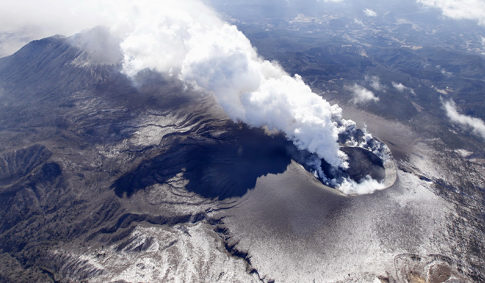
A Drone’s Eye View of Another Active Japanese Volcano
The day before Japan’s Ontake volcano blew its top, Lamont volcanologist Einat Lev visited Shinmoedake, another active volcano in Japan, to film the aftermath of a recent eruption there. Three years after Shinmoe came to life with a steam explosion similar to Ontake’s, the volcano continues to spew poisonous sulfur dioxide gas.


COP31, the 2026 United Nations Climate Change Conference, aims to advance dialogue, strengthen consensus, and accelerate climate action on a global scale. From November 9–20, 2026 in Antalya, Türkiye, heads of state, ministers, scientists, business leaders, and civil society will gather to advance efforts in emission targets, climate finance, and adaptation and resilience. Once again, our experts, students, and global thought leaders from Columbia Climate School and across Columbia University are contributing to key events, sharing insights, and helping shape the dialogue toward ambitious, science-based solutions. Learn More
