State of the Planet

News from the Columbia Climate School

Natural Disasters39

  • Rising Temperatures Lead to Increased Fire Risk in Indonesia

    Rising Temperatures Lead to Increased Fire Risk in Indonesia

    A new paper shows that rising temperatures have increased the risk of fires even during non-drought years in Indonesia, possibly making mild fire seasons in the country a thing of the past.

  • Oroville Dam Crisis is a Call to Action on U.S. Water Infrastructure

    Oroville Dam Crisis is a Call to Action on U.S. Water Infrastructure

    Columbia Water Center director Upmanu Lall suggests that we see the Oroville crisis as a call to action to evaluate and address the challenges facing the nation’s dam infrastructure.

  • Sampling on the Ganges and Brahmaputra Rivers

    Sampling on the Ganges and Brahmaputra Rivers

    The final phase of our revolves around visiting chars, sandy river islands, on the Ganges and Brahmaputra River. Chris and Dan are making measurements of soil salinity and moisture and spectra of the soil reflectance, while Liz and I collected samples for OSL dating and understanding the OSL properties of the river sediments here. This…

  • Side Trip to Hiron Point, Sundarbans

    Side Trip to Hiron Point, Sundarbans

    After helping Chris an Dan with soil salinity and reflectance measurement, Humayun, Liz and I moved onto the smaller M.B. Mewl to sail through the Sundarban Mangrove Forest to service our GPS station at Hiron Point.

  • Equipment Repairs in SW Bangladesh

    Equipment Repairs in SW Bangladesh

    Humayun, Liz and I headed to Khulna in SW Bangladesh a day after Chris and Dan. Along the way, we stopped at our sediment compaction meter for surveying and removing the GPS, and getting feasted by the family that hosts the system.

  • Back to Bangladesh to Date Earthquakes and More

    Back to Bangladesh to Date Earthquakes and More

    I’m back in Bangladesh with a small team after a year and a half away. One different is a police escort as a result of the attacks last year. We start by successfully sampling river sediments to correct the date of an earthquake that caused a river to shift over 3,500 years ago. We also…

  • Increasing Tornado Outbreaks: Is Climate Change Responsible?

    Increasing Tornado Outbreaks: Is Climate Change Responsible?

    In a paper published in the journal Science, researchers looked at increasing trends in the severity of tornado outbreaks, measured by the number of tornadoes per outbreak. They found that these trends are increasing fastest for the most extreme outbreaks.

  • Dammed Funding for U.S. Dams

    Dammed Funding for U.S. Dams

    Across the nation, large-scale water infrastructure such as dams have provided a multitude of services, from electric power and water reservoirs to flood control and containment of pollution. But federal investments in large water infrastructure projects have largely been curtailed over the past few decades.

  • Climate Denial and Sea Level Rise

    Climate Denial and Sea Level Rise

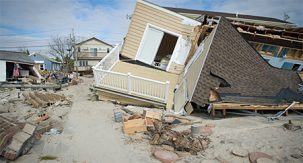
    The need to adapt to the current impact of climate change is already obvious in many cities and work is already underway to make cities more resilient to extreme weather events. New York City has begun to implement a resiliency plan that will cost at least $20 billion over the next decade.

Banner with images representing environmental issues and text "You Asked: Our Scientists and Experts Answer Your Burning Questions."

You Asked invites you to share your most pressing questions about climate, science, and sustainability. Lamont-Doherty Earth Observatory and Columbia Climate School experts will respond with clear, evidence-based answers. Pose your questions and story ideas!

  • Rising Temperatures Lead to Increased Fire Risk in Indonesia

    Rising Temperatures Lead to Increased Fire Risk in Indonesia

    A new paper shows that rising temperatures have increased the risk of fires even during non-drought years in Indonesia, possibly making mild fire seasons in the country a thing of the past.

  • Oroville Dam Crisis is a Call to Action on U.S. Water Infrastructure

    Oroville Dam Crisis is a Call to Action on U.S. Water Infrastructure

    Columbia Water Center director Upmanu Lall suggests that we see the Oroville crisis as a call to action to evaluate and address the challenges facing the nation’s dam infrastructure.

  • Sampling on the Ganges and Brahmaputra Rivers

    Sampling on the Ganges and Brahmaputra Rivers

    The final phase of our revolves around visiting chars, sandy river islands, on the Ganges and Brahmaputra River. Chris and Dan are making measurements of soil salinity and moisture and spectra of the soil reflectance, while Liz and I collected samples for OSL dating and understanding the OSL properties of the river sediments here. This…

  • Side Trip to Hiron Point, Sundarbans

    Side Trip to Hiron Point, Sundarbans

    After helping Chris an Dan with soil salinity and reflectance measurement, Humayun, Liz and I moved onto the smaller M.B. Mewl to sail through the Sundarban Mangrove Forest to service our GPS station at Hiron Point.

  • Equipment Repairs in SW Bangladesh

    Equipment Repairs in SW Bangladesh

    Humayun, Liz and I headed to Khulna in SW Bangladesh a day after Chris and Dan. Along the way, we stopped at our sediment compaction meter for surveying and removing the GPS, and getting feasted by the family that hosts the system.

  • Back to Bangladesh to Date Earthquakes and More

    Back to Bangladesh to Date Earthquakes and More

    I’m back in Bangladesh with a small team after a year and a half away. One different is a police escort as a result of the attacks last year. We start by successfully sampling river sediments to correct the date of an earthquake that caused a river to shift over 3,500 years ago. We also…

  • Increasing Tornado Outbreaks: Is Climate Change Responsible?

    Increasing Tornado Outbreaks: Is Climate Change Responsible?

    In a paper published in the journal Science, researchers looked at increasing trends in the severity of tornado outbreaks, measured by the number of tornadoes per outbreak. They found that these trends are increasing fastest for the most extreme outbreaks.

  • Dammed Funding for U.S. Dams

    Dammed Funding for U.S. Dams

    Across the nation, large-scale water infrastructure such as dams have provided a multitude of services, from electric power and water reservoirs to flood control and containment of pollution. But federal investments in large water infrastructure projects have largely been curtailed over the past few decades.

  • Climate Denial and Sea Level Rise

    Climate Denial and Sea Level Rise

    The need to adapt to the current impact of climate change is already obvious in many cities and work is already underway to make cities more resilient to extreme weather events. New York City has begun to implement a resiliency plan that will cost at least $20 billion over the next decade.