State of the Planet

News from the Columbia Climate School

Natural Disasters48

  • Perspective: Q&A with Development Practitioner Ignacio Urrutia

    Perspective: Q&A with Development Practitioner Ignacio Urrutia

    By Sarayu Adeni With careful planning and a methodical approach, Ignacio Urrutia, MPA-DP ‘13, aims to solve problems before they happen. Currently working in South Asia’s Disaster Risk Management (DRM) and Climate Change Unit at the World Bank, he brought over five years of experience at the World Bank and UNDP in Washington, D.C. and…

  • A Different Climate Change Message, on Stage Nov. 2-3

    A Different Climate Change Message, on Stage Nov. 2-3

    The Superhero Clubhouse eco-theater group will be putting on a double-billed performance –Don’t Be Sad Flying Ace! and Field Trip: A Climate Cabaret- on November 2nd and 3rd at the Theater at the 14th St. Y, 344 East 14th Street (between 1st and 2nd Aves).

  • Maps Made for Disaster Management

    Maps Made for Disaster Management

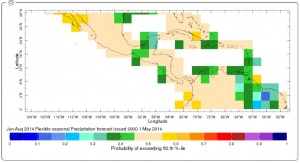
    Newly redesigned interactive mapping tools are helping the Red Cross make planning and operational decisions ahead of droughts and extreme weather.

  • Summer Heat Wave May Have Triggered Landslide on Lonely Alaskan Glacier

    Summer Heat Wave May Have Triggered Landslide on Lonely Alaskan Glacier

    A massive landslide in Alaska’s snowy Wrangell-St. Elias mountain range in July may have been caused by a summer heat wave making some slopes more vulnerable to collapse, says the Lamont-Doherty scientist who first discovered the avalanche.

  • On Gulf Coast, Organizing Youth to Face Disaster

    On Gulf Coast, Organizing Youth to Face Disaster

    A new youth development and disaster recovery program, which grew out of research on the Deepwater Horizon oil spill, will debut in five Gulf Coast high schools. The project will bring together teens to create and share resources to help communities recover from disasters.

  • What We Learned From Hurricane Sandy

    What We Learned From Hurricane Sandy

    Earth Institute experts weigh in as the one-year anniversary of Hurricane Sandy approaches.

  • Conservation & Environmental Sustainability – Fall 2013 Courses

    Conservation & Environmental Sustainability – Fall 2013 Courses

    The Earth Institute Center for Environmental Sustainability (EICES) at Columbia University provides executive training in environmental sustainability through courses in science, economics and policy. We invite you to join our leading experts and practitioners, strengthen your understanding of human-ecosystem interactions, and become an effective environmental leader and decision-maker.

  • Chasing Tornadoes: A Close Call with a Deadly Storm

    Chasing Tornadoes: A Close Call with a Deadly Storm

    Tornadoes are rare at any one location, but out of anywhere in the United States, the central Oklahoma area has the greatest risk—and this day would prove no exception.

  • Tides Play a Role in Triggering Undersea Earthquakes

    Tides Play a Role in Triggering Undersea Earthquakes

    Can shifting tides trigger earthquakes? Research done by Maya Tolstoy, a geophysicist at Lamont-Doherty Earth Observatory, suggests they do.

Colorful icons representing nature, sustainable living, and renewable energy with text "Earth Day 2026"

The first Earth Day in 1970 ignited a movement to stop polluting our planet. Today, our scientists and experts are tackling the most pressing challenges to achieve real-world impact. This Earth Day, join us in our commitment to realizing a just and sustainable future for our planet. Visit our Earth Day website for ideas, resources, and inspiration.

  • Perspective: Q&A with Development Practitioner Ignacio Urrutia

    Perspective: Q&A with Development Practitioner Ignacio Urrutia

    By Sarayu Adeni With careful planning and a methodical approach, Ignacio Urrutia, MPA-DP ‘13, aims to solve problems before they happen. Currently working in South Asia’s Disaster Risk Management (DRM) and Climate Change Unit at the World Bank, he brought over five years of experience at the World Bank and UNDP in Washington, D.C. and…

  • A Different Climate Change Message, on Stage Nov. 2-3

    A Different Climate Change Message, on Stage Nov. 2-3

    The Superhero Clubhouse eco-theater group will be putting on a double-billed performance –Don’t Be Sad Flying Ace! and Field Trip: A Climate Cabaret- on November 2nd and 3rd at the Theater at the 14th St. Y, 344 East 14th Street (between 1st and 2nd Aves).

  • Maps Made for Disaster Management

    Maps Made for Disaster Management

    Newly redesigned interactive mapping tools are helping the Red Cross make planning and operational decisions ahead of droughts and extreme weather.

  • Summer Heat Wave May Have Triggered Landslide on Lonely Alaskan Glacier

    Summer Heat Wave May Have Triggered Landslide on Lonely Alaskan Glacier

    A massive landslide in Alaska’s snowy Wrangell-St. Elias mountain range in July may have been caused by a summer heat wave making some slopes more vulnerable to collapse, says the Lamont-Doherty scientist who first discovered the avalanche.

  • On Gulf Coast, Organizing Youth to Face Disaster

    On Gulf Coast, Organizing Youth to Face Disaster

    A new youth development and disaster recovery program, which grew out of research on the Deepwater Horizon oil spill, will debut in five Gulf Coast high schools. The project will bring together teens to create and share resources to help communities recover from disasters.

  • What We Learned From Hurricane Sandy

    What We Learned From Hurricane Sandy

    Earth Institute experts weigh in as the one-year anniversary of Hurricane Sandy approaches.

  • Conservation & Environmental Sustainability – Fall 2013 Courses

    Conservation & Environmental Sustainability – Fall 2013 Courses

    The Earth Institute Center for Environmental Sustainability (EICES) at Columbia University provides executive training in environmental sustainability through courses in science, economics and policy. We invite you to join our leading experts and practitioners, strengthen your understanding of human-ecosystem interactions, and become an effective environmental leader and decision-maker.

  • Chasing Tornadoes: A Close Call with a Deadly Storm

    Chasing Tornadoes: A Close Call with a Deadly Storm

    Tornadoes are rare at any one location, but out of anywhere in the United States, the central Oklahoma area has the greatest risk—and this day would prove no exception.

  • Tides Play a Role in Triggering Undersea Earthquakes

    Tides Play a Role in Triggering Undersea Earthquakes

    Can shifting tides trigger earthquakes? Research done by Maya Tolstoy, a geophysicist at Lamont-Doherty Earth Observatory, suggests they do.