Press Release11
-

Bottled Water Can Contain Hundreds of Thousands of Previously Uncounted Tiny Plastic Bits, Study Finds
Using a new technique, scientists have been able to identify extremely minute plastic fragments in bottled water, 10 times more than previously counted.
-

A New 66 Million-Year History of Carbon Dioxide Offers Little Comfort for Today
Scientists have produced a new curve of how atmospheric carbon dioxide affects climate. It makes clear that its effects can be long lasting.
-

American Geophysical Union 2023: Key Research From the Columbia Climate School
A guide to notable research to be presented at the world’s largest gathering of earth and space scientists.
-

In Many Major Crop Regions, Workers Plant and Harvest in Spiraling Heat and Humidity
The ability of farmworkers to cultivate major crops including rice and maize may be compromised if climate trends continue.
-

In Massive Project, Scientists to Probe Deposits Beneath West Antarctic Ice Sheet
Drilling into sub-ice deposits left behind during times when the Earth was warmer than today should provide insights into how a massive ice sheet will react to human-induced climate change.
-

World Temperatures Will Blow Past Paris Goals This Decade, Asserts New Study
James Hansen warned the world in the 1980s that global warming was coming. Now, he is warning that it is barreling down even faster than expected.
-

Rising Seas Will Tighten Vise on Miami Even for People Who Are Not Flooded, Says Study
Most research on rising sea levels focuses on the direct effects of inundation. A new study adds social and economic vulnerabilities to the equation.
-

Study Identifies Jet-Stream Pattern That Locks in Extreme Winter Cold, Wet Spells
Recently, scientists connected giant waves in the global jet stream to hot, dry spells gripping widely separated parts of the planet at the same time. Now they have done the same for winter weather.
-

Study Reveals Long-Distance Levers Behind U.S. Southwest Drought—and a Dry Future
The U.S. Southwest has suffered a historic drought over the past two decades. A new study elucidates the drivers, and says conditions will never return to those of the relatively wet 20th century.


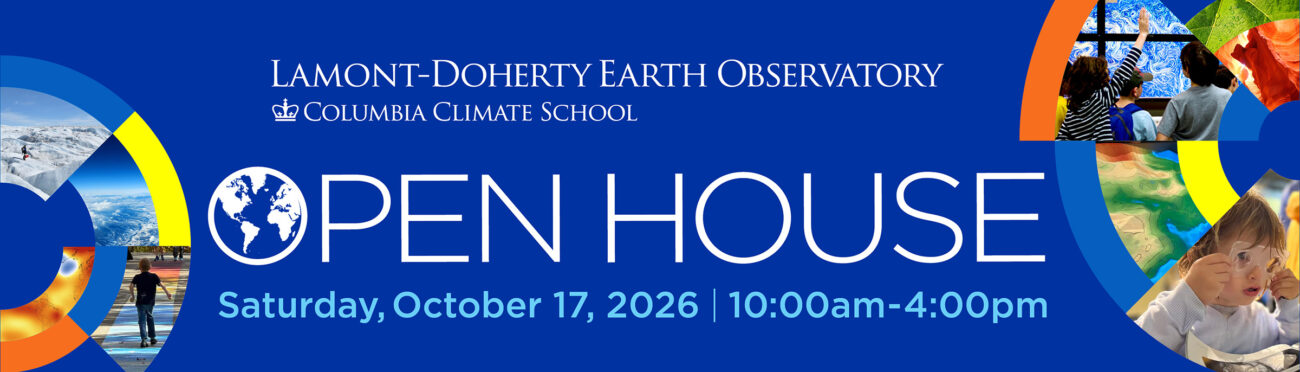
On Saturday, October 17, 2026 from 10am to 4pm, Lamont-Doherty Earth Observatory Open House—our biggest, best science fun and discovery event of the year—will take place on our beautiful campus in Palisades, NY. Mark your calendar and join us for this free, family-friendly celebration of science! RSVP Today!
