Press Release15
-
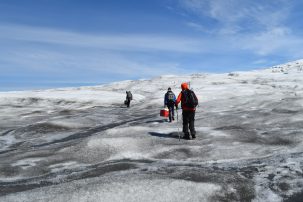
Greenland Ice Sheet Saw Record Loss in 2019
An international team of polar researchers says that the Greenland ice sheet experienced record loss in 2019.
-

Fossil Leaves Show High Atmospheric Carbon Spurred Ancient ‘Global Greening’
Scientists studying leaves from a forest that stood during a warm period 23 million years ago have for the first time linked high levels of atmospheric carbon dioxide with increased plant growth, as well with the high temperatures of the time.
-

New Model for Pricing Carbon Will Help Meet Net-Zero Climate Change Goals
A new approach to carbon pricing avoids the pitfalls of calculating the social costs of carbon.
-

Children Exposed to Deepwater Horizon Oil Spill Suffered Physical and Mental Health Effects
Three out of five parents reported that their child had experienced physical health symptoms, and nearly one third reported that their child had mental health issues.
-

Lead Fallout From Notre Dame Fire Was Likely Overlooked
New study estimates that a ton of lead dust may have been deposited in parks, homes, and schools near the cathedral.
-

Tree Rings Show Unprecedented Rise in Extreme Weather in South America
A new South American Drought Atlas reveals that unprecedented widespread, intense droughts and unusually wet periods have been on the rise since the mid-20th century.
-

Geologists Identify Deep-Earth Structures That May Signal Hidden Metal Lodes
Previously unrecognized structural lines deep in the earth appear to signal the locations of giant deposits of copper, lead, zinc and other vital metals near the surface.
-

Ocean Uptake of CO2 Could Drop as We Cut Carbon Emissions
A new study finds that ocean absorption of CO2 rises and falls along with human activity and natural phenomena. The findings are important for understanding how much the oceans will offset future climate change.
-

Earth Institute Announces Resilience Media Project
The project will boost newsroom capacity to go beyond reporting on disasters after they strike, to envision preventative and adaptive solutions.


By studying thousands of buildings and analyzing their electricity use, Columbia Climate School Dean Alexis Abramson has been able to uncover ways to significantly cut energy consumption and emissions. Watch the Video: “Engineering a Cooler Future Through Smarter Buildings“
