State of the Planet

News from the Columbia Climate School

Sustainability96

  • Using Data to Assess Progress of Sustainable Development Goals

    Using Data to Assess Progress of Sustainable Development Goals

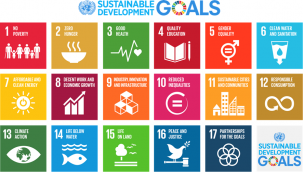
    The 17 Sustainable Development Goals adopted by all member states of the United Nations in September 2015 set an ambitious global sustainable development agenda. The goals span the three dimensions of sustainable development—economic development, social inclusion and environmental sustainability, underpinned by good governance. In order to operationalize this cross-cutting agenda in the varied contexts of…

  • Protecting Our Drinking Water

    The reason we have federal water quality standards is to ensure that local economic issues, politics, racism or other factors do not control decisions about water supply. But in Flint, decisions on water supply were not subject to effective federal review.

  • Working with Facebook to Create Better Population Maps

    Working with Facebook to Create Better Population Maps

    Knowing how settlements are distributed across the landscape—e.g., in clusters, along roads or waterways, or scattered widely—has important implications for designing infrastructure, improving access, and promoting sustainability.

  • Education and Sustainability

    o many different types of skills are needed to transition to the renewable economy, some element of our educational process should be devoted to identifying what children like to do and what they are good at. Those may not be the same thing, and it is important for people to identify the useful skills they…

  • How Well is the World Protecting Ecosystems and Human Health?

    How Well is the World Protecting Ecosystems and Human Health?

    The new global environmental report card is out. The 2016 Environmental Performance Index graded 180 countries on how well they are protecting human health and their ecosystems. While the world is making progress in some areas, it is seriously falling behind in others.

  • Federal Environmental Policy Can’t Find the 21st Century

    The issue comes down to willingness to pay upfront for improved systems, rather than pay to address environmental emergencies later on, when pieces of the system fall apart. Both water and energy systems carry user charges, but weak, ideologically-bound politicians refuse to allow these fees to grow to pay the capital cost of modern infrastructure.

  • Internships Available at Center on Sustainable Investment

    Internships Available at Center on Sustainable Investment

    The Columbia Center on Sustainable Investment is accepting applications until March 31 for internship positions for summer 2016. Interns are assigned to one or more projects depending on background and interests; unpaid and paid opportunities are available.

  • The Sustainable City

    By concentrating human population in cities, we will make it possible to preserve land for wilderness, ecosystem maintenance and agriculture. People will travel to these places and will experience nature, but only a fortunate few will live close to nature.

  • Uncovering Impacts of Gold Mining in Papua New Guinea

    Uncovering Impacts of Gold Mining in Papua New Guinea

    From late December 2015 through January, a team of Earth Institute scientists and human rights lawyers from Columbia University worked in the highlands of Papua New Guinea to deliver the results of an independent study of water quality and human rights to the indigenous communities living near an industrial gold mine.

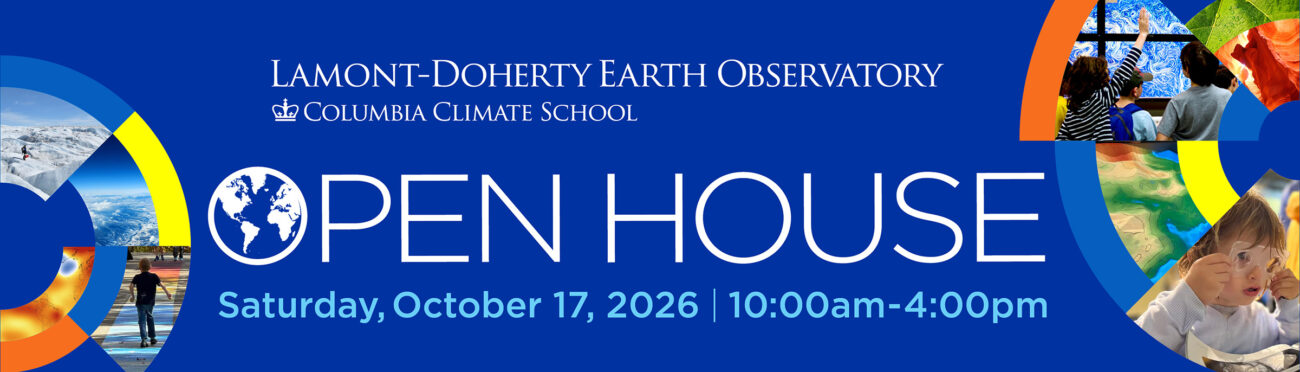
Blue banner with kids and Earth photos. Text: "Lamont-Doherty Earth Observatory Open House, Saturday, October 17, 2026, 10am-4pm.

On Saturday, October 17, 2026 from 10am to 4pm, Lamont-Doherty Earth Observatory Open House—our biggest, best science fun and discovery event of the year—will take place on our beautiful campus in Palisades, NY. Mark your calendar and join us for this free, family-friendly celebration of science! RSVP Today!

  • Using Data to Assess Progress of Sustainable Development Goals

    Using Data to Assess Progress of Sustainable Development Goals

    The 17 Sustainable Development Goals adopted by all member states of the United Nations in September 2015 set an ambitious global sustainable development agenda. The goals span the three dimensions of sustainable development—economic development, social inclusion and environmental sustainability, underpinned by good governance. In order to operationalize this cross-cutting agenda in the varied contexts of…

  • Protecting Our Drinking Water

    The reason we have federal water quality standards is to ensure that local economic issues, politics, racism or other factors do not control decisions about water supply. But in Flint, decisions on water supply were not subject to effective federal review.

  • Working with Facebook to Create Better Population Maps

    Working with Facebook to Create Better Population Maps

    Knowing how settlements are distributed across the landscape—e.g., in clusters, along roads or waterways, or scattered widely—has important implications for designing infrastructure, improving access, and promoting sustainability.

  • Education and Sustainability

    o many different types of skills are needed to transition to the renewable economy, some element of our educational process should be devoted to identifying what children like to do and what they are good at. Those may not be the same thing, and it is important for people to identify the useful skills they…

  • How Well is the World Protecting Ecosystems and Human Health?

    How Well is the World Protecting Ecosystems and Human Health?

    The new global environmental report card is out. The 2016 Environmental Performance Index graded 180 countries on how well they are protecting human health and their ecosystems. While the world is making progress in some areas, it is seriously falling behind in others.

  • Federal Environmental Policy Can’t Find the 21st Century

    The issue comes down to willingness to pay upfront for improved systems, rather than pay to address environmental emergencies later on, when pieces of the system fall apart. Both water and energy systems carry user charges, but weak, ideologically-bound politicians refuse to allow these fees to grow to pay the capital cost of modern infrastructure.

  • Internships Available at Center on Sustainable Investment

    Internships Available at Center on Sustainable Investment

    The Columbia Center on Sustainable Investment is accepting applications until March 31 for internship positions for summer 2016. Interns are assigned to one or more projects depending on background and interests; unpaid and paid opportunities are available.

  • The Sustainable City

    By concentrating human population in cities, we will make it possible to preserve land for wilderness, ecosystem maintenance and agriculture. People will travel to these places and will experience nature, but only a fortunate few will live close to nature.

  • Uncovering Impacts of Gold Mining in Papua New Guinea

    Uncovering Impacts of Gold Mining in Papua New Guinea

    From late December 2015 through January, a team of Earth Institute scientists and human rights lawyers from Columbia University worked in the highlands of Papua New Guinea to deliver the results of an independent study of water quality and human rights to the indigenous communities living near an industrial gold mine.