Water12
-

You Asked: Why Do We Know More About the Moon Than Our Own Oceans?
An Earth Institute oceanographer answers this deep question from a reader as part of our Earth Month Q&A on Instagram.
-

Lamont-Doherty to Host Fourth Annual No-Boundaries Art Exhibition
This year’s theme encourages students to explore the relationship between human beings and water through various art forms.
-

New Recommendations for a Climate-Smart National Flood Insurance Program
A new article co-authored by the Sabin Center for Climate Change Law provides key recommendations on how to change flood insurance for a changing climate.
-

Grappling With Ocean Conservation and Social Justice
Marine biologist, policy expert, and conservation strategist Ayana Elizabeth Johnson discusses the challenges and possibility she sees in environmental justice work today.
-

‘Hudson Rising’ Exhibit Features Living Breakwaters Project
Exploring the complex history of the river’s pollution and conservation, a show at the New-York Historical Society highlights the holistic solution proposed by Earth Institute faculty member Kate Orff.
-

Why We Shouldn’t Let Maritime Boundaries Shrink as Coastlines Recede
Climate change will pose many challenges for small island states — and shrinking maritime boundaries would only make matters worse, argues one climate lawyer.
-

Mining Pollution Limits Access to Clean Water in Papua New Guinea
A new report documents the social, environmental, economic, and health impacts of gold mining in Porgera, Papua New Guinea.
-

Scientists Work to Build Climate Change Resilience in Caribbean Coral Reef
A team from Columbia’s Earth Institute is helping to research and design adaptation strategies to help save the world’s second largest barrier reef.
-

Columbia Water Center: A Decade of Cutting Edge Research
To mark its anniversary, the Columbia Water Center has released a new report highlighting its achievements over the past decade. Read an excerpt, then download the full report.


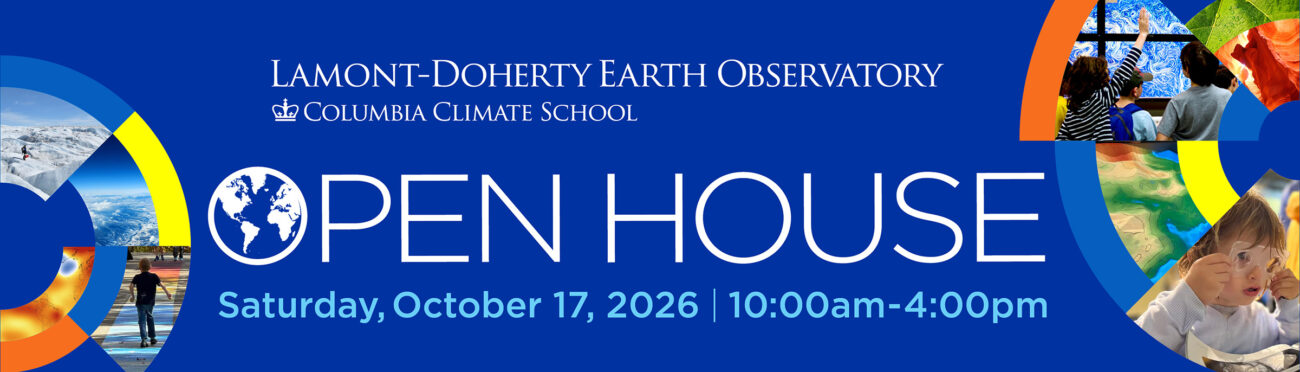
On Saturday, October 17, 2026 from 10am to 4pm, Lamont-Doherty Earth Observatory Open House—our biggest, best science fun and discovery event of the year—will take place on our beautiful campus in Palisades, NY. Mark your calendar and join us for this free, family-friendly celebration of science! RSVP Today!
