State of the Planet

News from the Columbia Climate School

Water27

  • Just How Effective is Green Infrastructure?

    Just How Effective is Green Infrastructure?

    Over the next 18 years, New York City’s 2010 Green Infrastructure Plan will spend $2.4 billion on green infrastructure— green roofs, tree plantings, and increased vegetation— to combat coastal pollution. But how does green infrastructure work and how effective is it really?

  • The End of Cheap Water?

    The End of Cheap Water?

    Americans are paying more for water than they did a decade ago, even as water utilities fall into debt and water infrastructure deteriorates, according to a Columbia Water Center report.

  • Resource Consumption — the Ultimate Bubble?

    Resource Consumption — the Ultimate Bubble?

    “Basically, the instinct of civilizations in the past has been to run off a cliff. This time it’s different. We have one global civilization, so we have to be very careful not to run off a cliff.”

  • Exploring New Zealand Climate Change in Groundwater

    Exploring New Zealand Climate Change in Groundwater

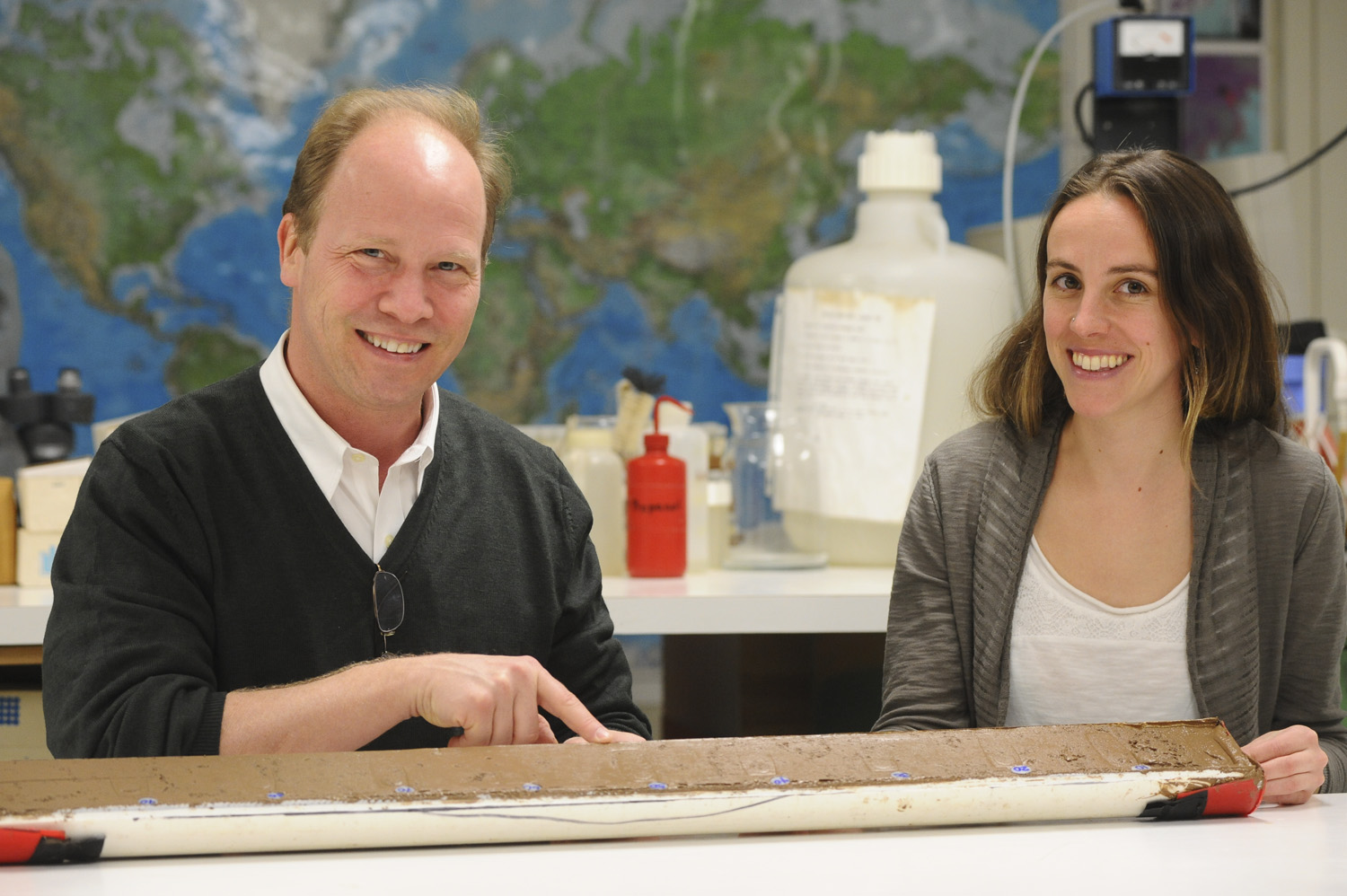
    Alan Seltzer, a senior at Columbia University, traveled to New Zealand this past summer to work on field experiments aimed at reconstructing temperatures in the region over the last 20,000 years. His adviser, geochemist Martin Stute, is working closely with colleagues at Lamont-Doherty to understand how the southern hemisphere came out of the last ice…

  • Sustainability Certification in Aquaculture: Put Your Money Where Your Mouth Is?

    Sustainability Certification in Aquaculture: Put Your Money Where Your Mouth Is?

    Should we certify aquaculture? A look at mounting challenges in the push for sustainable seafood.

  • Aquanaut Summer Interns Dive Deeper into Research

    Aquanaut Summer Interns Dive Deeper into Research

    This summer, the Columbia Water Center Aquanaut interns addressed a variety of water-related questions affecting the United States, with funding and guidance provided by Veolia Foundation, Veolia Water and members of Growing Blue. Nelson Dove, Christine Wen, Mary Williams, Christopher Economides and Daniel Shi were selected to expand the repertoire of data-driven tools the Columbia…

  • Pumping Draws Arsenic Toward a Big-City Aquifer

    Groundwater Removal May Affect Supplies in South Asia and Beyond

  • Q&A: Climate Change, Drought and the Future

    Q&A: Climate Change, Drought and the Future

    “One of the ways that climate change is going to manifest is through warmer temperatures. … What we are seeing, in line with our projections, is that even if you assume constant precipitation, the temperature effects are so large that it is going to dry things out. This is going to have really big impacts…

  • Students Travel to Belize through Earth Institute Course Support Funding

    Fieldwork is an important component of environmental education and research. Every year, the Earth Institute’s Office of Academic and Research Programs provides funding to help underwrite faculty-organized field trieps that augment undergraduate and graduate classroom learning experiences. With assistance from the Earth Institute Course Support Program, 10 students with Dr. Josh Drew and Dr. Elisa…

Photo of the Earth from space with the text "Lamont at AGU25" on top.

AGU25, the premier Earth and space science conference, takes place December 15-19, 2025 in New Orleans, Louisiana. This year’s theme—Where Science Connects Us—puts in focus how science depends on connection, from the lab to the field to the ballot box. Once again, Lamont-Doherty Earth Observatory and Columbia Climate School scientists, experts, students, and educators are playing an active role, sharing our research and helping shape the future of our planet. #AGU25 Learn More

  • Just How Effective is Green Infrastructure?

    Just How Effective is Green Infrastructure?

    Over the next 18 years, New York City’s 2010 Green Infrastructure Plan will spend $2.4 billion on green infrastructure— green roofs, tree plantings, and increased vegetation— to combat coastal pollution. But how does green infrastructure work and how effective is it really?

  • The End of Cheap Water?

    The End of Cheap Water?

    Americans are paying more for water than they did a decade ago, even as water utilities fall into debt and water infrastructure deteriorates, according to a Columbia Water Center report.

  • Resource Consumption — the Ultimate Bubble?

    Resource Consumption — the Ultimate Bubble?

    “Basically, the instinct of civilizations in the past has been to run off a cliff. This time it’s different. We have one global civilization, so we have to be very careful not to run off a cliff.”

  • Exploring New Zealand Climate Change in Groundwater

    Exploring New Zealand Climate Change in Groundwater

    Alan Seltzer, a senior at Columbia University, traveled to New Zealand this past summer to work on field experiments aimed at reconstructing temperatures in the region over the last 20,000 years. His adviser, geochemist Martin Stute, is working closely with colleagues at Lamont-Doherty to understand how the southern hemisphere came out of the last ice…

  • Sustainability Certification in Aquaculture: Put Your Money Where Your Mouth Is?

    Sustainability Certification in Aquaculture: Put Your Money Where Your Mouth Is?

    Should we certify aquaculture? A look at mounting challenges in the push for sustainable seafood.

  • Aquanaut Summer Interns Dive Deeper into Research

    Aquanaut Summer Interns Dive Deeper into Research

    This summer, the Columbia Water Center Aquanaut interns addressed a variety of water-related questions affecting the United States, with funding and guidance provided by Veolia Foundation, Veolia Water and members of Growing Blue. Nelson Dove, Christine Wen, Mary Williams, Christopher Economides and Daniel Shi were selected to expand the repertoire of data-driven tools the Columbia…

  • Pumping Draws Arsenic Toward a Big-City Aquifer

    Groundwater Removal May Affect Supplies in South Asia and Beyond

  • Q&A: Climate Change, Drought and the Future

    Q&A: Climate Change, Drought and the Future

    “One of the ways that climate change is going to manifest is through warmer temperatures. … What we are seeing, in line with our projections, is that even if you assume constant precipitation, the temperature effects are so large that it is going to dry things out. This is going to have really big impacts…

  • Students Travel to Belize through Earth Institute Course Support Funding

    Fieldwork is an important component of environmental education and research. Every year, the Earth Institute’s Office of Academic and Research Programs provides funding to help underwrite faculty-organized field trieps that augment undergraduate and graduate classroom learning experiences. With assistance from the Earth Institute Course Support Program, 10 students with Dr. Josh Drew and Dr. Elisa…