Posts
-

Art Meets Science at Lamont-Doherty Earth Observatory
Lamont’s 2025 Research as Art exhibit provides a platform for scientists to share their research in a creative way.
-
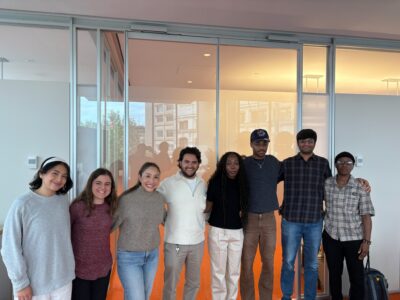
Meet the Inaugural Dean’s Graduate Scholars at Columbia Climate School
Eight full-time M.S. in Climate students have been honored with a scholarship recognizing their academic and professional excellence in the field.
-
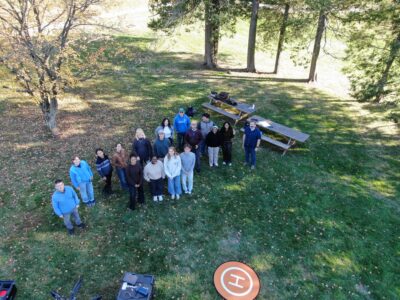
How Columbia Students and Local Activists Are Co-Creating Climate Justice
A course aims to teach students the importance of effective climate-adaptation planning through collaboration with local community partners.
-

How Can AI Address Climate Justice When Women’s Voices Are Silenced?
Unless women’s lived realities are embedded in AI’s foundations, it risks reinforcing the very inequities it claims to solve.
-
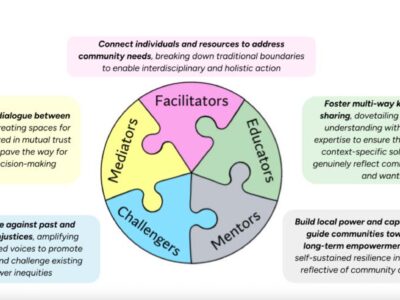
Planning Exercises That Got Community Engagement Right
The Resilient Coastal Communities Project has a new white paper that highlights examples of truly fair and accountable resilience planning.
-
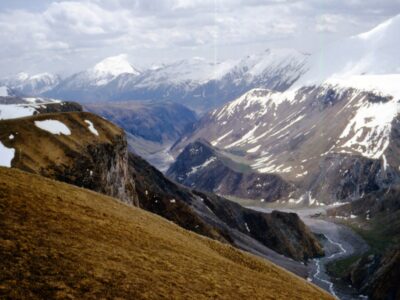
New Climate Finance Initiative Supports Climate Adaptation Efforts in Glacier-Dependent Regions
A newly approved $250 million from the Green Climate Fund will target glacier melt in Central Asia, the South Caucasus and Pakistan, offering an example of large-scale climate finance for adaptation.
-
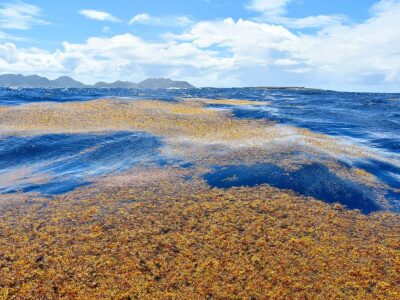
Harnessing AI, Scientists Discover a Rise in Floating Algae Across the Global Ocean
A recent study demonstrates the power of artificial intelligence as a tool for processing large amounts of ocean data.
-
Leveraging Risk Communications to Bridge Tribal Voices
A new, collaborative project aims to elevate and bridge Tribal voices in disaster risk communication.
-
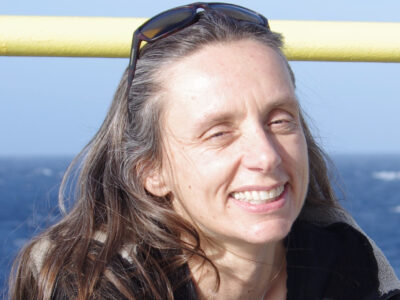
Women in Science: Climate Scientist Gisela Winckler
Winckler focuses on the history and causes of past, present and future climate variability, as well as the ocean’s role in the climate system and the carbon cycle.


