Posts
-

Gates Gift to Work Toward Millennium Development Goals
The Bill and Melinda Gates Foundation recently renewed its support for science and policy innovation to help impoverished countries achieve the Millennium Development Goals with a $15,000,000 multi-year grant.
-

Seismometer Puts Earthquakes Online at Kent School
A well-traveled seismometer sits tucked inside a concrete chamber behind the Kent School chapel in Northwest Connecticut, recording earthquakes. It got here by chance.
-

Greenbuilding in Riverside Park
Preview of carbon-neutral facility, built of recycled materials that will operate entirely off the grid in Riverside Park.
-

Environmental Sustainability Fellowship Awards – Deadline Extension
The School of International and Public Affairs, Environmental Sustainability Fellows will be awarded for the first time by the Master of Public Administration in Environmental Science and Policy program for the academic year 2012-2013. Environmental Sustainability Fellows will receive $20,000 each toward their tuition. We have extended the application deadline for the award to January…
-

The Buzz on Elephants
African-born, Oxford-trained biologist Lucy King recently won an award for a promising solution to a longstanding problem in Africa—elephants raiding crops.
-
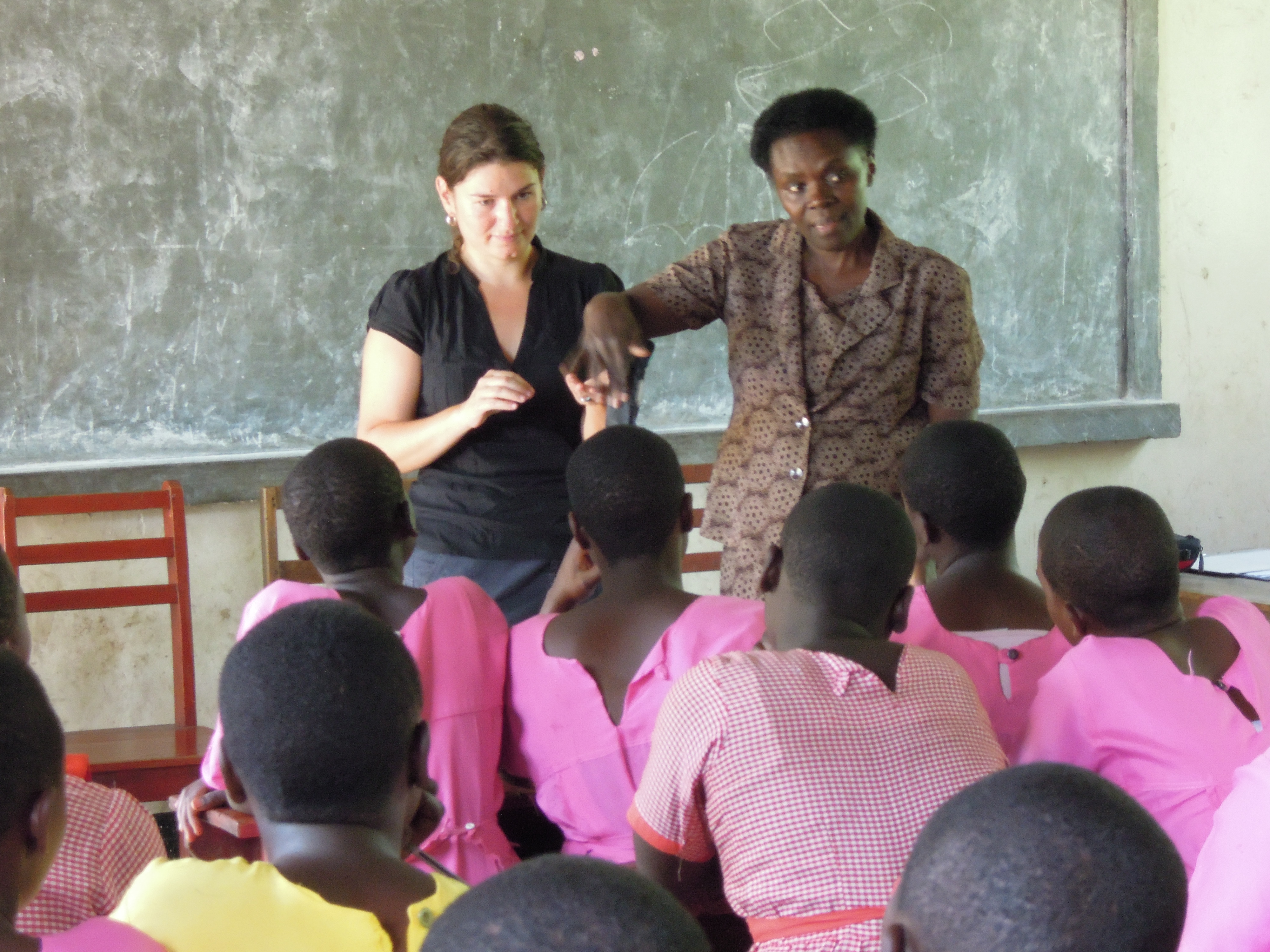
Crossing Barriers for Women in Uganda and Tajikistan
From Central Africa to Central Asia, women are helping other women to continue attending school and to begin their own businesses, sometimes in conflict with local customs. Yet what does it really mean to break down cultural barriers to work toward these types of gender equality?
-

Rethinking Our Food System to Combat Obesity
The Earth Institute’s Urban Design Lab and MIT Collaborative Initiatives joined to investigate the issue of obesity through the prism of design. Their conclusion: “No single effort to curb childhood obesity will be sustainable or effective on a broad scale if the larger food system is not addressed.”
-
Columbia Climate Center Hosts Workshop on Carbon Management Education and Practice
The Columbia Climate Center convened a workshop, “Carbon Management Education and Practice” at Columbia University on November 3-4, 2011. Over 30 participants from academia, non-governmental organizations, the private sector and government met to discuss the emergence and contours of carbon management as a new educational and professional field. Two days of panels and presentations provided…
-

UNFOLD: Climate Change Art & Science Dating Game
What do climate research and art have in common? How do non-scientists interpret climate change issues?


