archaeology
-
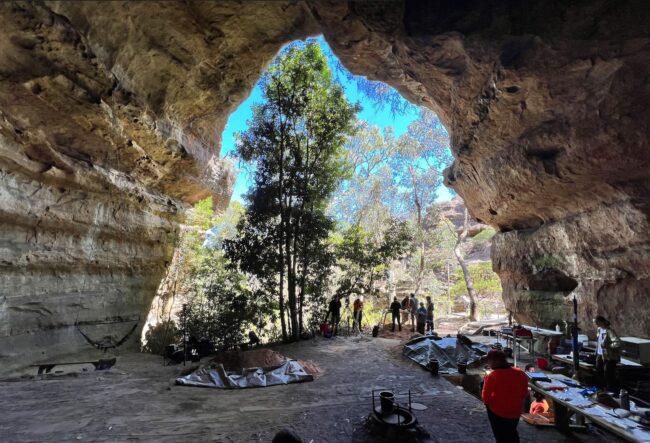
Humans Occupied a High-Altitude Site in Australia During the Last Ice Age, New Study Finds
Archaeologists and local First Nations groups have uncovered early evidence that reshapes our historical understanding of high-altitude human occupation and mobility.
-

Archaeologist Kristina Douglass Named 2025 MacArthur Fellow
Douglass’s research uses lessons from the past to help communities understand how to adapt to climate change.
-

Science for the Planet: In Madagascar, Learning From a Library of Human Experience
Archaeologist Kristina Douglass explains how past human adaptation can inform solutions to modern climate challenges.
-

A Volcanic Explosion 520,000 Years Ago Dwarfed One That Devastated the Minoan Civilization
An undersea eruption a half million years ago was much larger than nearly anything recorded in human time.
-

Scientists Say a Shipwreck Off Patagonia Is a Long-Lost 1850s Rhode Island Whaler
In 1858, a sailing ship left Warren, R.I., to hunt the globe for whales, and never returned. Where did it end up? Researchers from the southern and northern hemispheres joined to investigate.
-

Científicos afirman que un naufragio en la costa de Patagonia es un ballenero norteamericano perdido en 1859
En 1858, un velero partió de una ciudad costera del noreste de Estados Unidos para cazar ballenas alrededor del mundo y nunca regresó. ¿Dónde terminó? Investigadores de los hemisferios sur y norte se unieron para dar respuesta a este misterio.
-

Melting Ice and a High Altitude Dig Reveal Viking Secrets in Norway
A wealth of ancient artifacts stand to be discovered as high altitude ice melts, but the relationship between high altitude archaeology and climate change is a somber one.
-

Reburying the Dead in Mississippi
An archaeology dig shows how time erases the arbitrary barriers we construct between races.
-

How a Turbulent Environment Sparked a Leap in Early Human Behavior
A new study suggests that a series of environmental changes in East Africa some 320,000 years ago challenged a previous long-standing way of life for proto-humans, and produced a more adaptable culture.


The first Earth Day in 1970 ignited a movement to stop polluting our planet. Today, our scientists and experts are tackling the most pressing challenges to achieve real-world impact. This Earth Day, join us in our commitment to realizing a just and sustainable future for our planet. Visit our Earth Day website for ideas, resources, and inspiration.
