Arctic10
-
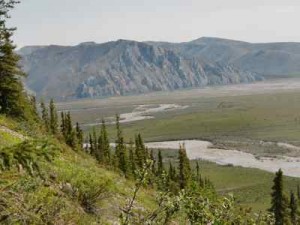
Studying the Farthest-North Trees
A team led by Kevin Anchukaitis of the Lamont-Doherty Earth Observatory Tree Ring Lab is currently in Alaska’s Arctic National Wildlife Refuge, studying the effects of changing climate on trees. Working near the treeline, they’re taking cores from spindly white spruces to measure weather of the past.
-

Switchyard Project: Melting Ice, a Fresher Arctic
The freshwater content of the Arctic Ocean is increasing as the Earth’s climate warms. Chemical analysis indicates that the source is both melting ice and the Pacific Ocean.
-

Flying Over the Arctic, Collecting Data and Enjoying the View
By Brian Moses This past week, Operation IceBridge undertook a detailed survey of the ICEX camp, situated on the ice sheet north of Alaska. This complex 3 day mission involves a transit to Fairbanks, AK over the top of the world, refueling in Fairbanks and flying the survey on day two, and a low-altitude nighttime…
-
The State of the Arctic
Where climate change is concerned, the Arctic region acts as a harbinger: the extremely sensitive Arctic system reacts earlier and more profoundly to anthropogenic climate change than many other regions. And as climate change progresses, it is also projected to experience greater environmental changes than other places on earth. As such, it has become an…



COP31, the 2026 United Nations Climate Change Conference, aims to advance dialogue, strengthen consensus, and accelerate climate action on a global scale. From November 9–20, 2026 in Antalya, Türkiye, heads of state, ministers, scientists, business leaders, and civil society will gather to advance efforts in emission targets, climate finance, and adaptation and resilience. Once again, our experts, students, and global thought leaders from Columbia Climate School and across Columbia University are contributing to key events, sharing insights, and helping shape the dialogue toward ambitious, science-based solutions. Learn More
