State of the Planet

News from the Columbia Climate School

climate change105

  • Photo Essay: Iceland at the Cutting Edge of Climate Change

    Photo Essay: Iceland at the Cutting Edge of Climate Change

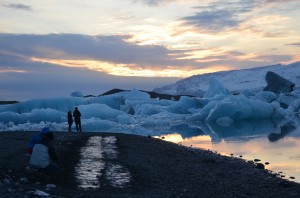
    Iceland has a complicated relationship with climate change. As in much of the far north, global warming is already exerting many effects here–arguably both good and bad. Yet the country contributes relatively little to the warming, since most of its energy comes from geothermal and hydro plants, which produce little carbon dioxide. Now, it is…

  • Creating a ‘Safe Space’ for Iconic Ecosystems

    Creating a ‘Safe Space’ for Iconic Ecosystems

    Important global ecosystems like the Amazon rainforest and Great Barrier Reef are in danger of breaking down because of a combination of local pressures and climate change, but better local management could help make these areas more resilient.

  • MPA Students Partner with Raritan Headwaters Association

    MPA Students Partner with Raritan Headwaters Association

    As part of the Workshop in applied Earth Systems Policy Analysis, students in the MPA in Environmental Science and Policy program are partnering with the Raritan Headwaters Association (RHA) to help address emerging water quality and watershed resiliency issues related to climate change.

  • Did Climate Change Help Spark The Syrian War?

    Scientists Link Warming Trend to Record Drought and Later Unrest

  • Initiative on Extreme Weather and Climate Kick-Off

    Initiative on Extreme Weather and Climate Kick-Off

    This week marks the launch of the new Columbia Initiative on Extreme Weather and Climate, a cross-disciplinary collaboration between a variety of centers, research groups and individuals from across Columbia University. The Initiative, led by Adam Sobel, kicked off on Monday evening with a World Leaders Forum panel event in Low Library. Panelists discussed a…

  • Webcast Tonight: Focus on Extreme Weather

    Webcast Tonight: Focus on Extreme Weather

    The Columbia Initiative on Extreme Weather and Climate brings together experts across the university to integrate research into the physical science of these events with research on their impacts on human society and engineering solutions. The initiative kicks off this evening with a panel discussion, “Preparing for Extreme Weather: Global Lessons from Sandy,” from 6-7:30…

  • Report Forecasts Worsening Climate Hazards for Region

    Report Forecasts Worsening Climate Hazards for Region

    A new report gives a worrisome picture of climate-related problems the New York region will likely face this century. Temperatures are projected to rise, extreme precipitation and heat waves will be more frequent, and sea level could rise as much as 6 feet.

  • Warming Pushes Western U.S. Toward Driest Period in 1,000 Years

    Study Warns of Unprecedented Risk of Drought in 21st Century

  • Seafloor Volcano Pulses May Alter Climate

    New Data Show Strikingly Regular Patterns, From Weeks to Eons

Photo of the Earth from space with the text "Lamont at AGU25" on top.

AGU25, the premier Earth and space science conference, takes place December 15-19, 2025 in New Orleans, Louisiana. This year’s theme—Where Science Connects Us—puts in focus how science depends on connection, from the lab to the field to the ballot box. Once again, Lamont-Doherty Earth Observatory and Columbia Climate School scientists, experts, students, and educators are playing an active role, sharing our research and helping shape the future of our planet. #AGU25 Learn More

  • Photo Essay: Iceland at the Cutting Edge of Climate Change

    Photo Essay: Iceland at the Cutting Edge of Climate Change

    Iceland has a complicated relationship with climate change. As in much of the far north, global warming is already exerting many effects here–arguably both good and bad. Yet the country contributes relatively little to the warming, since most of its energy comes from geothermal and hydro plants, which produce little carbon dioxide. Now, it is…

  • Creating a ‘Safe Space’ for Iconic Ecosystems

    Creating a ‘Safe Space’ for Iconic Ecosystems

    Important global ecosystems like the Amazon rainforest and Great Barrier Reef are in danger of breaking down because of a combination of local pressures and climate change, but better local management could help make these areas more resilient.

  • MPA Students Partner with Raritan Headwaters Association

    MPA Students Partner with Raritan Headwaters Association

    As part of the Workshop in applied Earth Systems Policy Analysis, students in the MPA in Environmental Science and Policy program are partnering with the Raritan Headwaters Association (RHA) to help address emerging water quality and watershed resiliency issues related to climate change.

  • Did Climate Change Help Spark The Syrian War?

    Scientists Link Warming Trend to Record Drought and Later Unrest

  • Initiative on Extreme Weather and Climate Kick-Off

    Initiative on Extreme Weather and Climate Kick-Off

    This week marks the launch of the new Columbia Initiative on Extreme Weather and Climate, a cross-disciplinary collaboration between a variety of centers, research groups and individuals from across Columbia University. The Initiative, led by Adam Sobel, kicked off on Monday evening with a World Leaders Forum panel event in Low Library. Panelists discussed a…

  • Webcast Tonight: Focus on Extreme Weather

    Webcast Tonight: Focus on Extreme Weather

    The Columbia Initiative on Extreme Weather and Climate brings together experts across the university to integrate research into the physical science of these events with research on their impacts on human society and engineering solutions. The initiative kicks off this evening with a panel discussion, “Preparing for Extreme Weather: Global Lessons from Sandy,” from 6-7:30…

  • Report Forecasts Worsening Climate Hazards for Region

    Report Forecasts Worsening Climate Hazards for Region

    A new report gives a worrisome picture of climate-related problems the New York region will likely face this century. Temperatures are projected to rise, extreme precipitation and heat waves will be more frequent, and sea level could rise as much as 6 feet.

  • Warming Pushes Western U.S. Toward Driest Period in 1,000 Years

    Study Warns of Unprecedented Risk of Drought in 21st Century

  • Seafloor Volcano Pulses May Alter Climate

    New Data Show Strikingly Regular Patterns, From Weeks to Eons