climate change13
-

A Virtual Reality Film That Makes the Climate Crisis Feel “Real”
‘Once a Glacier’ is about a girl who tries to save a glacier—and with it, forge new empathy for our fellow humans and planet.
-

Key Ocean Current Contains a Warning on Climate
A new study shows that a giant current circling Antarctica has speeded up during past warm periods, eating away at the polar ice. It’s doing it again now.
-

Using Nature to Help the Climate: 4 Ways That Work
Only a few nature-based climate solutions are grounded in well-proven science. The good news: these are the ones that are already most widely used.
-

For This Graduating Senior, Climate, Culture and Community Go Hand in Hand
Charitie Ropati’s Indigenous heritage informs her education, research and activism.
-

Catherine McKenna on Her Life, Work and Preserving the World for Future Generations
In a recent Climate School lecture, the former Canadian Minister of Environment and Climate Change spoke of her not-so-linear career path and why politics are pivotal in combatting climate change.
-

How Climate Change Drives the Spread of Invasive Plants
Abetted by warmer climes, non-native species can take root and wreak havoc in new environments. Is there anything we can do about them?
-

The SEC Finally Issues its Climate Disclosure Rule
Government’s regulation of corporate environmental reporting has finally begun.
-

Stickiness in Glacial Space and Time
What role do ice and glacial melt play in modern society? Icelandic anthropologist Gísli Pálsson reflects on a recent article that examines this question.
-

Finishing the Coastal Service Run
Traveling by boat, we are finishing our data collection and equipment servicing in coastal Bangladesh.


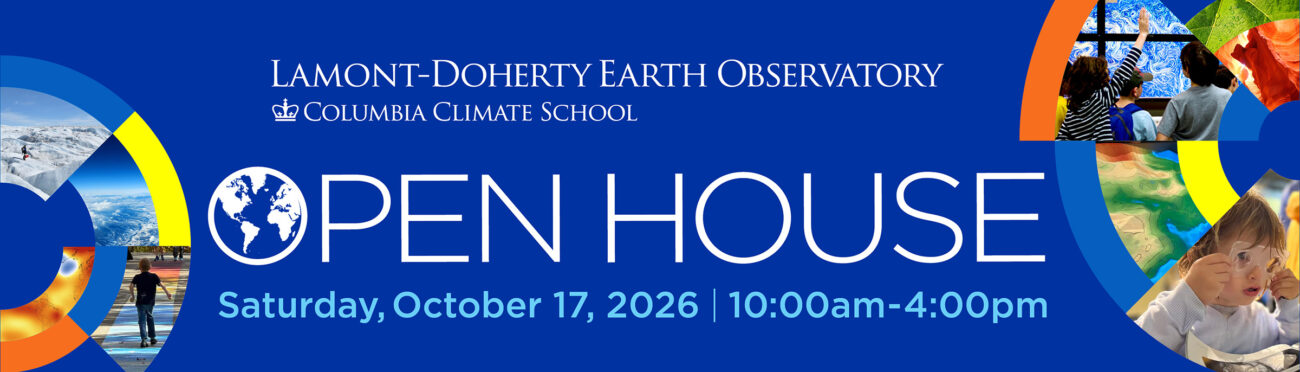
On Saturday, October 17, 2026 from 10am to 4pm, Lamont-Doherty Earth Observatory Open House—our biggest, best science fun and discovery event of the year—will take place on our beautiful campus in Palisades, NY. Mark your calendar and join us for this free, family-friendly celebration of science! RSVP Today!