climate change44
-

Nick Frearson Designs Devices for Earth’s Most Extreme Environments
An engineer at Lamont-Doherty, Frearson builds instruments that help scientists collect vital data in Antarctica, the deep sea, and at the top of volcanoes.
-

2020 Election Will Be Crucial in Determining Whether We Avoid a Climate Catastrophe
Here’s a look at how the U.S.’s future climate regulation will look under Biden versus another four years of Trump.
-

Clark Glacier Commemorated at Funeral in Oregon
In mid-October, Oregon’s Clark glacier was honored with a funeral and calls to protect the state’s often overlooked glaciers.
-

Irrigation in High Mountain Asia is Creating Unexpected Glacier Growth
Irrigated agricultural plains in regions of High Mountain Asia are driving increased snowfall accumulation, protecting glaciers from temperature rises.
-

Glaciologist Benjamin Keisling on Diversity, Inclusion, and Objectivity in the Geosciences
He’s working to make the geosciences an area where everyone can thrive.
-

TED Talk Proposes A Three-Step Plan for India’s Clean Energy Transition
Senior research scholar Varun Sivaram presented his ideas at the star-studded TED Countdown Global Launch, a global initiative to accelerate solutions to the climate crisis.
-

Using Art as an In-Road to Science and Activism
Artist Jill Pelto, who fuses data and visuals to communicate about climate change, shares her process and reflections.
-

Greenland on Track to Lose Ice Faster Than in Any Century Over the Last 12,000 Years
If human societies don’t sharply curb emissions of greenhouse gases, Greenland’s rate of ice loss this century is likely to greatly outpace that of any century since shortly after the end of the last ice age, a new study concludes.
-

California’s Continuing Climate Leadership
California deserves our gratitude for again leading the way and providing hope in this most difficult time.


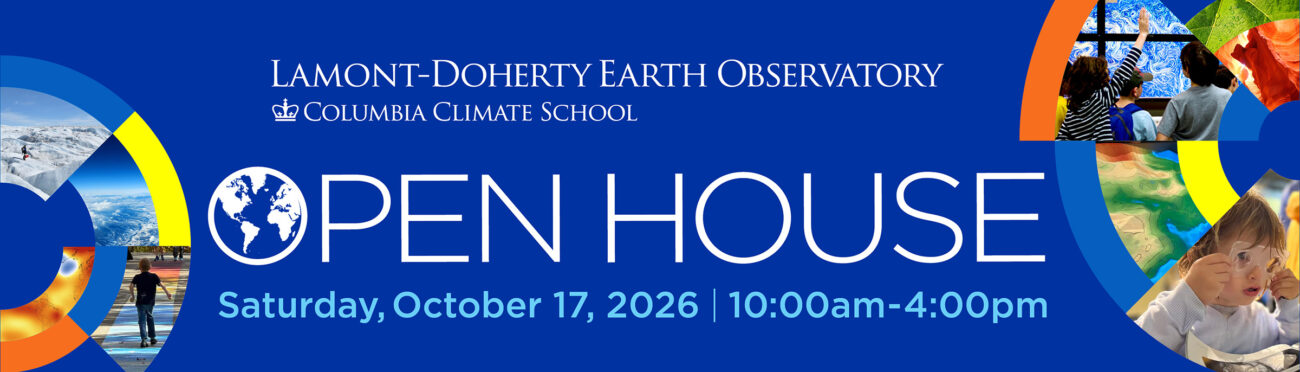
On Saturday, October 17, 2026 from 10am to 4pm, Lamont-Doherty Earth Observatory Open House—our biggest, best science fun and discovery event of the year—will take place on our beautiful campus in Palisades, NY. Mark your calendar and join us for this free, family-friendly celebration of science! RSVP Today!
