climate change82
-
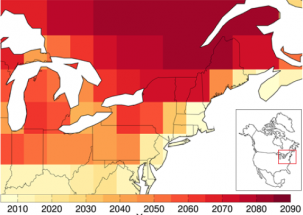
Climate May Quickly Drive Forest-Eating Beetles North, Says Study
Over the next few decades, global warming-related rises in winter temperatures could significantly extend the range of the southern pine beetle, one of the world’s most aggressive tree-killing insects, through much of the northern United States and southern Canada, says a new study.
-

Why Climate Change Matters
Climate change is a test of our ability to identify, understand and act on critical global environmental issues. It tests our ability to work across national borders and across academic and professional fields of knowledge.
-

East Antarctic Ice Sheet Should Remain Stable Even if the West Melts
A new look inside the ice sheet validates predictions that it probably won’t melt as quickly as its neighbor—good news, since East Antarctica contains enough water to raise sea levels by 200 feet.
-

Antarctic Ice-Mapping Project Will Fly for the Last Time in October
With its mission complete, the Rosetta-Ice Project will give scientists an unprecedented look at the Ross Ice Shelf and how it’s changing with the climate.
-

Sabin Center Wins Award for Outstanding Contributions to Environmental Protection
The American Bar Association award recognizes the center as a premier source for information, analysis, and education on climate change law and policy.
-

How Will Climate Change Impact Shelter?
In this video, Lamont-Doherty Earth Observatory researchers Robin Bell, Radley Horton, and Adam Sobel explain their research and how it can help improve adaptation practices and make our homes, livelihoods, and the systems we rely on more resilient to extreme weather and sea level rise.
-

What Changes Minds About Climate Change?
More Americans are coming to agree with the vast majority of climate scientists who say human-induced climate change is really happening. Here’s what works, and what doesn’t, when communicating with skeptics.
-

Analyzing Winter Storm Risk and Resilience in a Changing Climate
A new study analyzing storm intensity and impacts in the New York metro area aims to inform how communities can better prepare for winter storms and enhance resiliency as the effects of climate change exacerbate hazards.
-

Developing Carbon Management Solutions
David Goldberg and Peter Kelemen, scientists at Lamont-Doherty Earth Observatory, are at the forefront of carbon capture and storage research. In this video, they discuss their work and how it will contribute to carbon management solutions and strengthen society’s resilience to climate change.


Congratulations to our Columbia Climate School Class of 2026 and all of our 2026 Columbia University graduates! Learn more about our May 15 Climate School Class Day celebration. 💙 #Columbia2026 #ColumbiaClimate2026
