climate change85
-

Warming Climate Could Abruptly Increase Rain in Africa’s Sahel
Climate change could turn one of Africa’s driest regions wet, according to a new study. Scientists have found evidence in computer simulations for a possible abrupt change in the Sahel, a region long characterized by aridity and political instability. In the study, just published in the journal Earth System Dynamics, the authors detected a self-amplifying…
-

Fueled by Melting Glaciers, Algae Bloom Off Greenland
Iron particles catching a ride on glacial meltwater washed out to sea are likely fueling a recently discovered summer algal bloom off the southern coast of Greenland, according to a new study. Microalgae, also known as phytoplankton, are plant-like marine microorganisms that form the base of the food web in many parts of the ocean.…
-

As Climate Stirs Arctic Sea Ice Faster, Pollution Tags Along
A warming climate is not just melting the Arctic’s sea ice; it is stirring the remaining ice faster, increasing the odds that ice-rafted pollution will foul a neighboring country’s waters, says a new study.
-

Understanding Today’s Climate Politics
The climate problem will be made less bad by technological, cultural, social and economic change that will force political change. Waiting for policy to be the change agent is an exercise in futility.
-

Iron Chemistry Matters for Ocean Carbon Uptake
An interdisciplinary team of scientists has discovered that, contrary to general scientific belief, iron in nondissolved particle form can stimulate phytoplankton growth, and that the chemical form that particulate iron takes is critical to ocean photosynthesis.
-

Malaria Risk Increases in Ethiopian Highlands as Temperatures Climb
The highlands of Ethiopia are home to the majority of the country’s population, the cooler climate serving as a natural buffer against malaria transmission. New data now show that increasing temperatures over the past 35 years are eroding this buffer, allowing conditions more favorable for malaria to begin climbing into highland areas.
-

Transforming a Passion for Oceans into Discovery
Sustainability Management graduate Melissa Meggiolaro (’17) interviews Lamont-Doherty Earth Observatory oceanographer Arnold Gordon.
-

Could Climate Change Shut Down the Gulf Stream?
In the 2004 disaster movie “The Day After Tomorrow,”, global warming accelerated the melting of polar ice, disrupting circulation in the North Atlantic Ocean and triggering violent changes in the weather. Could climate change shut down the Gulf Stream?
-

How Will Climate Change Impact Water Resources?
Richard Seager and Park Williams, climate scientists at Lamont-Doherty Earth Observatory, discuss how water will be affected by warmer temperatures, and how their research increases understanding of these issues.


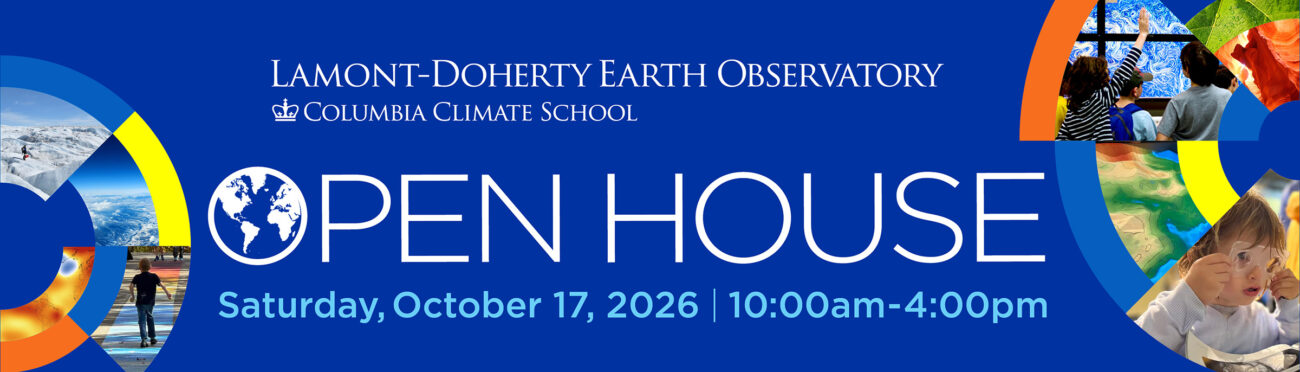
On Saturday, October 17, 2026 from 10am to 4pm, Lamont-Doherty Earth Observatory Open House—our biggest, best science fun and discovery event of the year—will take place on our beautiful campus in Palisades, NY. Mark your calendar and join us for this free, family-friendly celebration of science! RSVP Today!
