climate change88
-
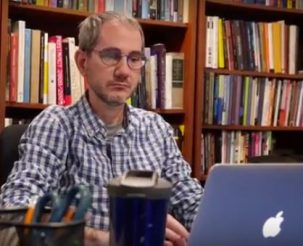
Colin Kelley: Food and Water Vulnerability in a Changing Climate
Colin Kelley, an associate research scientist with the International Research Institute for Climate and Society, studies regional climate in vulnerable areas like the Middle East in order to improve our ability to make forecasts, plan ahead and become more resilient to drought and other climate shifts.
-

How We Know Today’s Climate Change Is Not Natural
Despite the many climate “skeptics” in key positions of power today, 97 percent of climate scientists agree that the warming of Earth’s climate over the last 100 years is mainly due to human activity. Why are they so sure?
-
Under the Dead Sea, Warnings of Dire Drought
Ancient Sediments Tell a Story That Could Be Repeated
-

The Science of Carbon Dioxide and Climate
The vast majority of scientists around the world agree that our climate is changing at a faster rate than ever recorded in human history because of our use of fuels such as coal and oil, so-called fossil fuels. The conclusion rests on basic physics known since the early 1800s, when physical scientists first recognized that…
-

Women Leaders Tackle the Urban Climate Challenge
Anne Hidalgo, the mayor of Paris, will join dozens of other leaders in government, business and the non-profit world at the Women4Climate conference at Columbia University on March 15.
-

Will China Take the Green Mantle From the U.S.?
While President Trump has promised to pull the U.S. out of the Paris climate accord, China’s President Xi Jinxing has vowed to continue to tackle climate change and honor his country’s obligations. Will China become the global leader in combating climate change?
-

In High Sierras, Remnants of Ice Age Tell a Tale of Future Climate
Aaron Putnam’s research in the California Sierras is part of an effort to study glaciers around the world—in Europe’s Alps, the Himalayas, Mongolia, Patagonia, New Zealand. He’s working on an important piece of the worldwide climate puzzle that can help us understand what’s ahead in a warming world.
-

Shifting Monsoon Altered Early Cultures in China, Study Says
The annual summer monsoon that drops rain onto East Asia has shifted dramatically, at times moving northward by as much as 400 km and doubling rainfall in that northern reach. The monsoon’s changes over the past 10,000 years likely altered the course of early human cultures in China, say the authors of a new study.
-

Scientists Say They Now Know Why Antarctic Meltwater Stays Below Ocean Surface
Up to now, it has been a mystery why much of the fresh water resulting from the melting of Antarctic ice shelves ends up in the depths instead of floating above saltier, denser ocean waters. Scientists working along one major ice shelf believe they have found the answer.


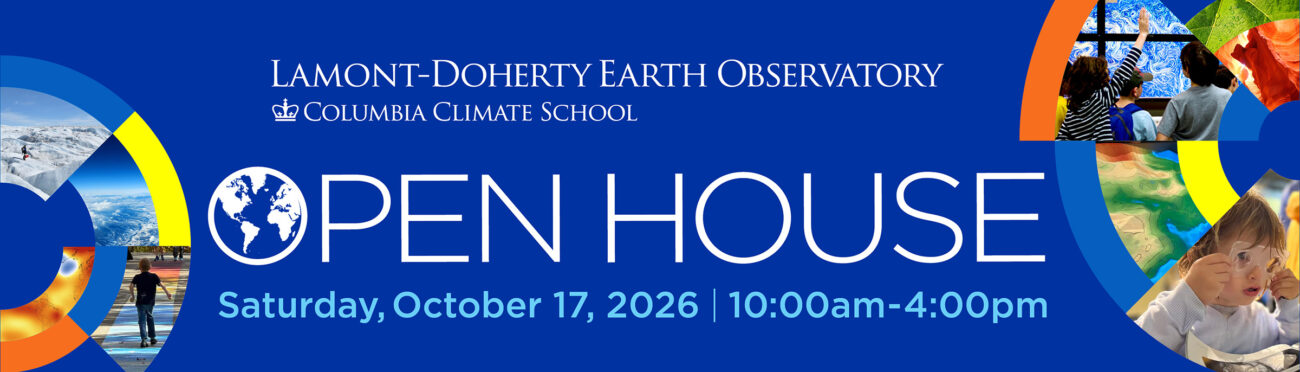
On Saturday, October 17, 2026 from 10am to 4pm, Lamont-Doherty Earth Observatory Open House—our biggest, best science fun and discovery event of the year—will take place on our beautiful campus in Palisades, NY. Mark your calendar and join us for this free, family-friendly celebration of science! RSVP Today!
