climate33
-

Studies Find Climate Change to Disrupt Antarctic and Tropical Ecosystems
A recent study finds that West Antarctica’s ecosystem is highly correlated to its climate. As a result, climate change will have a negative impact on its ecological relationships, from plankton to penguins. Antarctica isn’t alone – climate change will also affect tropical ocean ecosystems by causing mass coral bleaching.
-
Ocean Sediments Tell a Surprising Climate Story
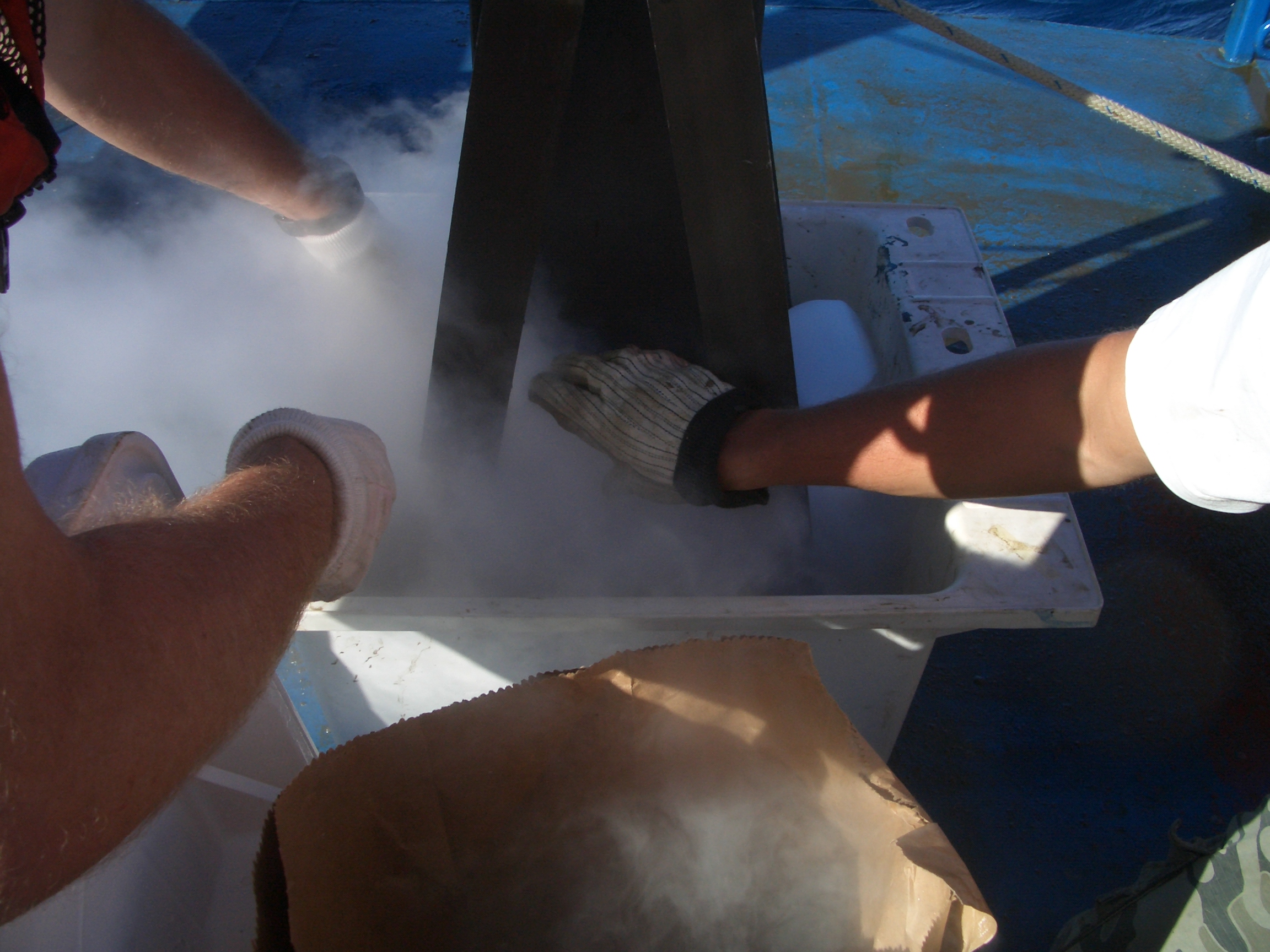
Geochemists Alexander van Geen and Jacob Mey helped coauthor a recent paper in the leading journal Science showing that warming climate in the future may not degrade oxygen supplies in some parts of the oceans as previously thought.
-

Pedaling for the Planet: NYC-DC Climate Ride
Columbia and Earth Institute alumni JD Capuano will be navigating a 300-mile bicycle ride between New York City and Washington, D.C., from Sept. 20-24 to support Climate Ride, the national bike ride to raise charitable donations for and awareness about climate change, cycling, and environmental causes.
-

Indian Government Takes Steps on Agriculture, Water, Climate
In terms of the urgent need to reform agriculture, address climate change and promote sustainable watershed development, the Indian government’s new budget provides for a number of promising initiatives.
-

A Meeting for the Kullorsuaq Community
It seems that many of the local fishermen have gone to hunt Narwal further north but there are several good prospects for boats that Søren will scout further as several of the fishermen are sleeping as the fishing is better right now at night. With 24 hours of daylight day or night fishing doesn’t really…
-

The Changing Upernavik Waterfront
Project Background: Changing conditions in Greenland’s northwest glaciers over the last decade have led to a range of questions about water temperature and circulation patterns in the fjords where ocean water meets the glacial fronts.
-

Gavin Schmidt Named Director of Goddard Institute for Space Studies
NASA has named Gavin A. Schmidt to head its Goddard Institute for Space Studies (GISS), an affiliate of Columbia University’s Earth Institute. Currently serving as deputy director, Schmidt takes over from long-time director James E. Hansen, who retired last year to open a separate climate science and advocacy center at the Earth Institute.
-

EPA’s Upcoming Carbon Rules: A Primer
On Monday, June 2, President Obama will announce proposed federal rules aimed at curbing carbon emissions from existing U.S. power plants–possibly a landmark in U.S. climate policy. It is uncertain how far the rule will go, and the announcement is being closely watched around the world.
-

How High Will Sea Levels Rise?
Scientists from Lamont-Doherty Earth Observatory are trying to determine how high sea levels may rise in the future by studying the shorelines of the past. Led by a team of researchers including Lamont climate scientist and marine geologist Maureen Raymo, the goal of Pliomax is to increase the accuracy of global sea level estimates for…


October 28, 2026 is Columbia Giving Day! Your gift to Columbia Climate School helps advance interdisciplinary research, educate the next generation of leaders, and transform bold ideas into real-world solutions for climate, Earth, and society.
