State of the Planet

News from the Columbia Climate School

conservation12

  • Farmers, Flames and Climate: Are We Entering an Age of ‘Mega-Fires’?

    Farmers, Flames and Climate: Are We Entering an Age of ‘Mega-Fires’?

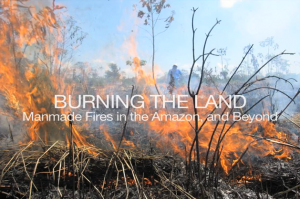
    For millennia, people have set fires to clear land for cultivation, pastures or hunting; so-called slash-and-burn agriculture is still common across much of tropical Africa, Asia and South America. It has been a useful strategy–but …

  • Two Wren Brains Are Better Than One

    Two Wren Brains Are Better Than One

    When researchers observed activity in the brains of plain-tailed wrens while singing, they discovered something striking: In both sexes, the neurons reacted more strongly to the duet song than individual contributions — they are seemingly wired to enhance cooperation.

  • White-Nose Syndrome is Driving Conservation Batty

    White-Nose Syndrome is Driving Conservation Batty

    Scientists report in a recently published article in Nature that the fungus Geomyces destructans found on bats afflicted with White Nose Syndrome is the primary cause of the disease. However, amidst all the muck of doom and gloom, researchers report in the July issue of the Journal of Wildlife Diseases that affected bats can be…

  • China’s Decade Plan for Water

    China’s Decade Plan for Water

    For the first time, China’s No. 1 central document outlining the government’s priorities for the coming year focuses on the construction of water resources acknowledging its importance as a “strategic resource” and its necessity to the economy.

  • Executive Courses in Sustainable Coastal Economies, Urban Resilience, and Conservation

    Executive Courses in Sustainable Coastal Economies, Urban Resilience, and Conservation

    The Center for Environmental Research and Conservation at Columbia University provides professionals with the knowledge and tools to be effective environmental leaders and decision makers in the 21st century. It is an evening program in which environmental issues are discussed, debated and examined, where participants develop an in-depth understanding of conservation science and practice through…

  • Robotic Bug Sparks a Flighty Debate on Evolution

    Robotic Bug Sparks a Flighty Debate on Evolution

    A robotic bug’s attempts to fly were no match for gravity – the critter was unable to soar above the ground. The findings shed light on a longstanding debate about the evolutionary origins of flight, as scientists have long debated whether birds first evolved flight as ground dwellers or tree jumpers.

  • 8 Ways to Look at 7 Billion

    8 Ways to Look at 7 Billion

    Interested in learning more about the world’s population? Here are some recent articles about the history, context and implications of 7 billion people living on earth.

  • Green Sidewalk is Electrifying

    Green Sidewalk is Electrifying

    Utilizing innovative technology to transform physical impact into electricity, PaveGen is literally, as the company tagline describes, “Generating Energy from footsteps.”

  • Ecological and Urban Resilience

    Ecological and Urban Resilience

    Resilience science has been evolving over the past decade, expanding beyond ecology to reflect systems of thinking in fields such as economics and political science. And, as more and more people move into densely populated cities, using massive amounts of water, energy, and other resources, the need to combine these disciplines to consider the resilience…

Collage of Turkiye beach scene and Columbia University Campus with text: UN Climate Change Conference COP31, Antalya, Turkiye, Nov 9-20, 2026

COP31, the 2026 United Nations Climate Change Conference, aims to advance dialogue, strengthen consensus, and accelerate climate action on a global scale. From November 9–20, 2026 in Antalya, Türkiye, heads of state, ministers, scientists, business leaders, and civil society will gather to advance efforts in emission targets, climate finance, and adaptation and resilience. Once again, our experts, students, and global thought leaders from Columbia Climate School and across Columbia University are contributing to key events, sharing insights, and helping shape the dialogue toward ambitious, science-based solutions. Learn More

  • Farmers, Flames and Climate: Are We Entering an Age of ‘Mega-Fires’?

    Farmers, Flames and Climate: Are We Entering an Age of ‘Mega-Fires’?

    For millennia, people have set fires to clear land for cultivation, pastures or hunting; so-called slash-and-burn agriculture is still common across much of tropical Africa, Asia and South America. It has been a useful strategy–but …

  • Two Wren Brains Are Better Than One

    Two Wren Brains Are Better Than One

    When researchers observed activity in the brains of plain-tailed wrens while singing, they discovered something striking: In both sexes, the neurons reacted more strongly to the duet song than individual contributions — they are seemingly wired to enhance cooperation.

  • White-Nose Syndrome is Driving Conservation Batty

    White-Nose Syndrome is Driving Conservation Batty

    Scientists report in a recently published article in Nature that the fungus Geomyces destructans found on bats afflicted with White Nose Syndrome is the primary cause of the disease. However, amidst all the muck of doom and gloom, researchers report in the July issue of the Journal of Wildlife Diseases that affected bats can be…

  • China’s Decade Plan for Water

    China’s Decade Plan for Water

    For the first time, China’s No. 1 central document outlining the government’s priorities for the coming year focuses on the construction of water resources acknowledging its importance as a “strategic resource” and its necessity to the economy.

  • Executive Courses in Sustainable Coastal Economies, Urban Resilience, and Conservation

    Executive Courses in Sustainable Coastal Economies, Urban Resilience, and Conservation

    The Center for Environmental Research and Conservation at Columbia University provides professionals with the knowledge and tools to be effective environmental leaders and decision makers in the 21st century. It is an evening program in which environmental issues are discussed, debated and examined, where participants develop an in-depth understanding of conservation science and practice through…

  • Robotic Bug Sparks a Flighty Debate on Evolution

    Robotic Bug Sparks a Flighty Debate on Evolution

    A robotic bug’s attempts to fly were no match for gravity – the critter was unable to soar above the ground. The findings shed light on a longstanding debate about the evolutionary origins of flight, as scientists have long debated whether birds first evolved flight as ground dwellers or tree jumpers.

  • 8 Ways to Look at 7 Billion

    8 Ways to Look at 7 Billion

    Interested in learning more about the world’s population? Here are some recent articles about the history, context and implications of 7 billion people living on earth.

  • Green Sidewalk is Electrifying

    Green Sidewalk is Electrifying

    Utilizing innovative technology to transform physical impact into electricity, PaveGen is literally, as the company tagline describes, “Generating Energy from footsteps.”

  • Ecological and Urban Resilience

    Ecological and Urban Resilience

    Resilience science has been evolving over the past decade, expanding beyond ecology to reflect systems of thinking in fields such as economics and political science. And, as more and more people move into densely populated cities, using massive amounts of water, energy, and other resources, the need to combine these disciplines to consider the resilience…
