Earthquakes7
-
Finishing Up in Bangladesh
In the final push, we split into multiple teams, and caught up and completed all the seismometer installations on time.
-

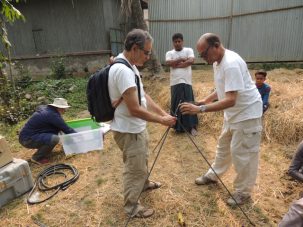
Installing the seismometer array
Helping Jim’s team, I assisted in installing stations and scouting locations. While some stations go quickly, others took multiple trips to find a good site. Time is growing short for getting all the seismometer installations done on time.
-

Transition to Seismology Scouting
As we finished scouting and installing the GPS stations, we started to assist the seismology team in getting permission to install there instruments in Tea Estates.
-

Finishing the GPS Scouting
We drove through the hills of Sylhet passed rice fields and tea plantations, and through woods looking for appropriate spots to install our GPS systems.
-

Primary Schools to the Rescue
Up ahead was a school, perfect for a GPS installation. Schools proved to be the best sites in the hills, which we covered in either tea plantations or woods.
-

Installing the First Two GPS Sites
From our base in Srimongal, now came the challenging work of finding appropriate locations to install the GPS. It requires a combination of the right tectonic setting and reinforced concrete buildings.
-

Fellowship of the Seismometers
I am back in Bangladesh to start deployment of seismometers and GPS for a large new project that crosses 3 countries: Bangladesh, India and Myanmar.
-

Ear to the Ground, Listening for Nuclear Blasts
Seismologist Lynn Sykes has been working for more than 50 years to halt the testing of nuclear bombs. In his forthcoming book, Silencing the Bomb: One Scientist’s Quest to Halt Nuclear Testing, Sykes provides an insider’s look at the science behind detecting explosions, and international efforts to establish a series of treaties.
-

Ocean Sediments Off Pacific Coast May Feed Tsunami Danger
Tightly packed sediments help the Cascadia Subduction Zone generate large earthquakes, and could boost its ability to trigger a large tsunami.


The first Earth Day in 1970 ignited a movement to stop polluting our planet. Today, our scientists and experts are tackling the most pressing challenges to achieve real-world impact. This Earth Day, join us in our commitment to realizing a just and sustainable future for our planet. Visit our Earth Day website for ideas, resources, and inspiration.
